The main difference between the Japandi style and Scandinavian style lies in the atmosphere and the use of color. Japandi feels calmer and more earthy, while Scandinavian is lighter and airier. Both styles share a love for minimalism and natural materials, but their origin, philosophy, and accents differ clearly. This difference is reflected not only in colors and furniture, but especially in how an interior feels.
What makes Japandi Japandi and Scandinavian Scandinavian?
At first glance, Japandi and Scandinavian look very similar. Both interior styles are known for their tranquility, simplicity, and functionality. Yet they stem from different cultural backgrounds, and it is precisely this origin that determines the character of the style.
Scandinavian design has its roots in Northern Europe, in countries like Sweden, Norway, and Denmark. Due to long winters and limited daylight, a living style emerged that revolves around light, comfort, and functionality. Concepts like hygge play an important role here. Living should be warm, accessible, and practical.
Japandi is a blend of ‘Japan’ and ‘Scandi’. The style combines Scandinavian functionality with Japanese living philosophy. From Japan comes the philosophy of wabi-sabi, where peace, simplicity, and natural imperfection are central. Not everything has to be perfect. It is precisely the irregular and the sober that provide depth.
Scandinavian feels light, friendly, and functional.
Japandi feels earthy, refined, and more Zen-oriented.
Where Scandinavian often opts for a fresh and open look, Japandi adds an extra layer of tranquility and restraint.
Are there differences in materials and colors?
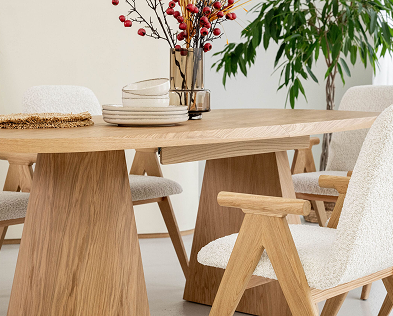
Yes, those differences are clearly visible. Scandinavian design makes extensive use of light wood species such as birch or ash. These are often combined with white walls, soft pastel tones, and natural fabrics like wool and linen. The goal is to make spaces feel light, fresh, and spacious.
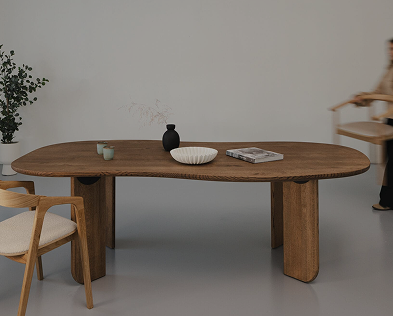
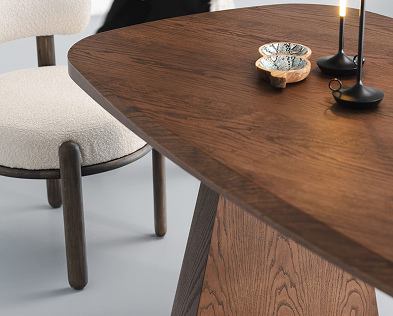
Japandi often works with slightly darker wood tones, such as walnut or black-stained oak. This is clearly reflected in our Japandi dining chairs, where earth tones, gray, and sometimes deep green set the mood. Materials such as ceramics, bamboo, and raw linen play a larger role. As a result, the atmosphere is more earthy and calm without becoming heavy.
Scandinavian: light wood, pastel colors, and soft fabrics.
Japandi: darker wood, earth tones, and more texture in materials.
What is the difference in furniture and design?
Clear differences are also visible in the furniture, although both styles are functional in nature. Scandinavian dining chairs are often light in form, with round and friendly lines. Think of slender chairs on slim legs where comfort and ease of use are central.
Japandi furniture is generally lower and visually calmer. They have a minimalist and sometimes robust appearance, with many straight lines and little decoration. The function of the furniture comes first. Aesthetics follow function, not the other way around. This ensures a calm and balanced whole.
Scandinavian: slender legs, round shapes, and an airy design.
Japandi: low furniture, clean lines, and a restrained appearance.
When does Japandi suit you better and when does Scandinavian?
Japandi suits people who love minimalism with depth. This style is suitable if you are looking for peace, simplicity, and refinement, and enjoy working with natural materials and a calm, slightly darker color palette. Japandi feels calm and thoughtful.
Scandinavian suits you better if you love light, freshness, and comfort. The style is accessible and practical and works particularly well in homes where you want to create an open and airy atmosphere. Especially in smaller spaces, Scandinavian living often provides extra light and spaciousness.
Choose Japandi if you love calm, earthy interiors.
Choose Scandinavian if you prefer light and fresh above all else.
Can you combine Japandi and Scandinavian?
Yes, these styles can be combined well. In fact, Japandi is originally a combination of both. It’s all about balance. By combining the light base of Scandinavian with the restrained, dark accents of Japandi, an interior is created that feels both warm and calm.
It is important that the color palette remains calm and that materials feel natural. By combining light fabrics with dark wood or ceramics, a balanced whole is created. A Japandi interior always feels in equilibrium, never cold or restless.
Want to know more about Japandi furniture?
At Vechtdal Meubels, you will find a carefully selected range of high-quality Japandi furniture. Made from European oak, FSC-certified, and always finished with care. For example, view our Japandi dining tables or discover our Japandi dining chairs. Everything is delivered fully assembled!