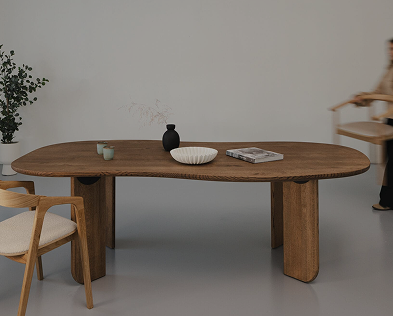
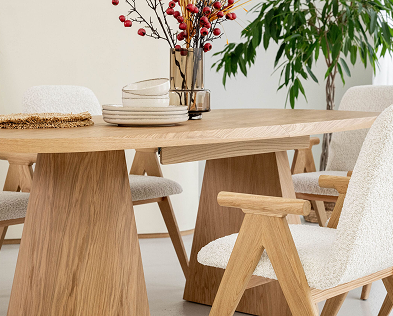
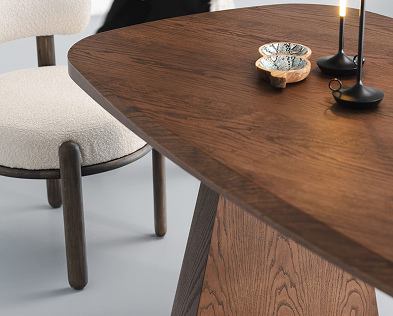
Japandi furniture stays beautiful the longest when you clean it regularly, protect it from moisture and direct sunlight, and choose maintenance that suits the material. With a few simple habits, the sleek, calm look of your interior will be effortlessly maintained.
Which materials require special attention with Japandi furniture?
Japandi furniture often consists of natural materials such as oak, solid wood, linen, wool, cotton, and soft neutral upholstery. These are beautiful, but also sensitive to moisture, sunlight, and intensive use. A good rule of thumb is to treat each material as you would pure, natural products. For example, with oak furniture, it is important to avoid fluctuations in humidity because wood can warp.
Wood & oak
Oak is strong and durable, but stays most beautiful when you protect it from rings and heat. Always use coasters, avoid sliding accessories over the surface, and keep moisture on the surface as short as possible.
Soft fabrics and natural tones
Japandi fabrics are often light in color and therefore require some extra attention to stains. Regular vacuuming with a soft brush ensures that dust does not get into the fibers. With light furniture, a textile protector can help to keep it beautiful for longer.
How do you clean stains without damaging your Japandi design?
With Japandi furniture, it’s all about peace and simplicity. That means you achieve the most with mild resources. Hard scrubbing or aggressive cleaning affects the calm appearance of the material. Always work from mild to more intensive, never the other way around.
Stains on wood
Use a slightly damp cloth and then dry immediately. Do you see a greasy spot? Then a little natural soap (such as green soap) can help, but always test this on an inconspicuous area.
Stains on fabric
Always dab stains instead of rubbing. This way you do not push the stain deeper into the fiber. Use lukewarm water with a little mild soap or a special furniture cleaner that is suitable for natural fabrics.
Are there simple tricks to make your furniture last longer?
Small habits make the biggest difference and cost you hardly any effort. Japandi is about simplicity, and that applies equally to maintenance.
- Do not place furniture directly against the heating, this prevents dehydration of wood.
- Rotate chairs and cushions regularly so that wear is evenly distributed.
- Place felt pads under legs to protect your floor and reduce noise.
Once these habits become part of your daily routine, your furniture will visibly stay beautiful longer.
How do you keep the sleek lines and colors of your Japandi interior fresh?
The power of Japandi lies in the minimalist lines. Fabrics and wood that look clean and fresh reinforce that peaceful feeling. Contrast works well here. Light furniture comes into its own better when it is not surrounded by too many light accessories. Subtle color differences create peace and depth.
Protection against sunlight
Natural light is beautiful, but can discolor wood and fabric. Use light curtains or a UV-resistant film on windows where the sun shines in for a long time. This way you retain the natural tones that make Japandi so recognizable.
When is it time for a professional approach or refresher?
Even when you maintain your furniture well, there comes a time when a fresh treatment is needed. If you doubt whether your furniture needs maintenance, pay attention to signals such as dull spots, wear on seating surfaces or color differences on intensively used parts.
Have wood refreshed
A table top can sometimes use a light sanding or new oil or lacquer layer. Especially with oak, this ensures a beautiful, renewed appearance.
Have fabrics cleaned
In the case of stubborn stains or when the fabric becomes visibly dull, a professional textile cleaner can fully restore the furniture without damage.
Brief advice in one overview
Japandi furniture stays beautiful for a long time when you treat it gently, protect it from sun and moisture, and choose maintenance that suits natural materials. With small daily habits, you maintain that peaceful, timeless atmosphere that Japandi is known for.