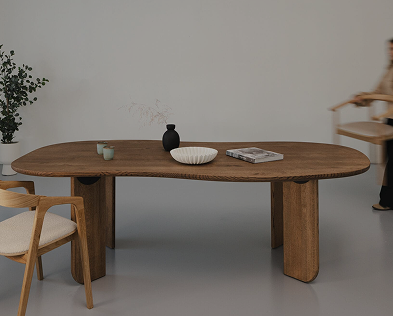
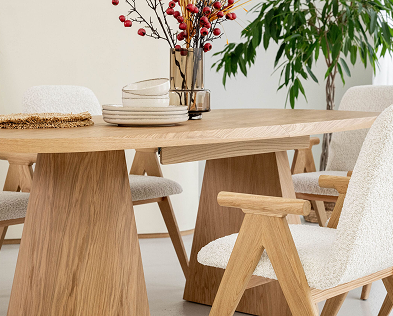
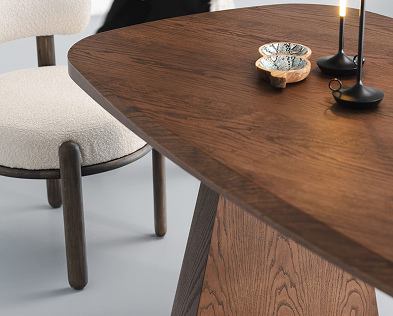
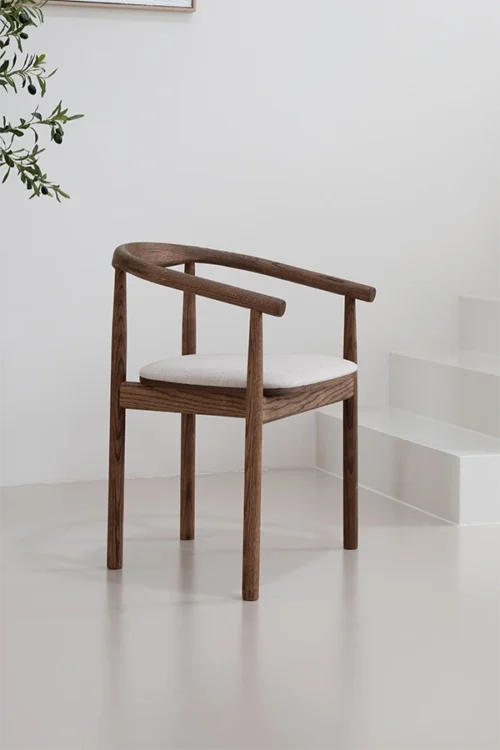
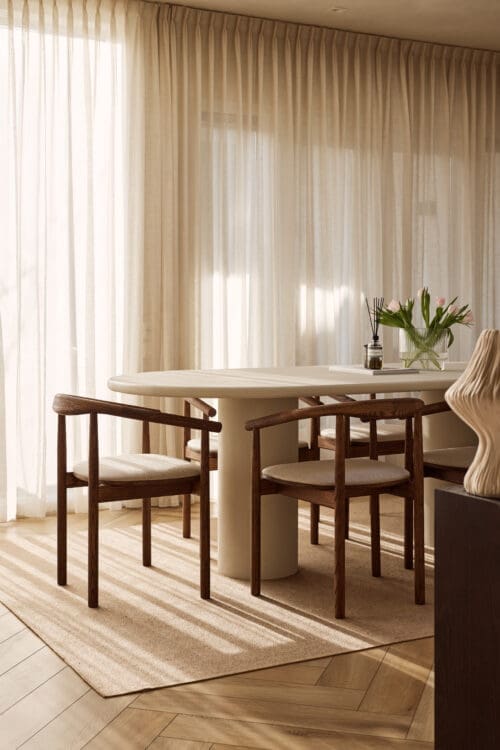
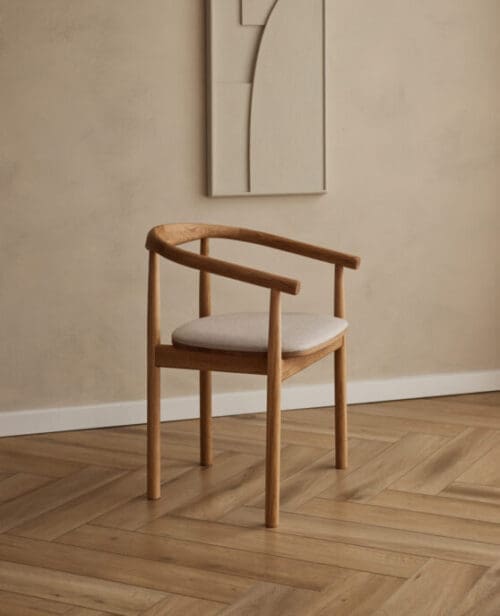
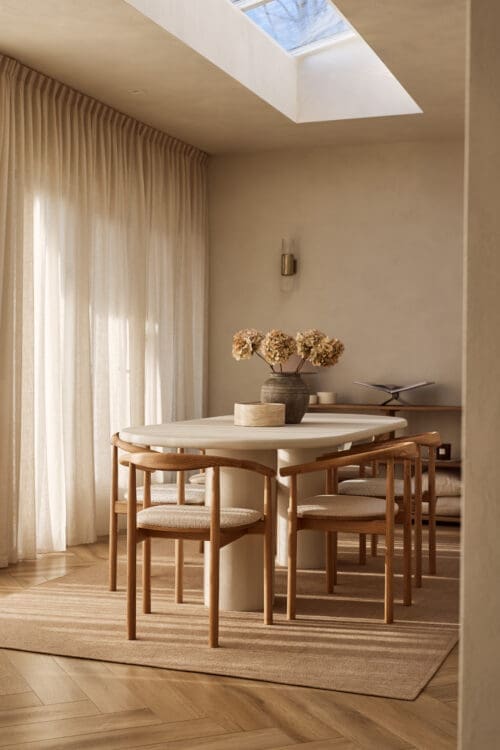
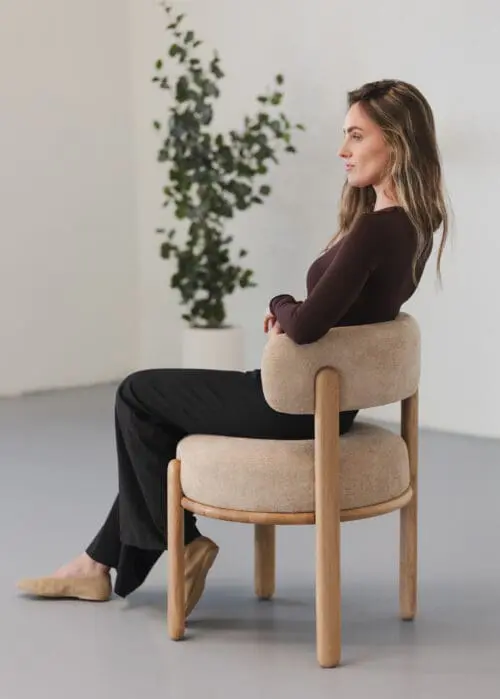
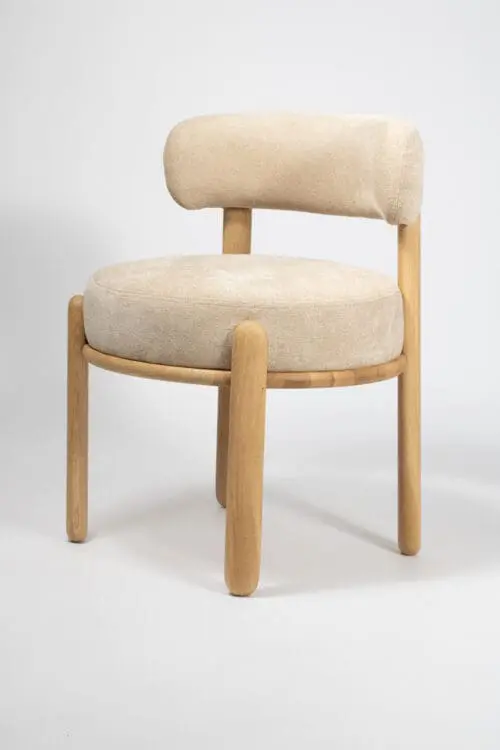
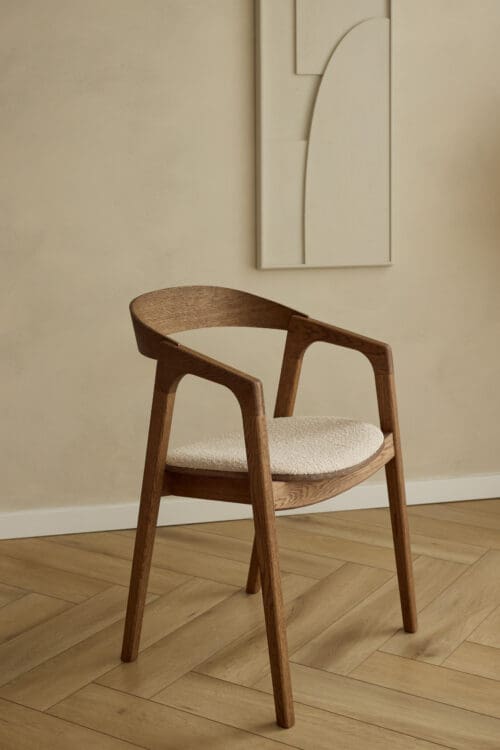
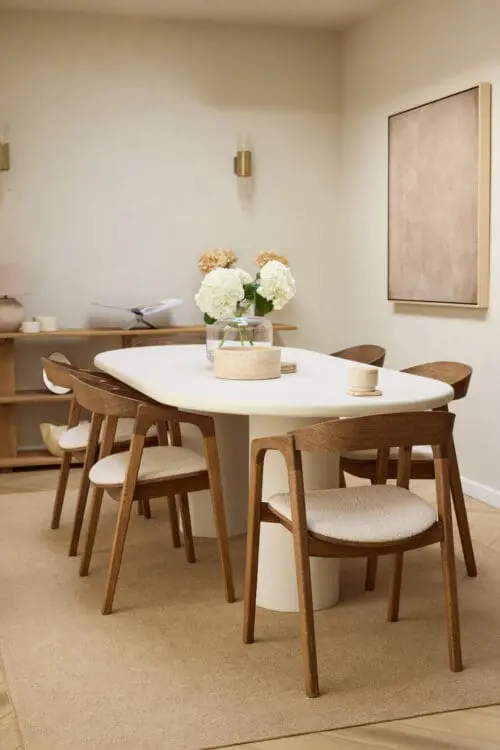
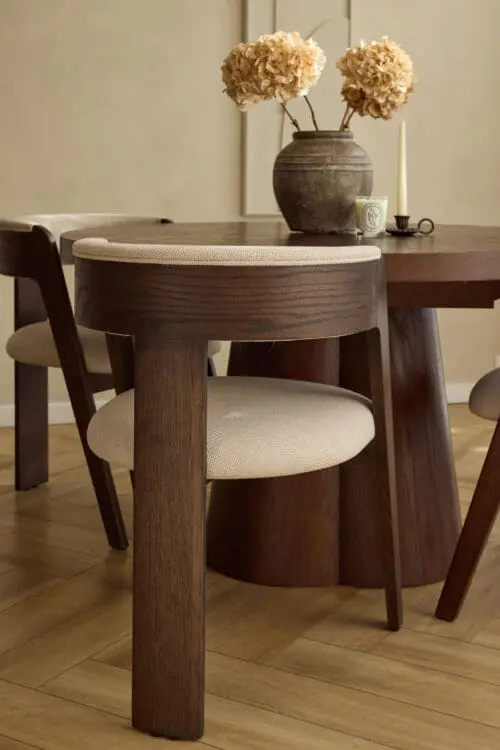
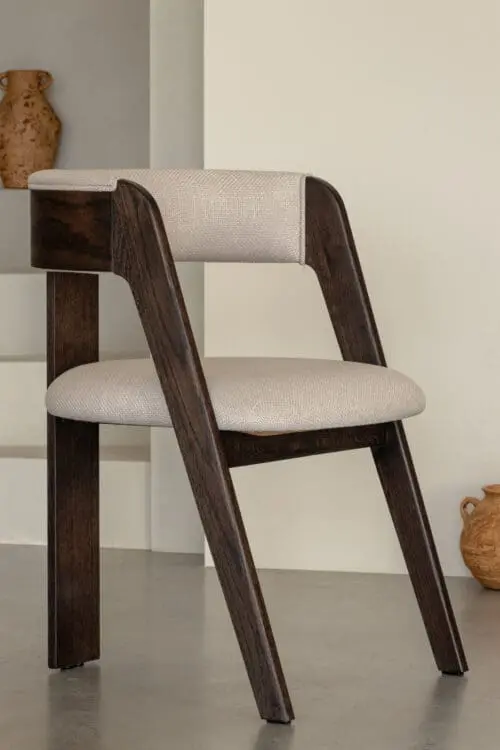
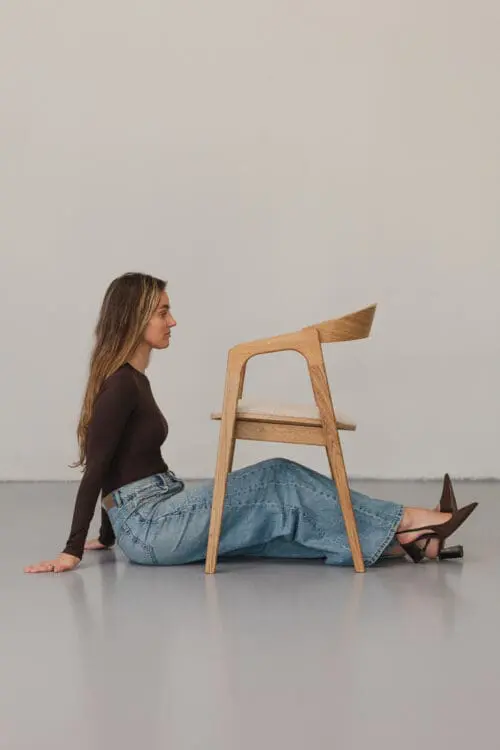
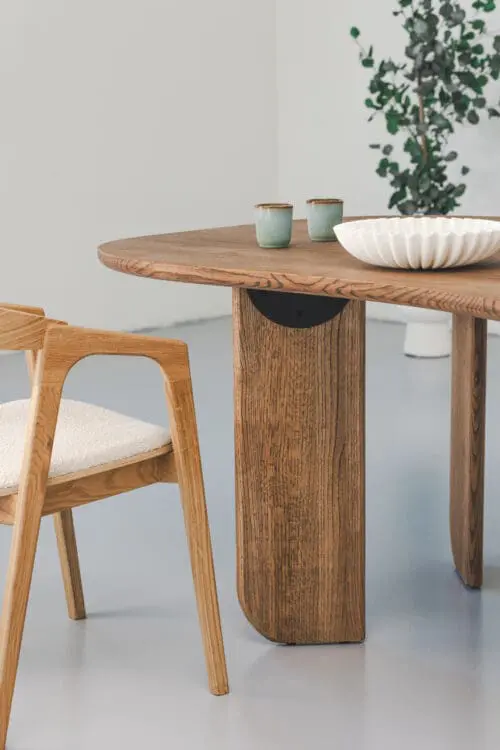
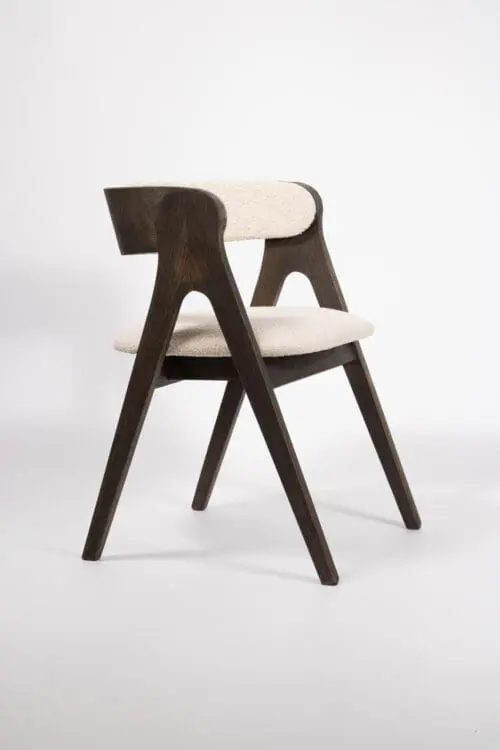
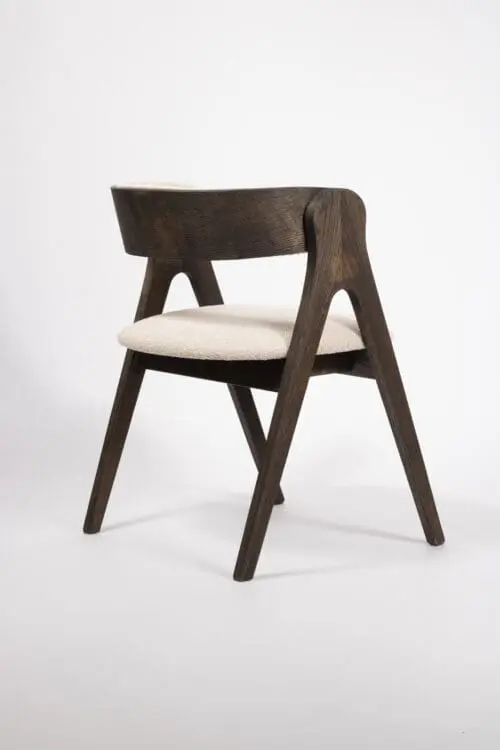
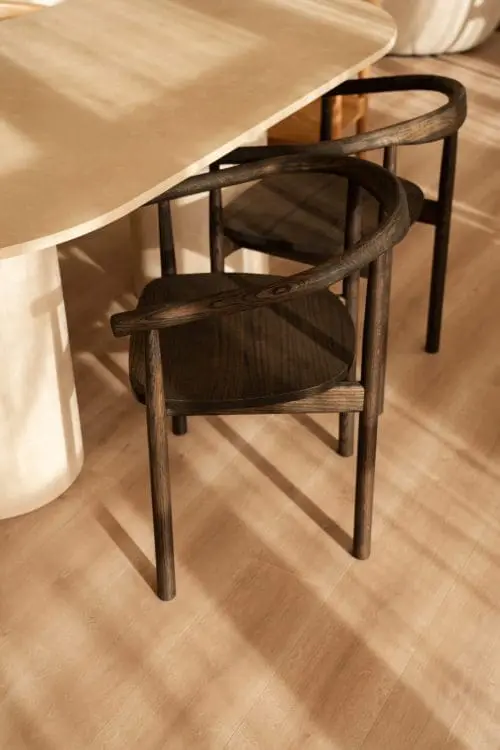
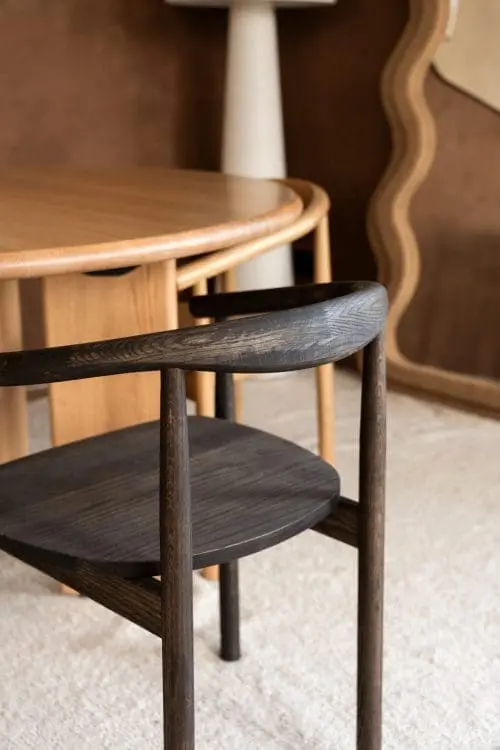
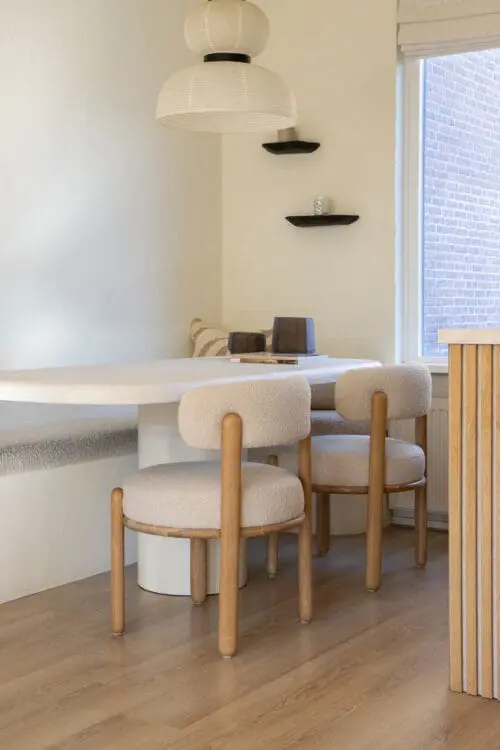
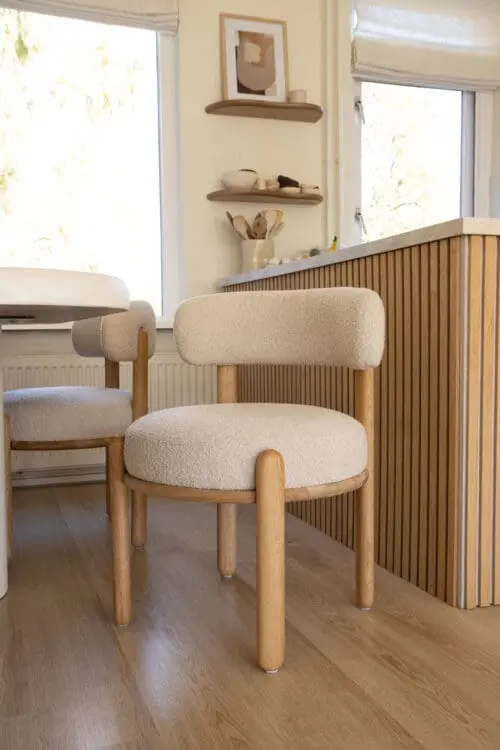
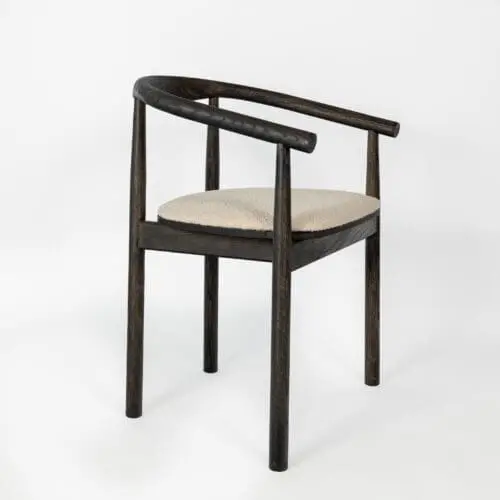
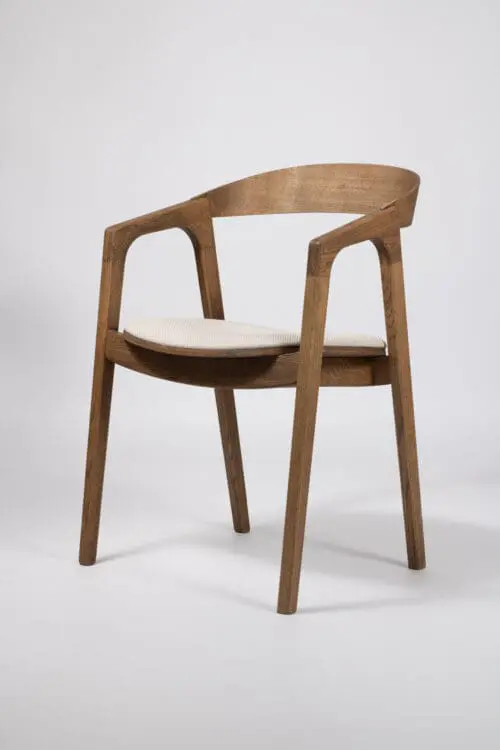
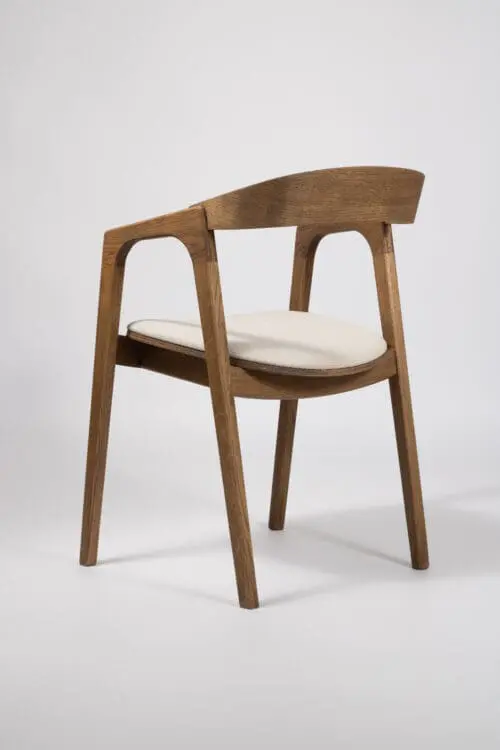
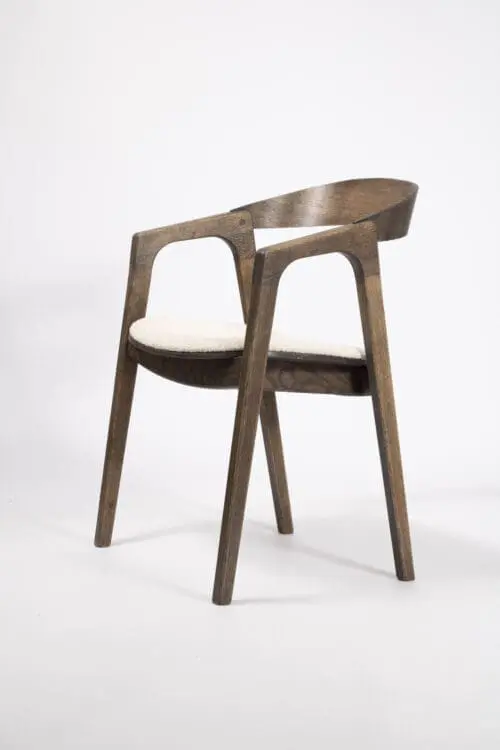
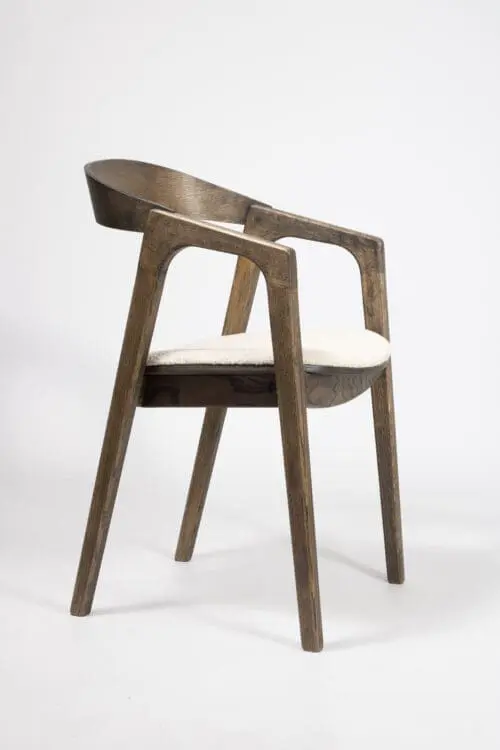
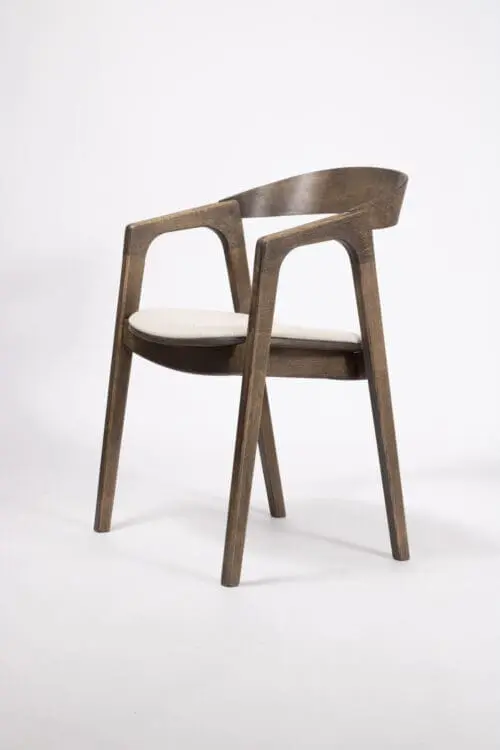
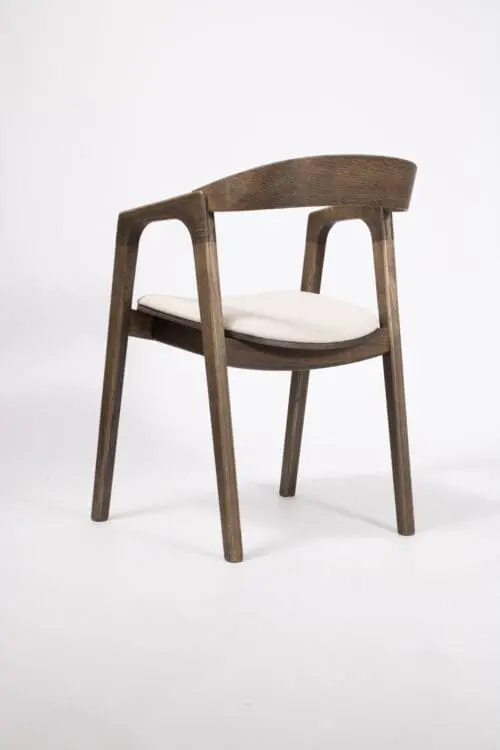
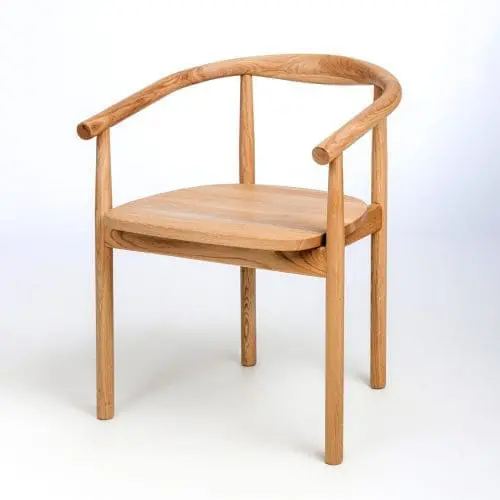
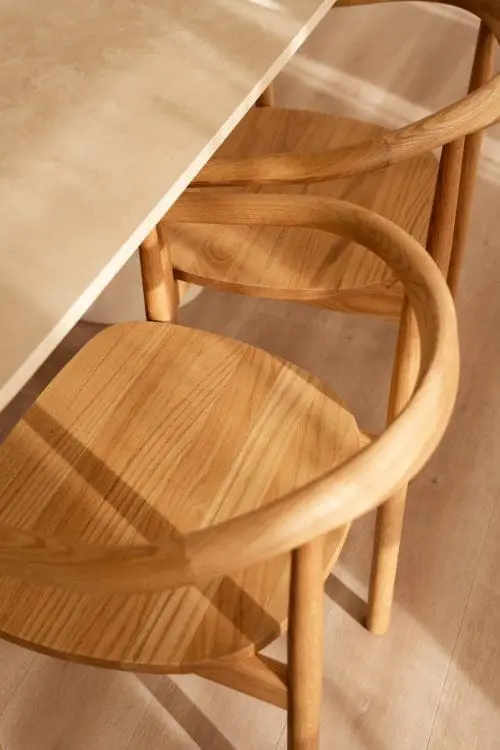
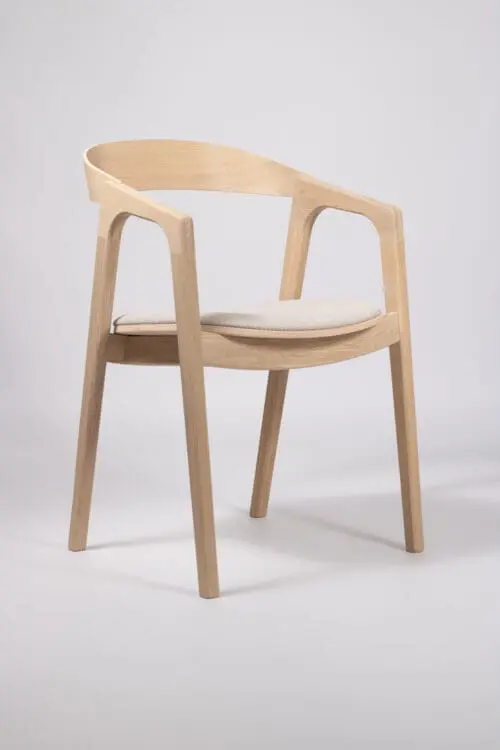
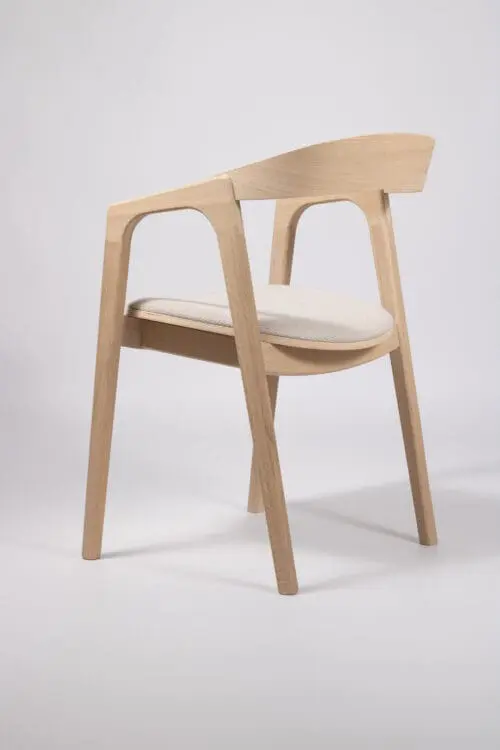
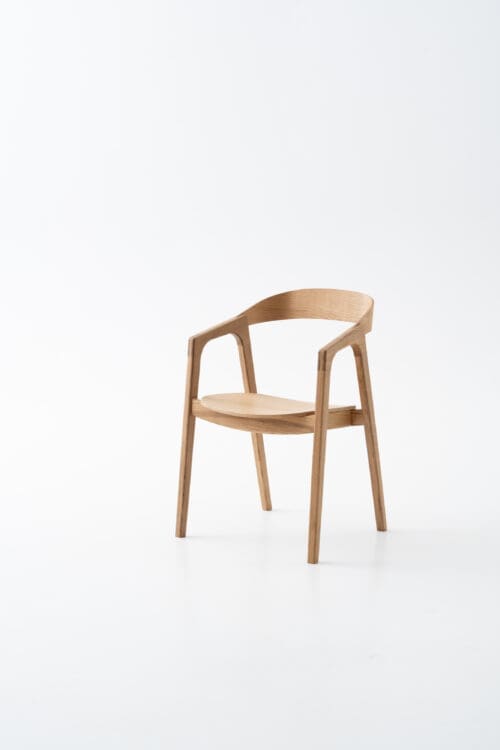
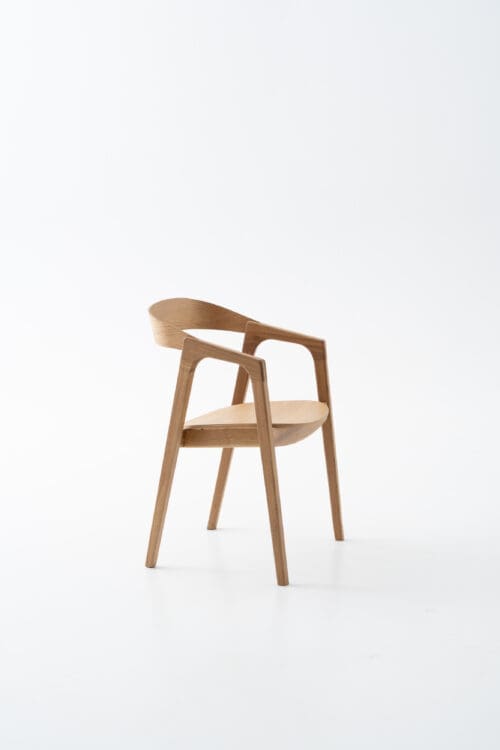
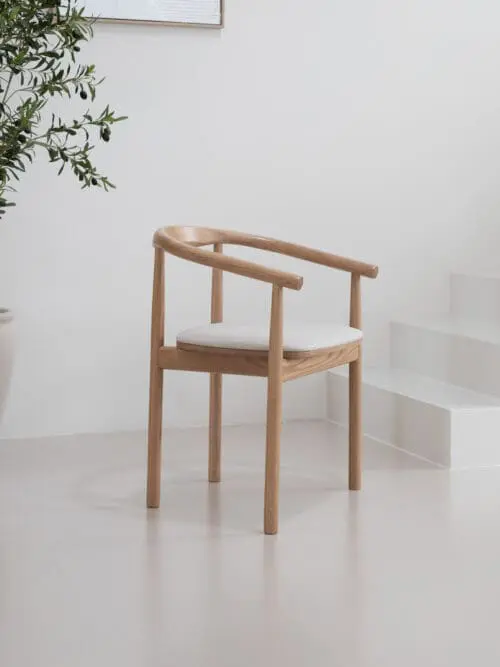
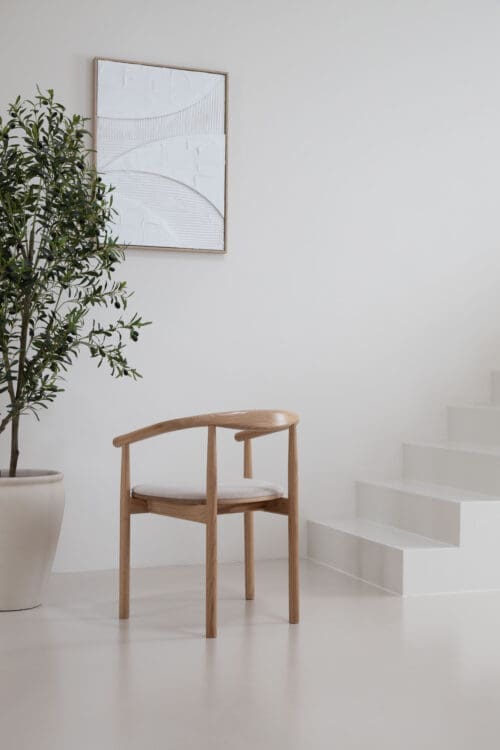
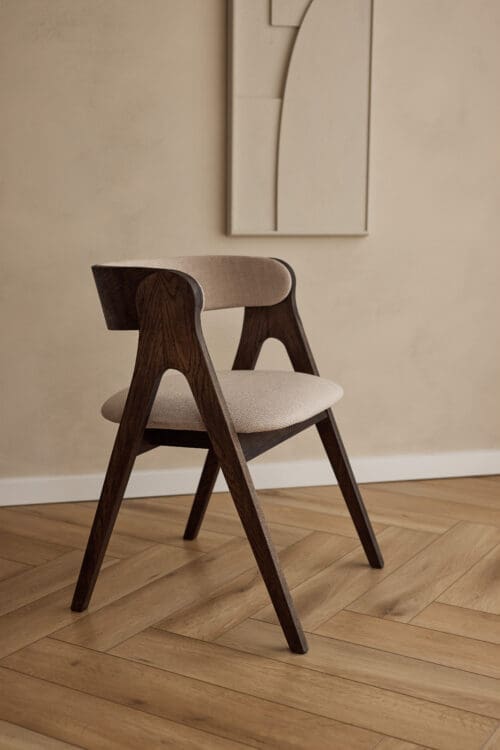
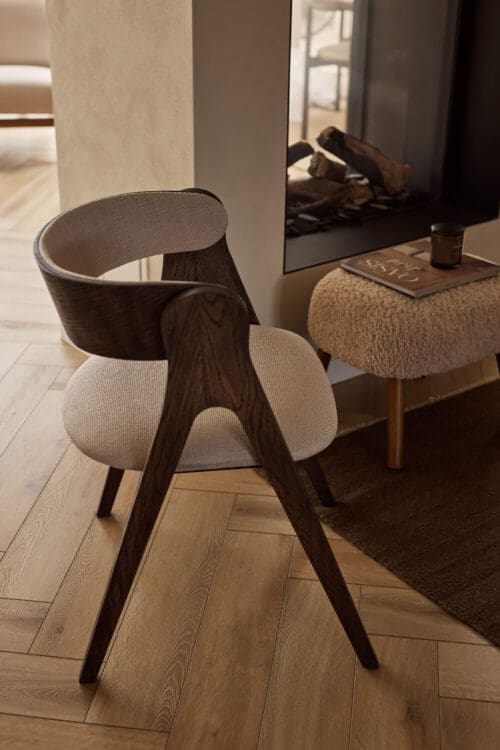
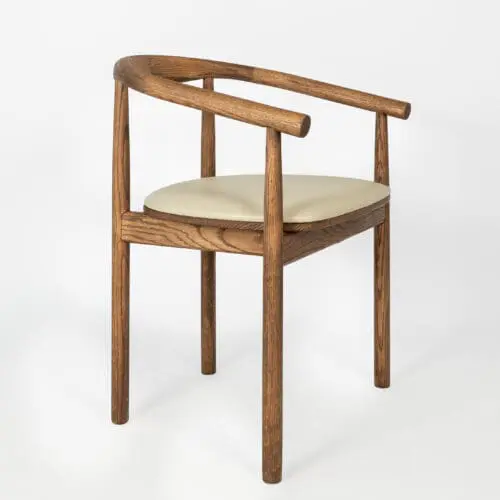
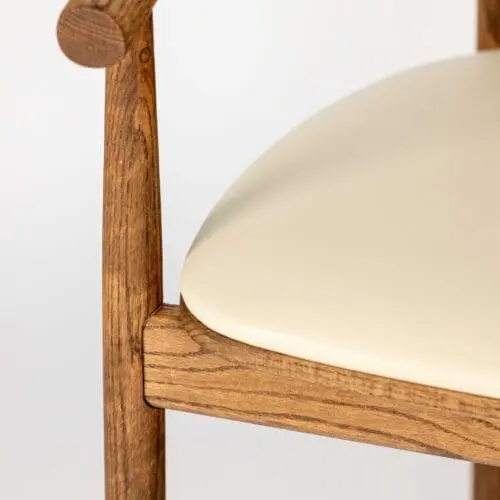
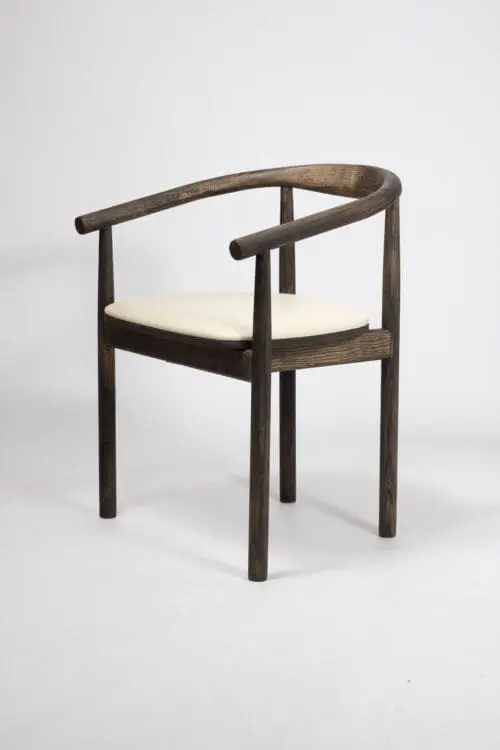
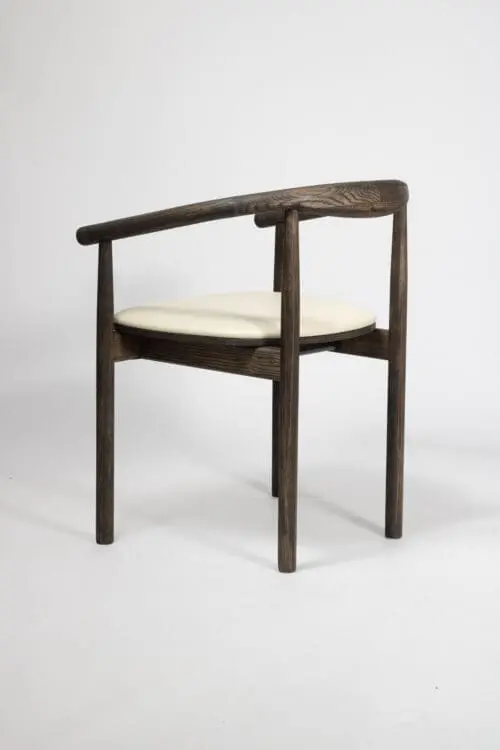
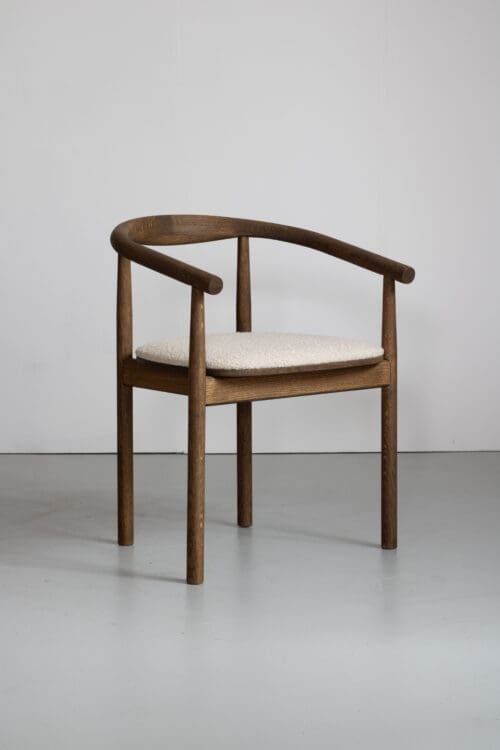
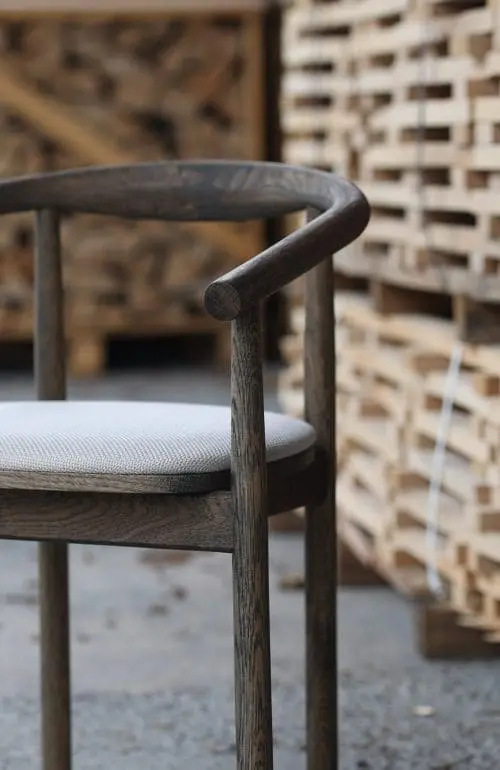
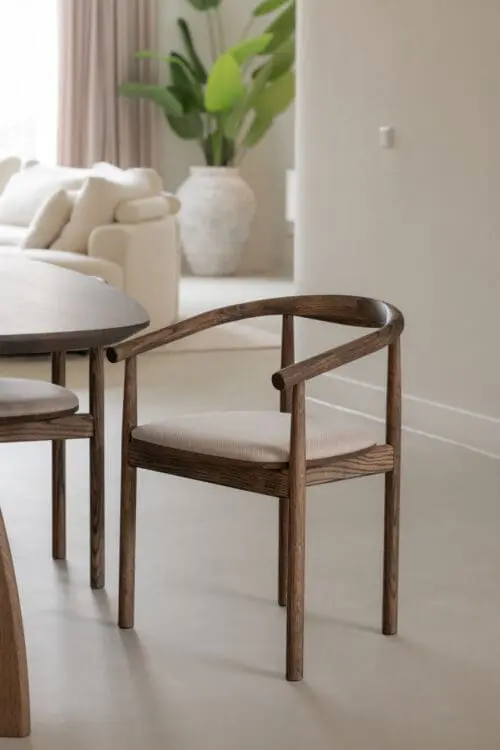
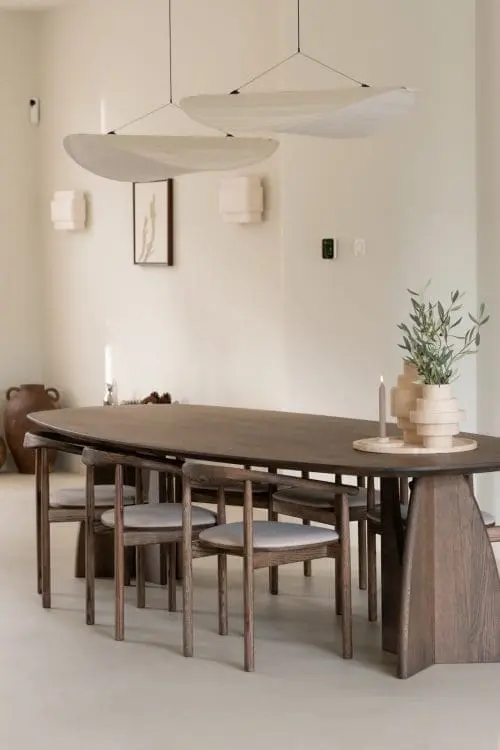
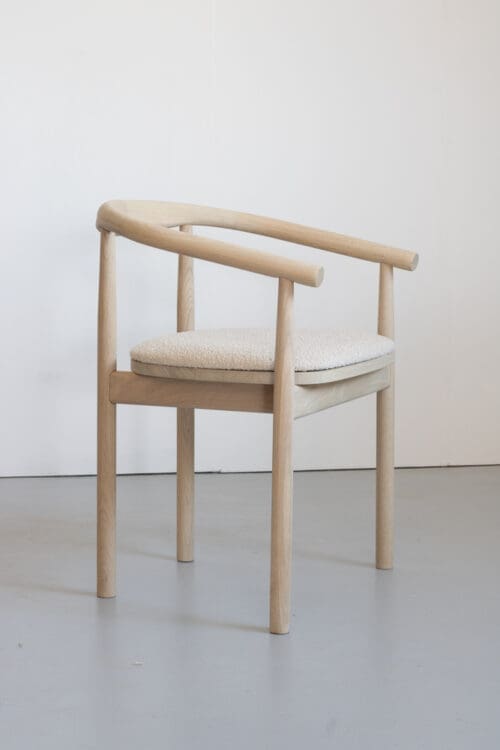
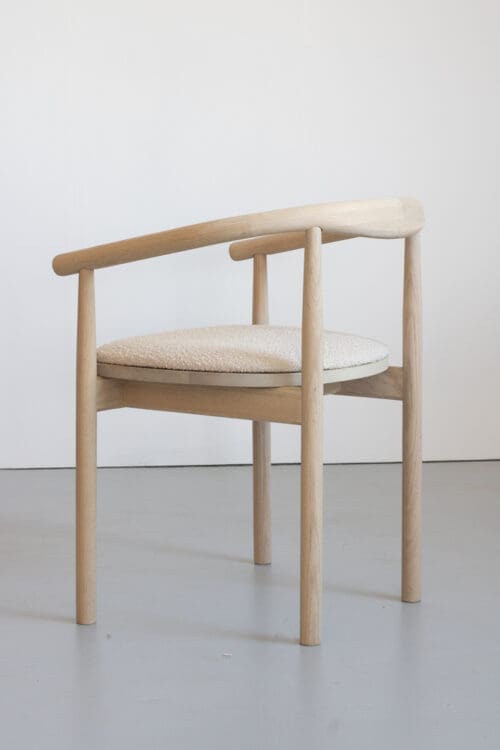
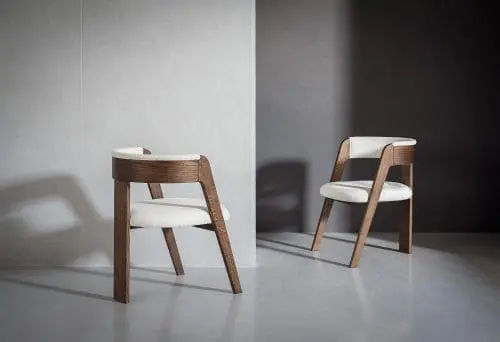
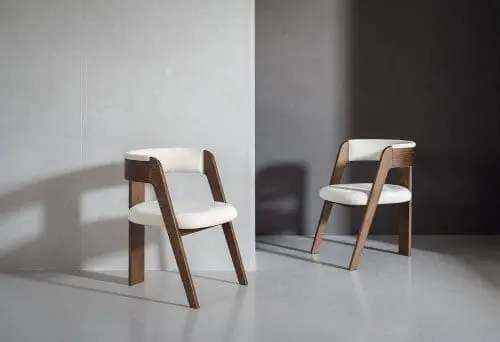
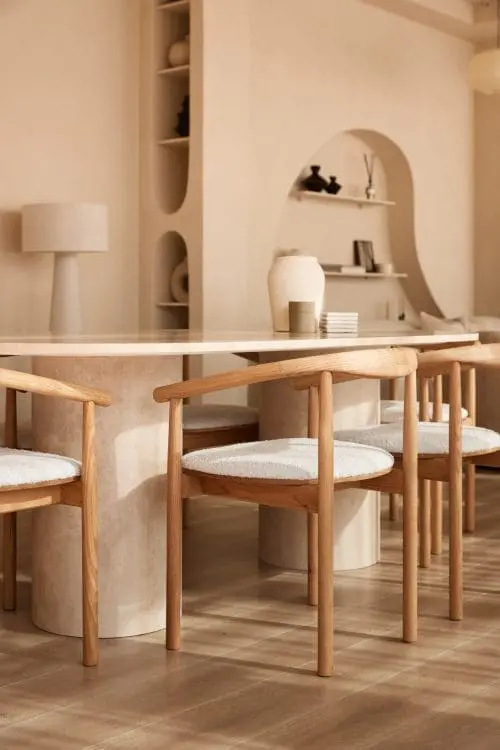
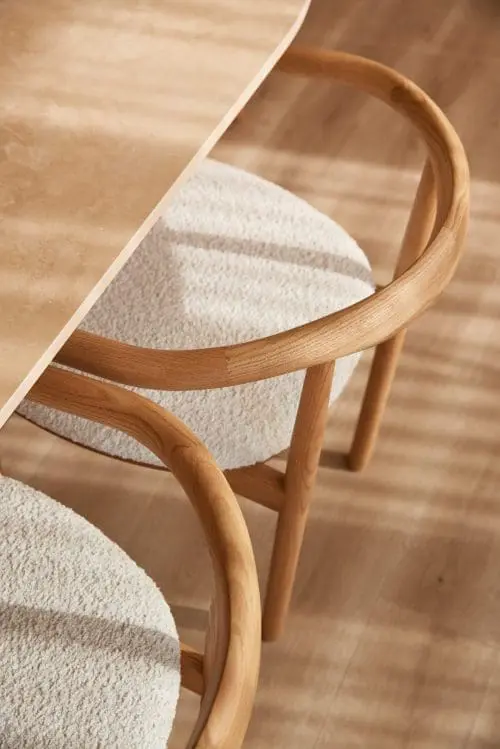
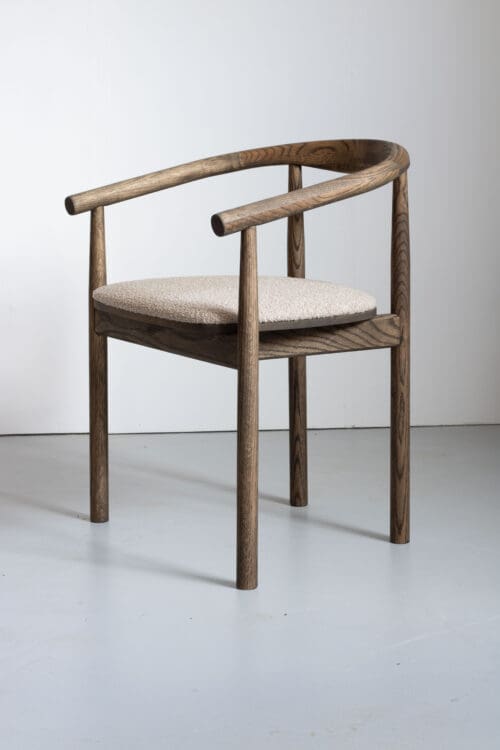
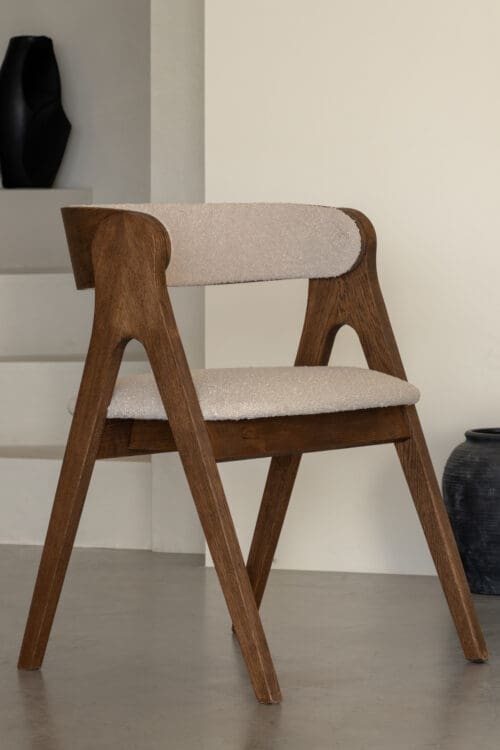
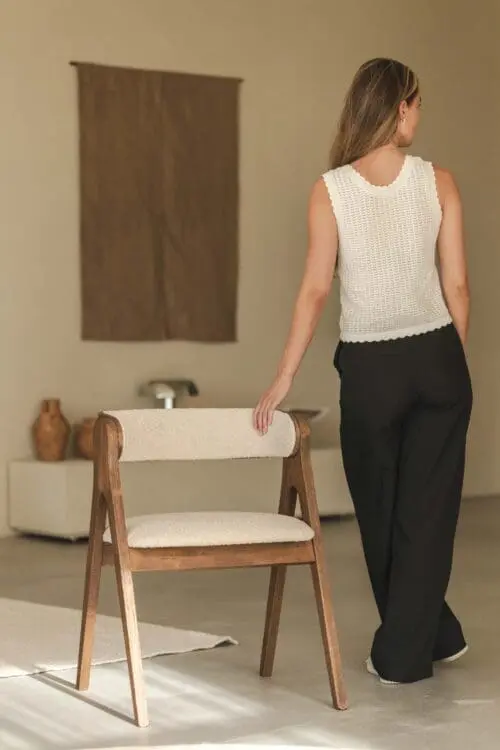
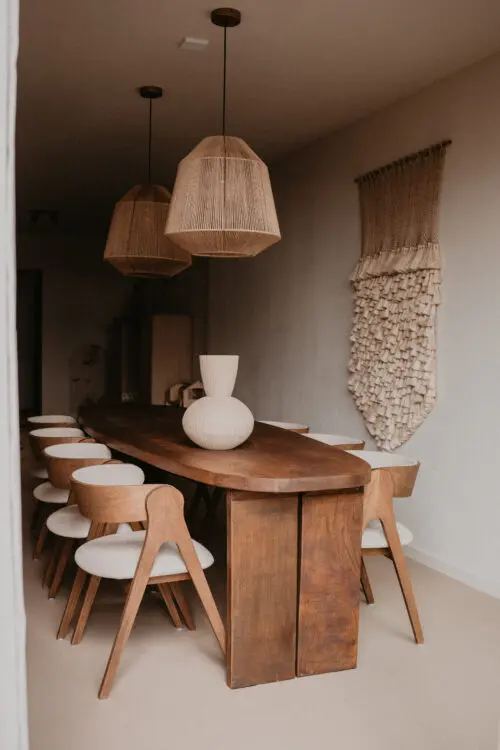
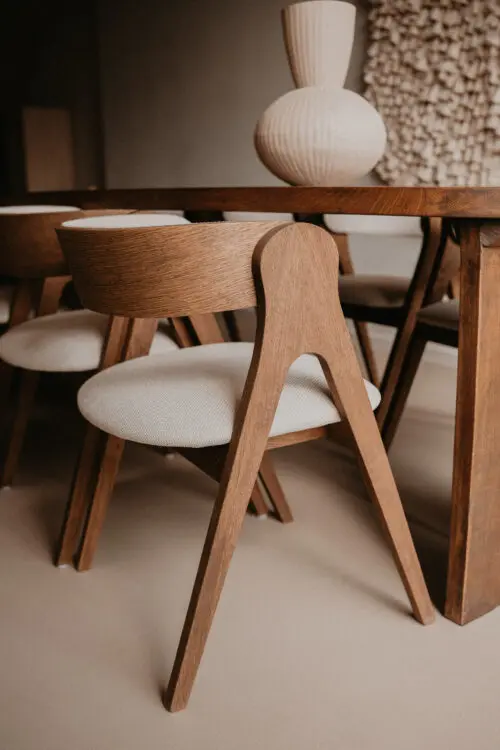
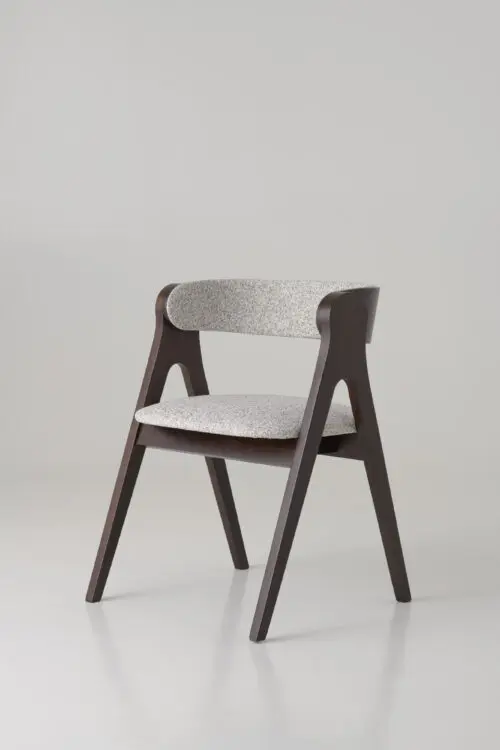
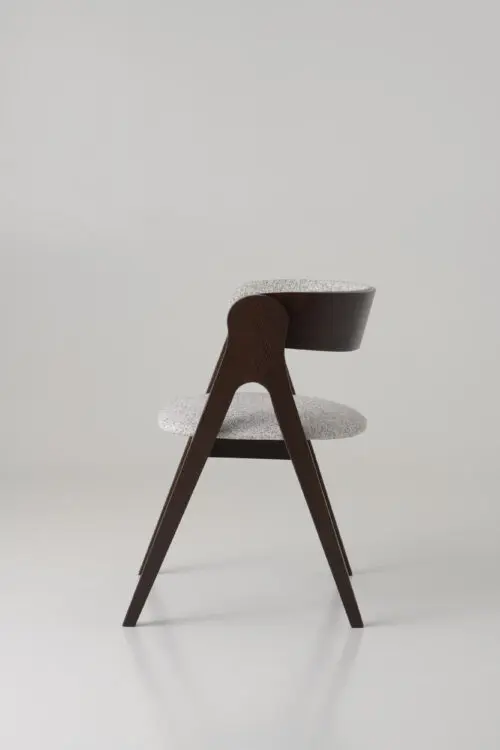
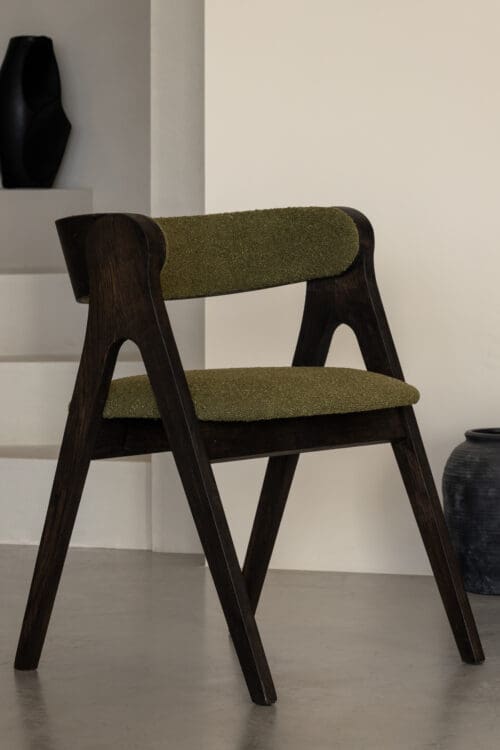
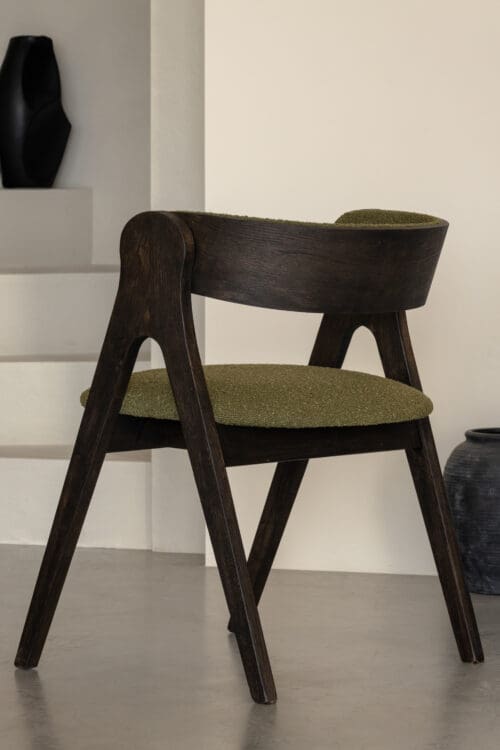
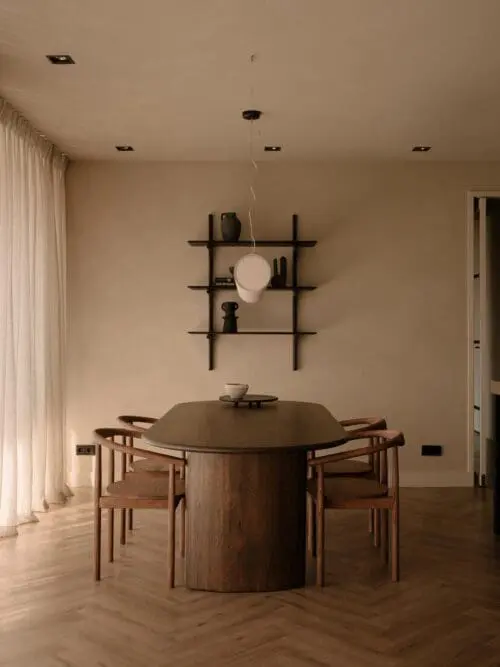
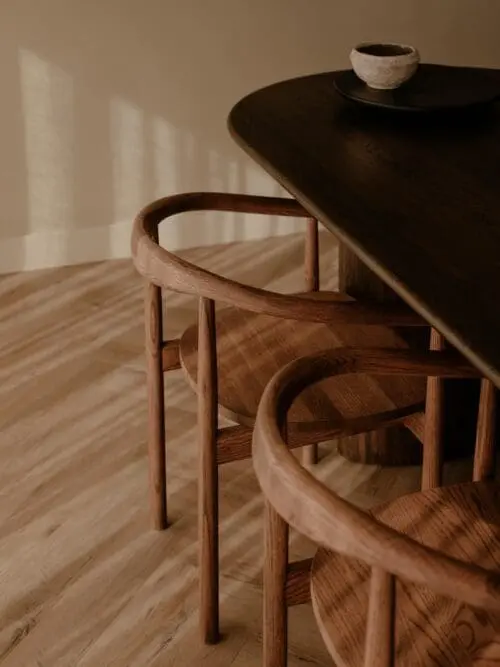
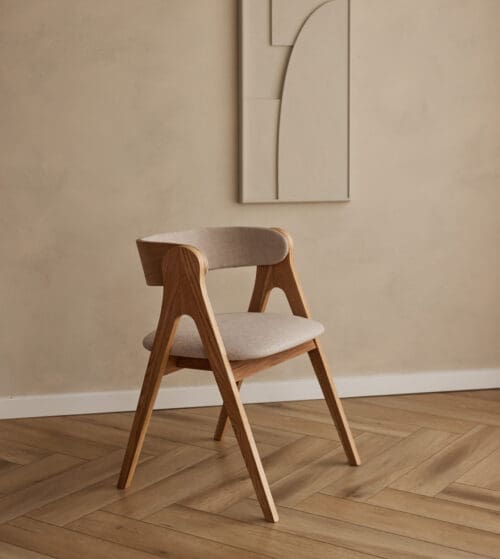
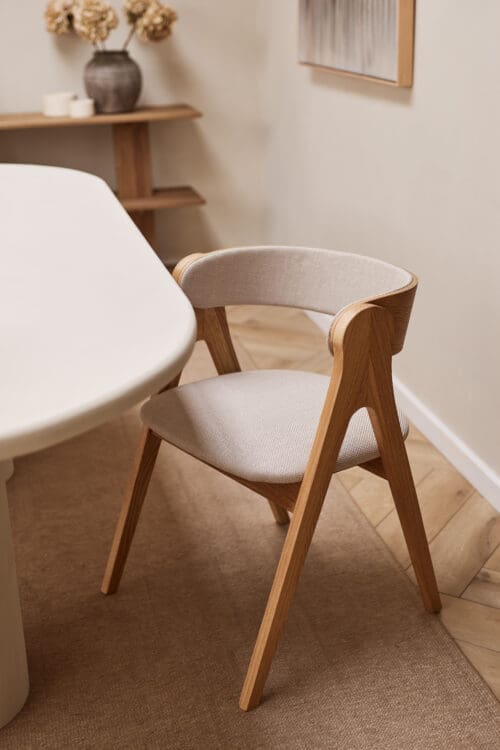
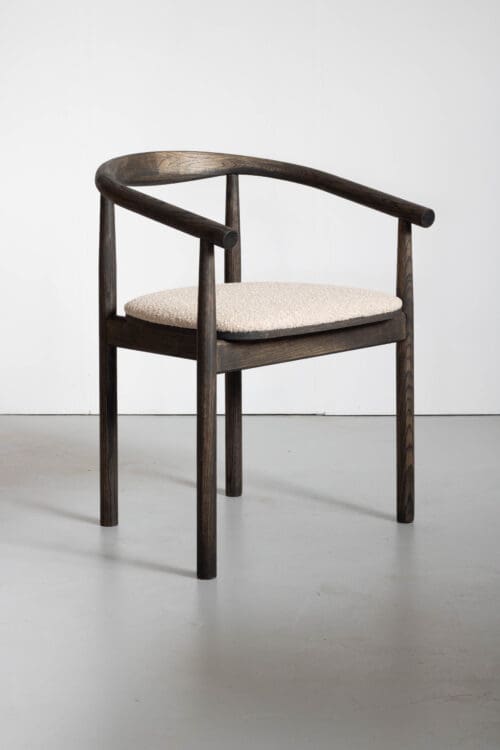
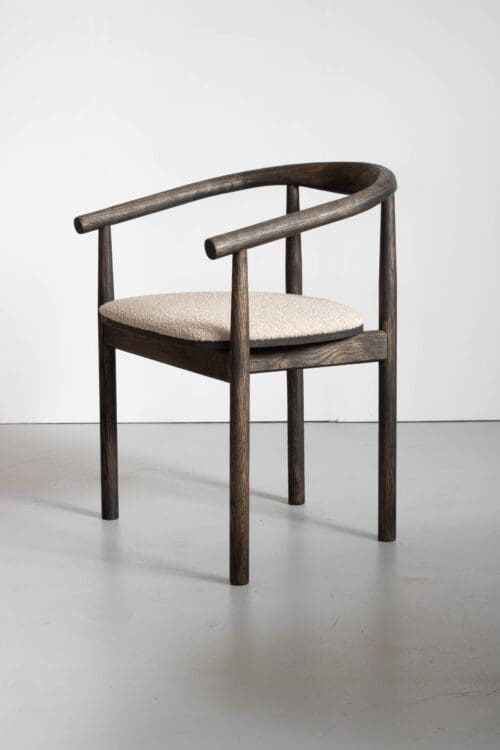
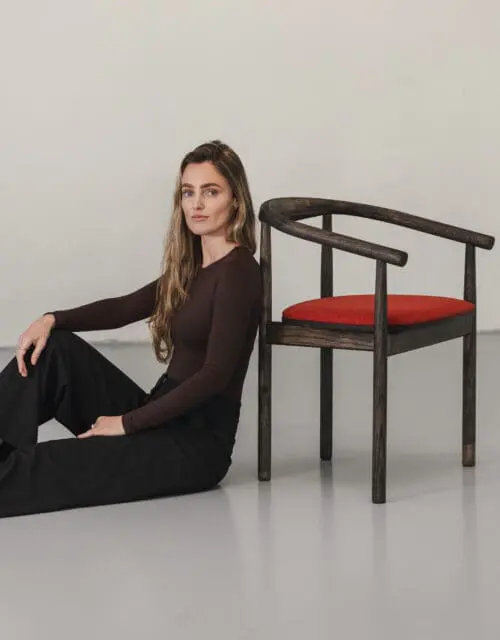
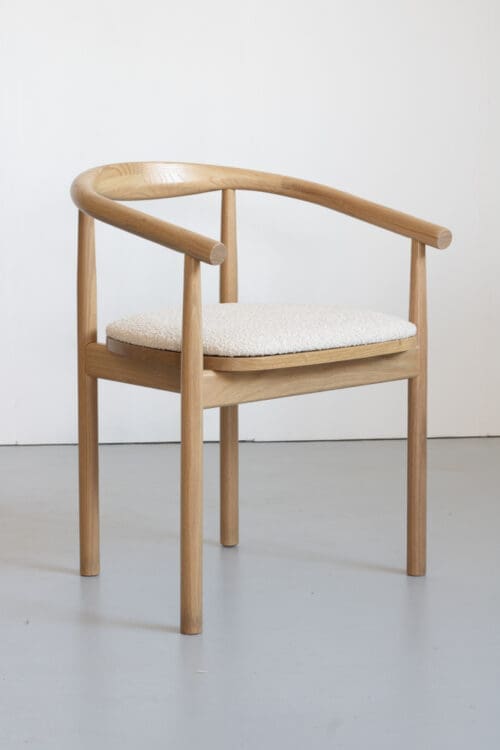
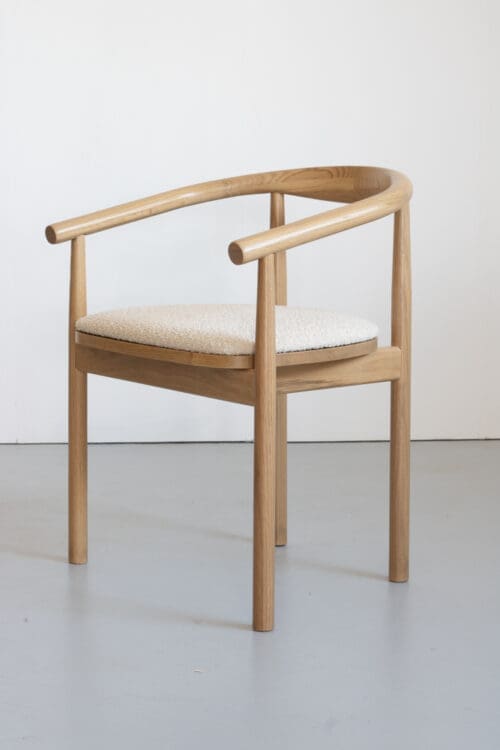
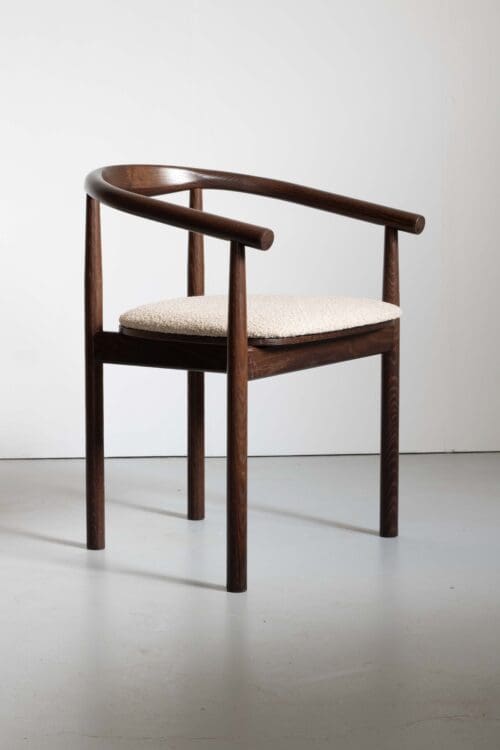
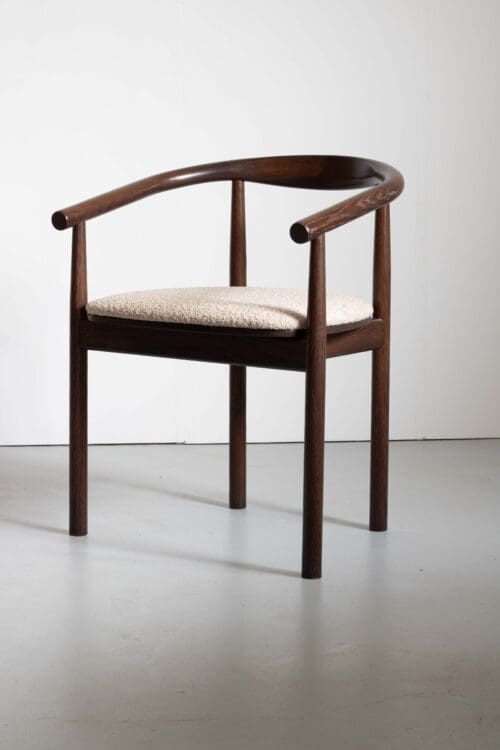
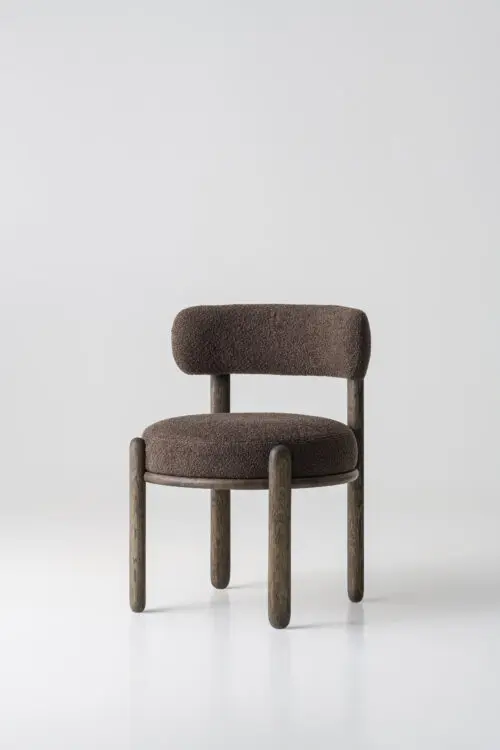
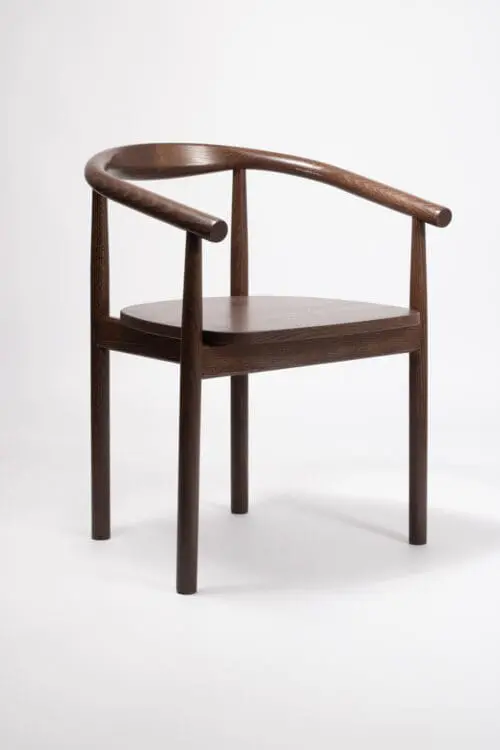
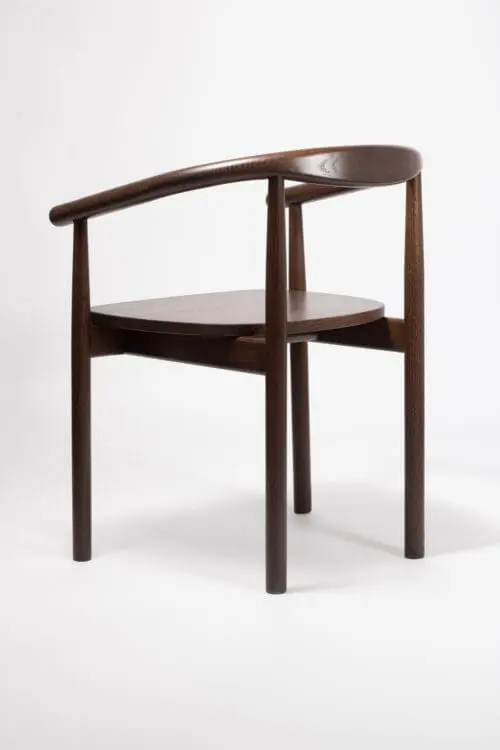
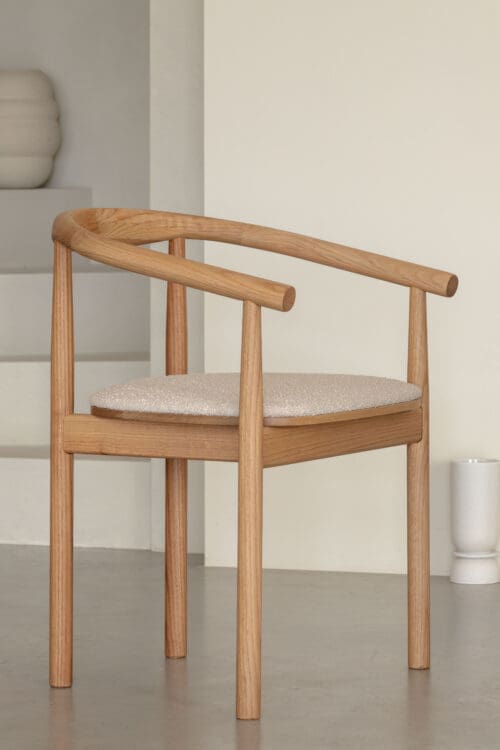
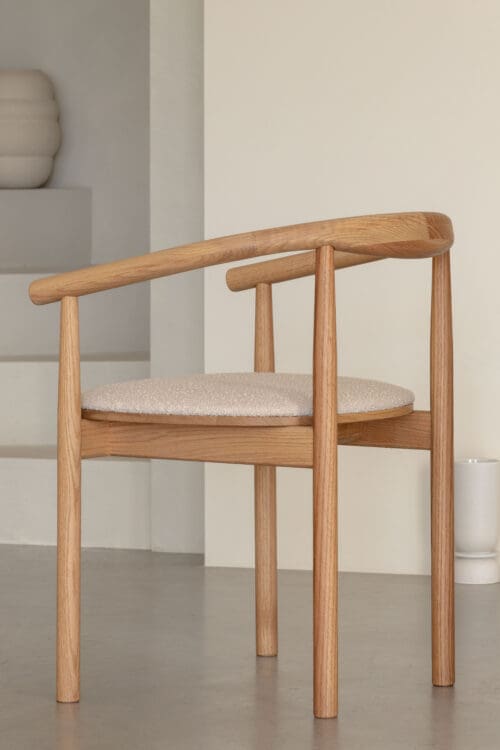
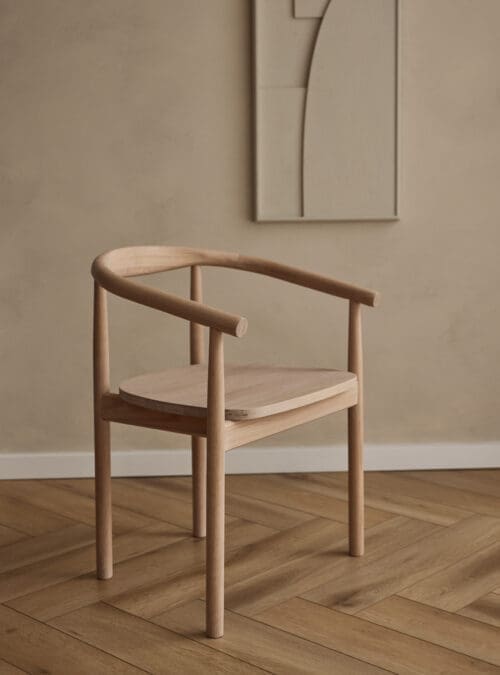
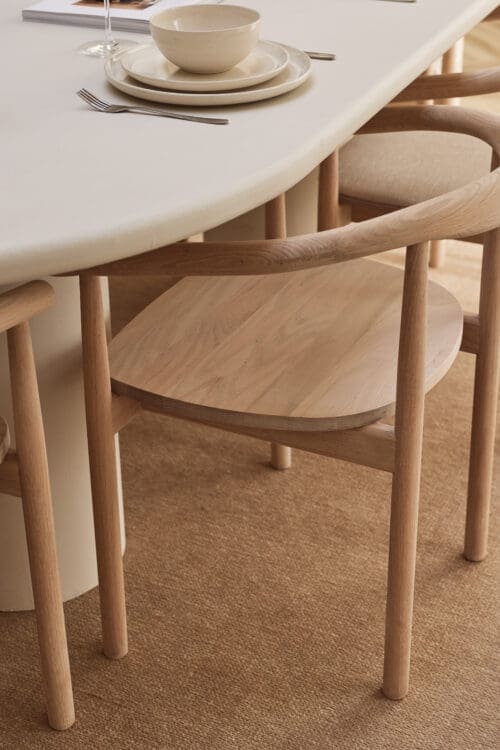
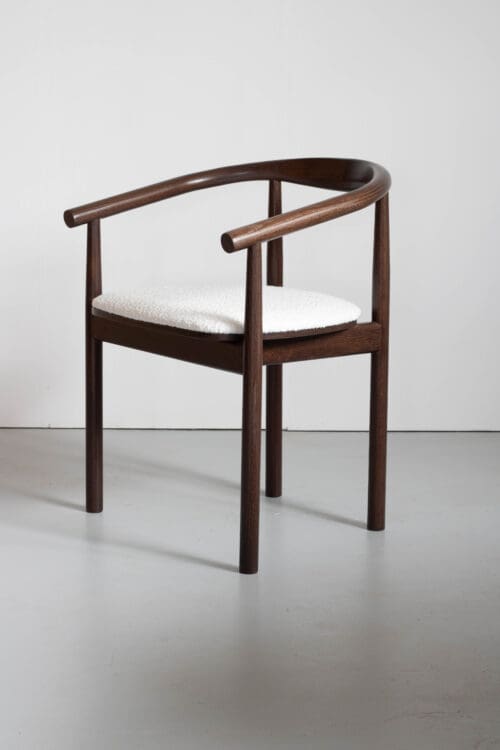
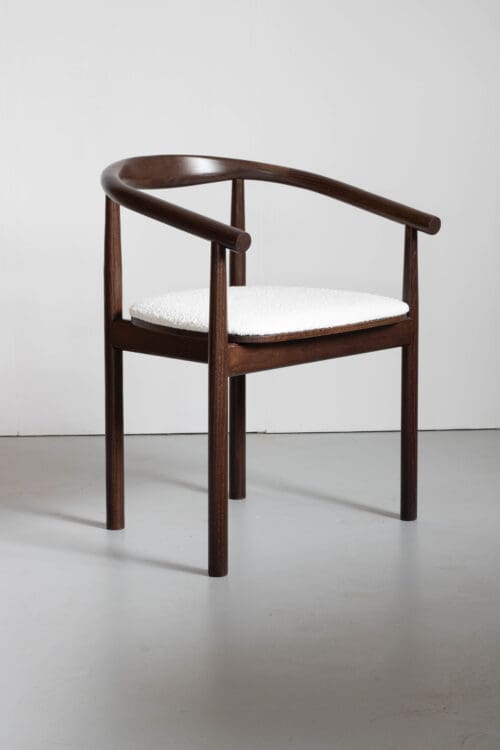
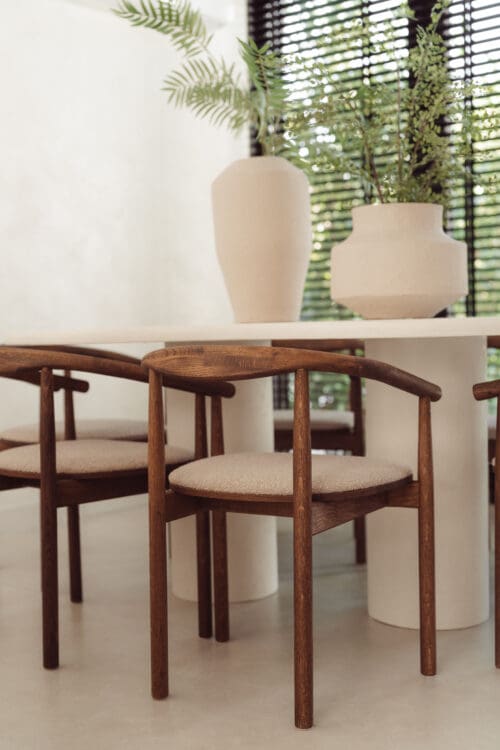
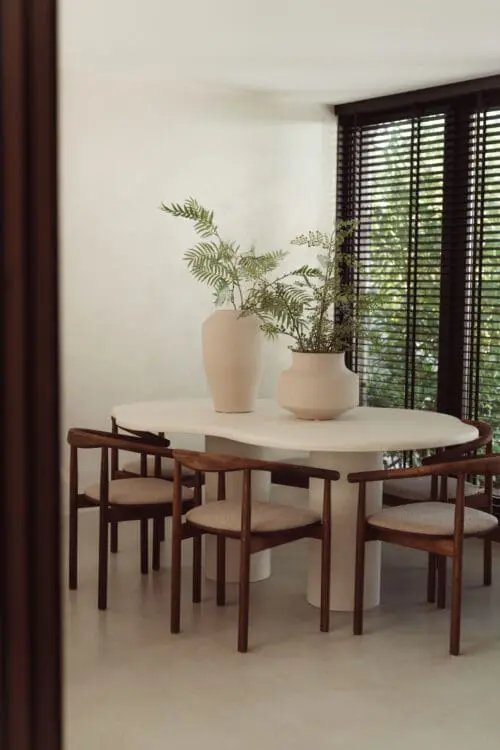
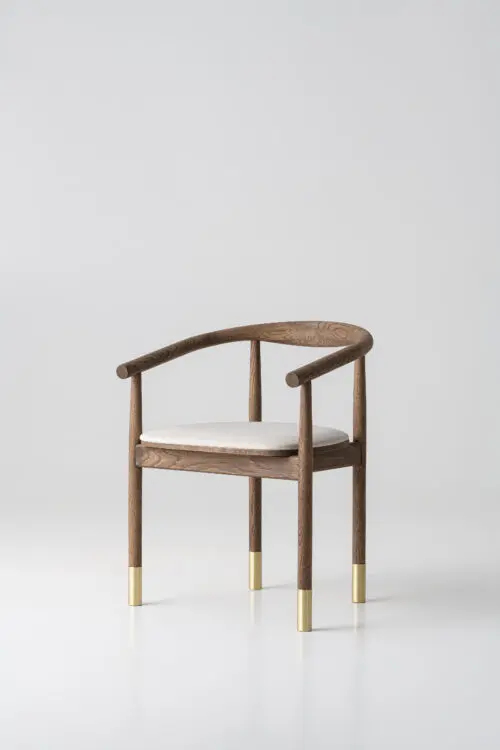
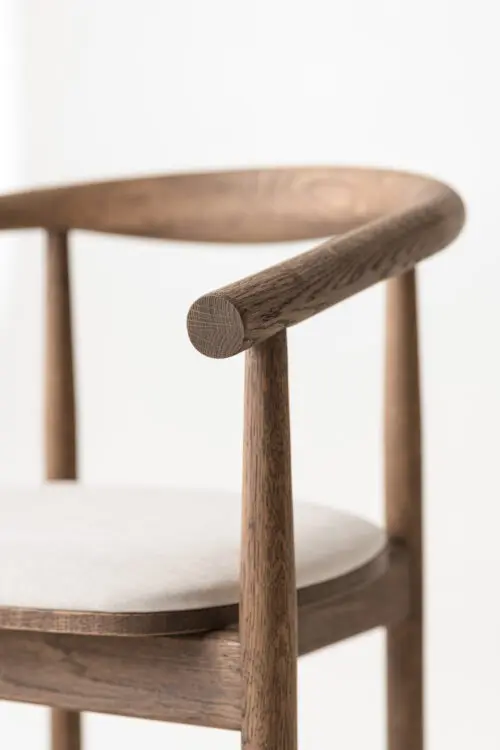
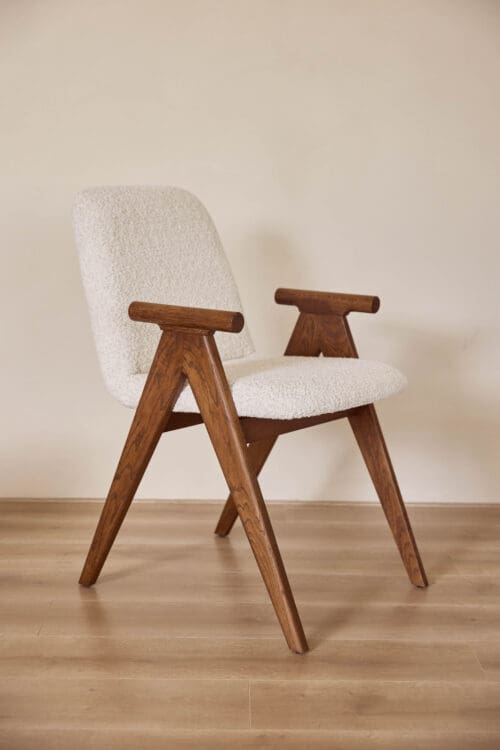
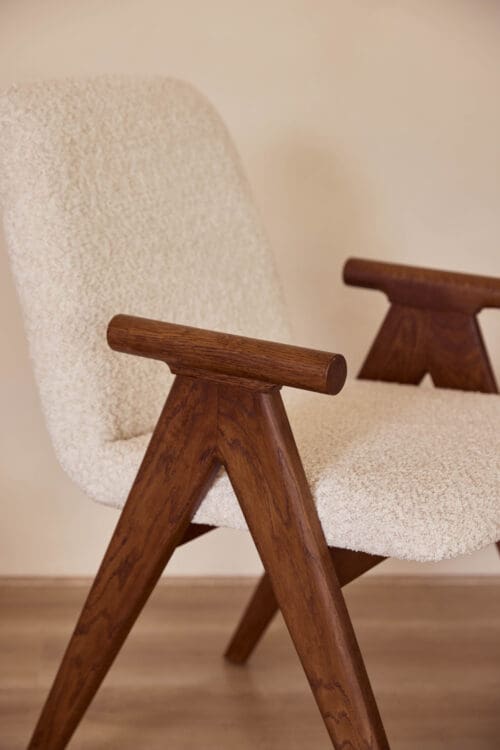
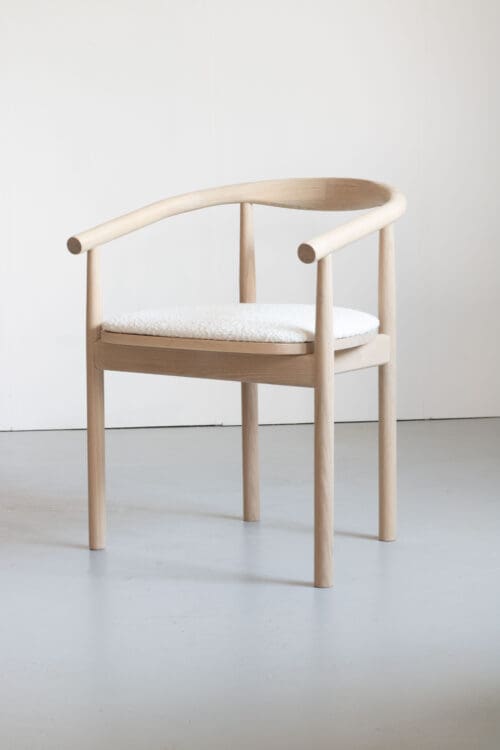
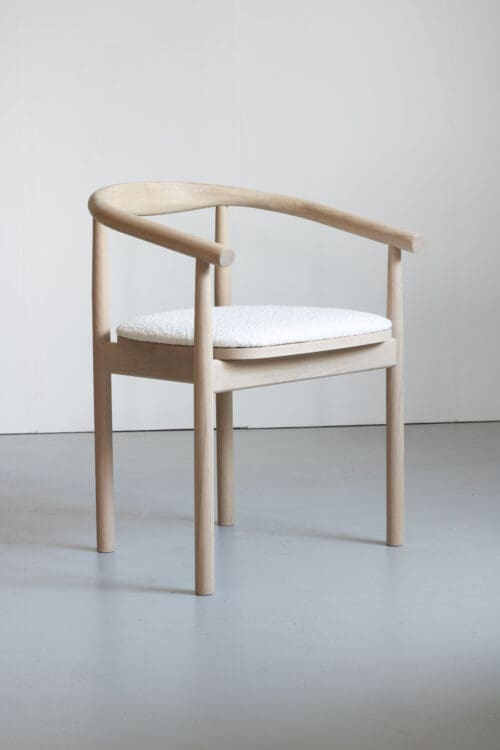
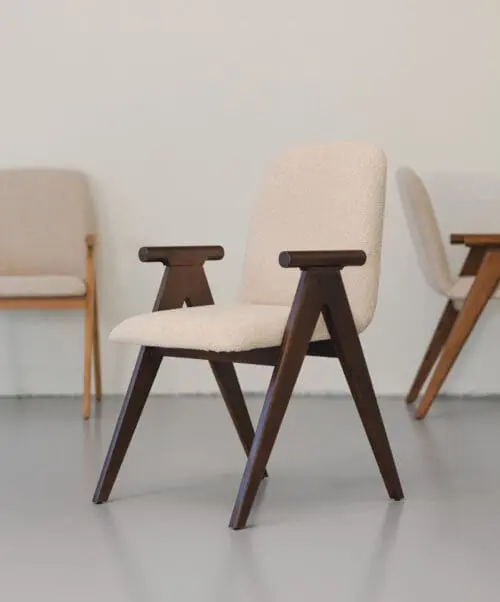
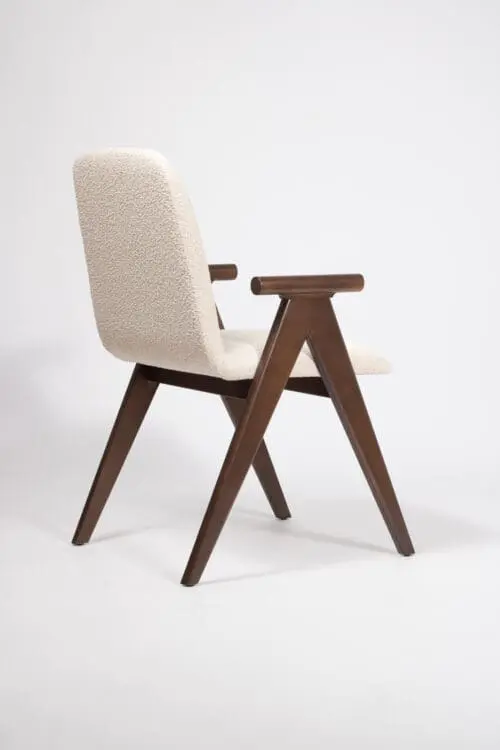
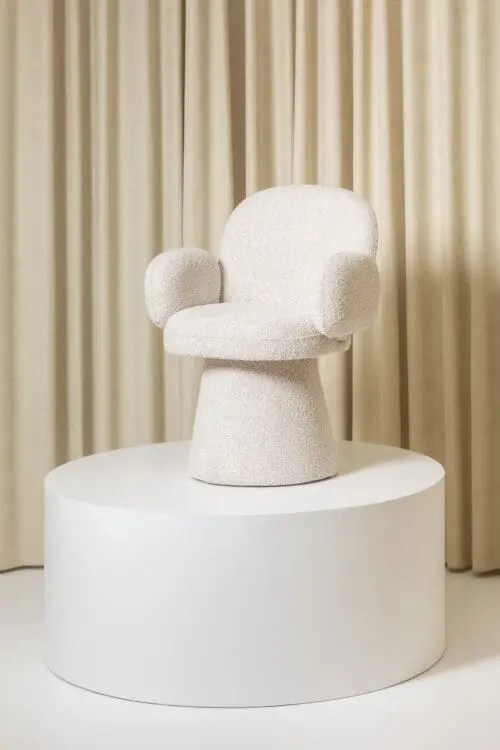
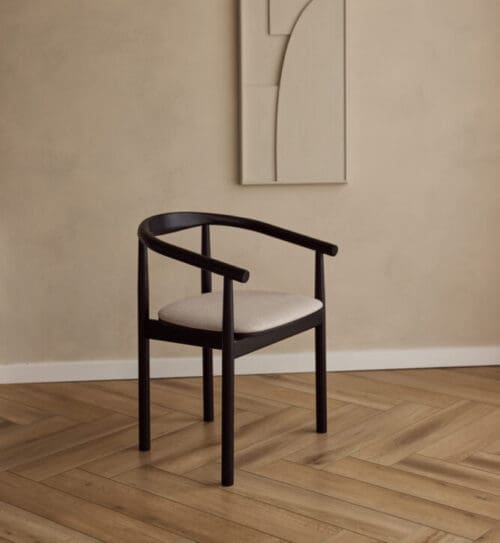
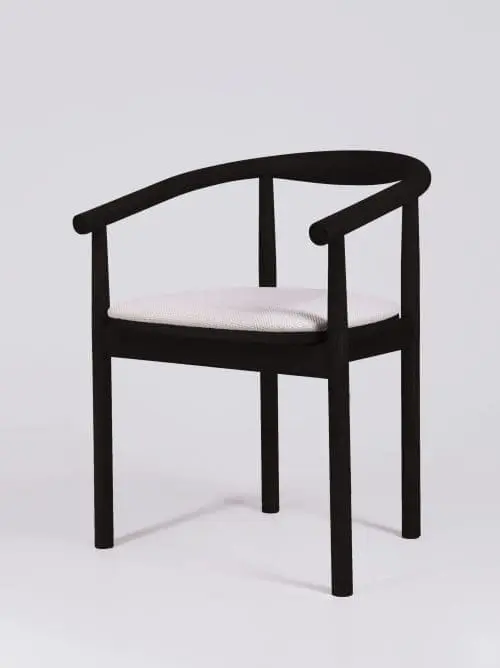
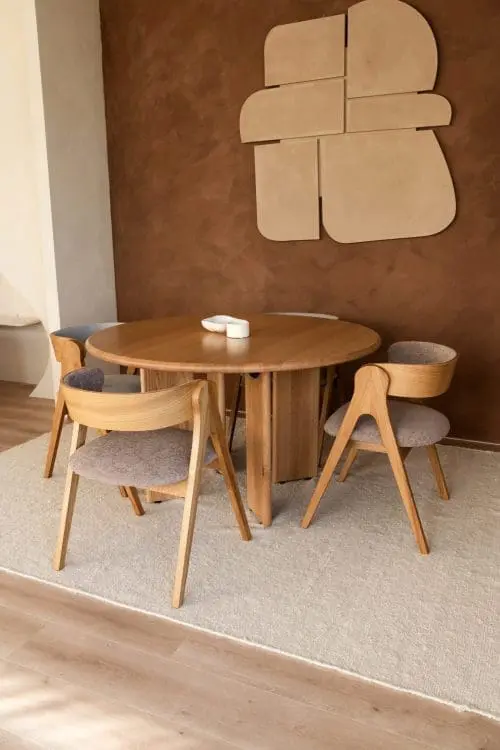
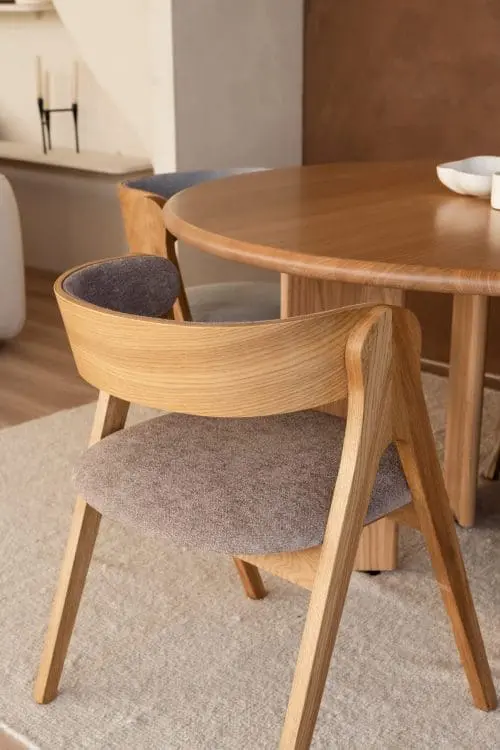
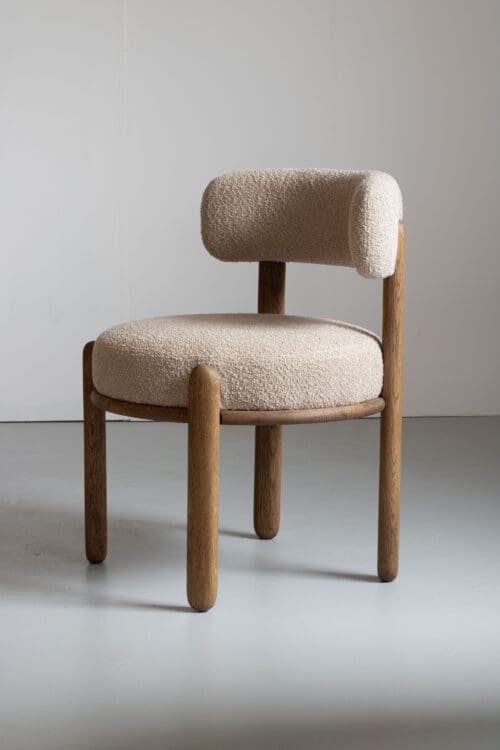
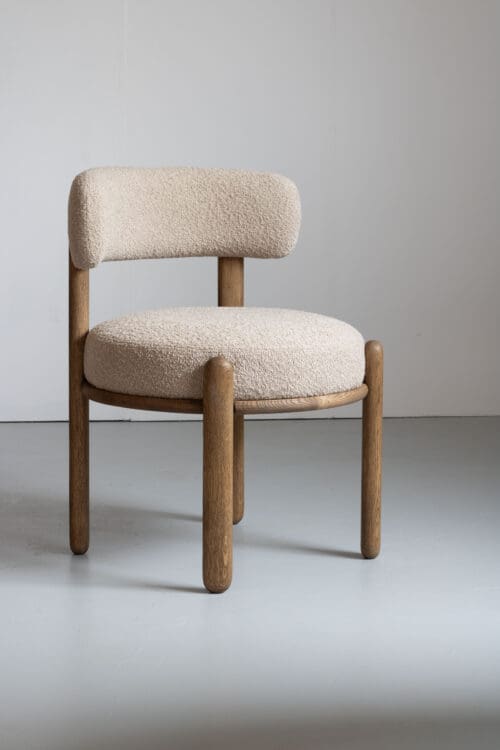
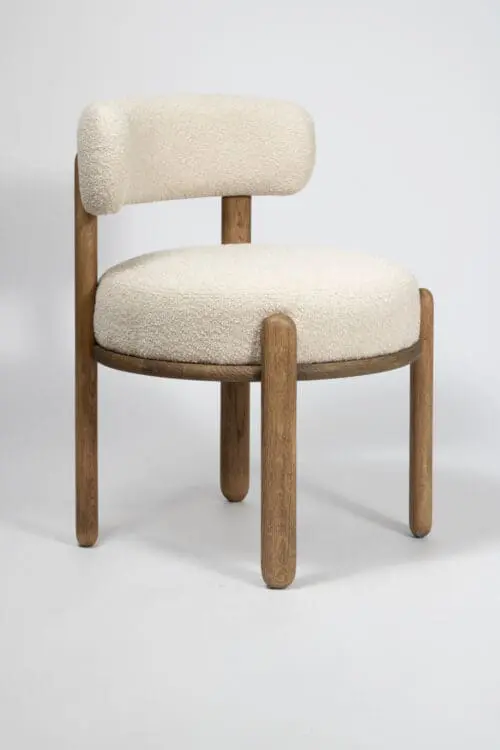
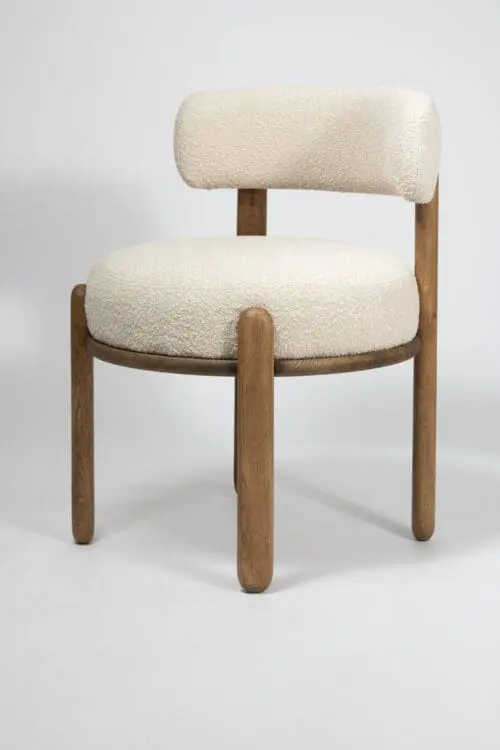
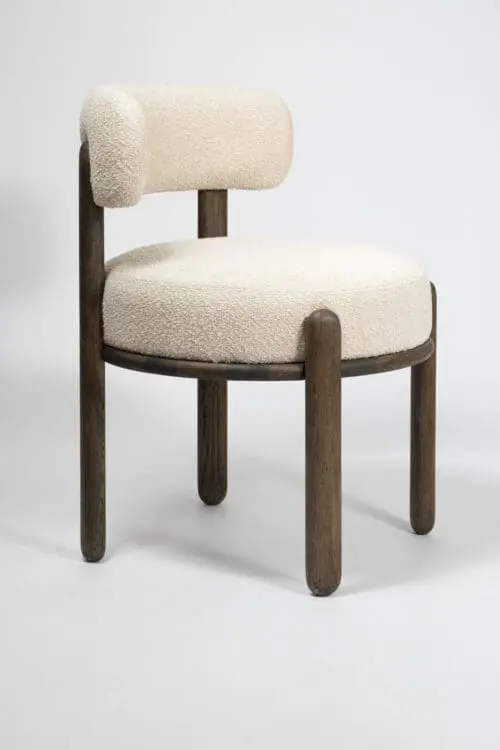
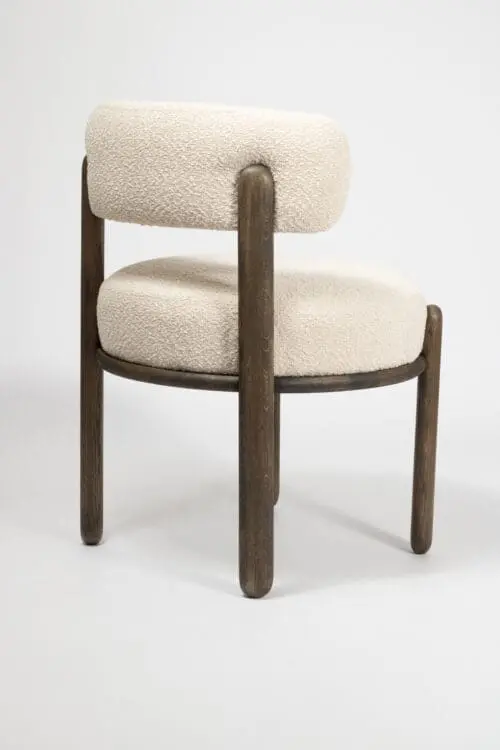
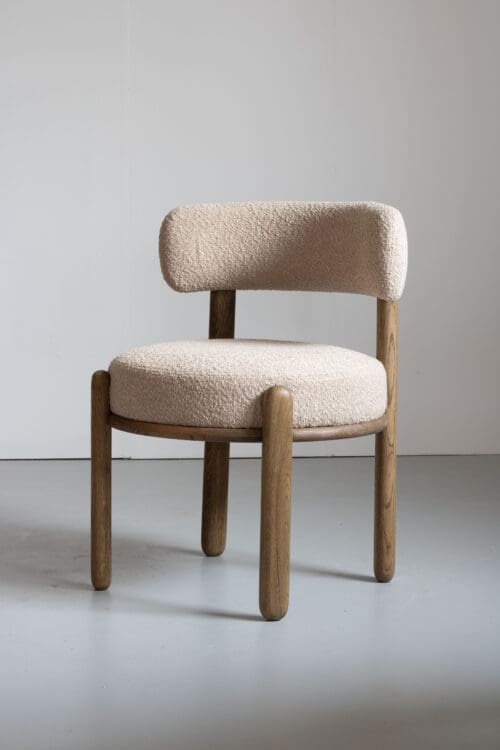
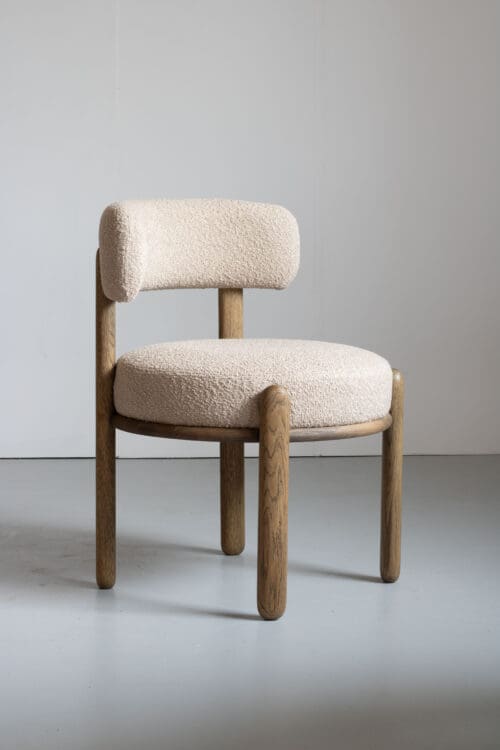
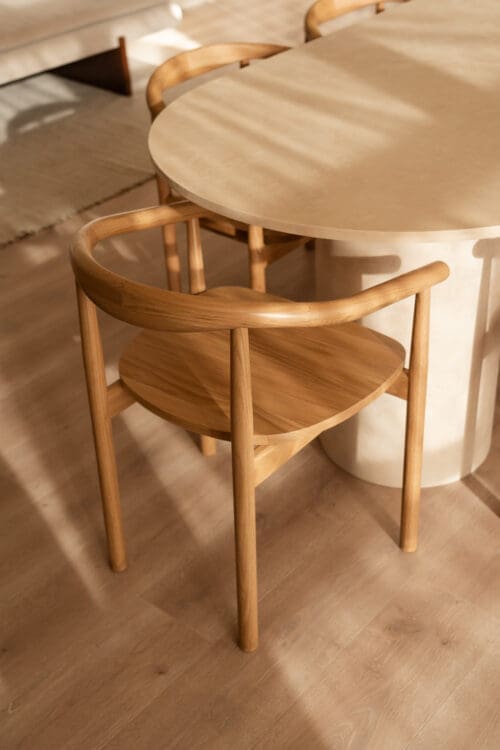
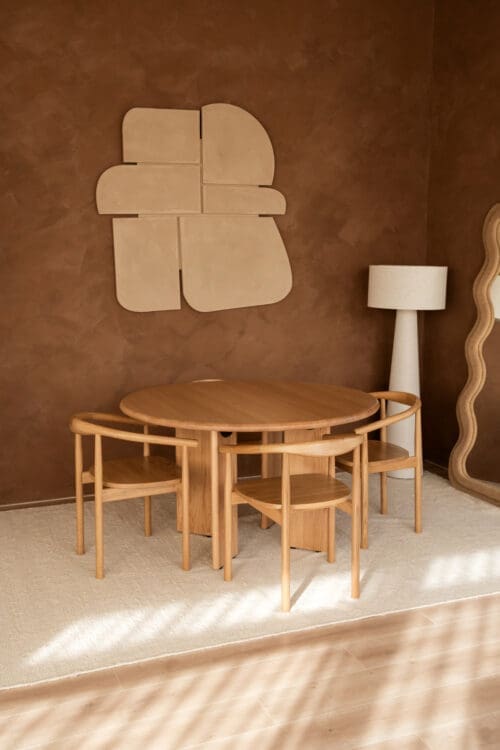
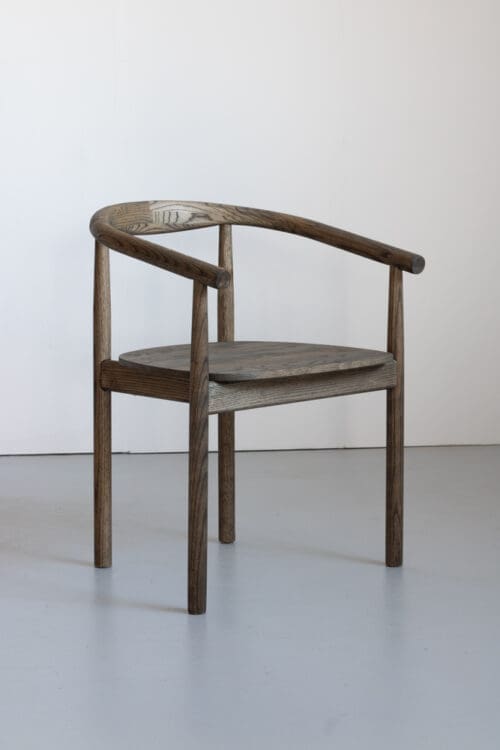
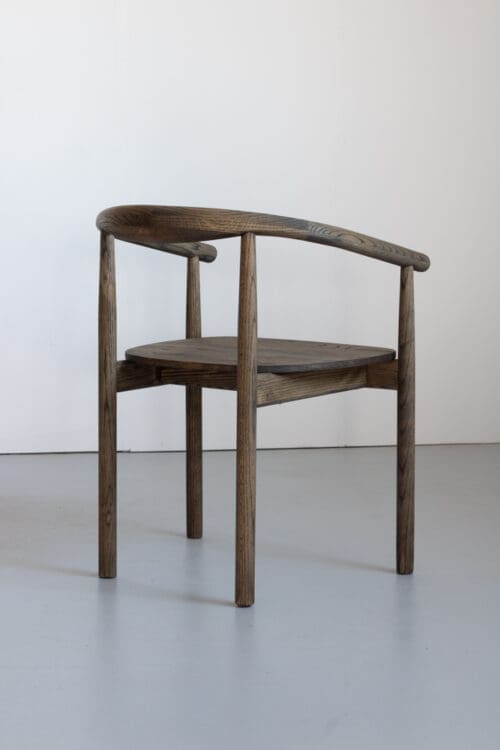
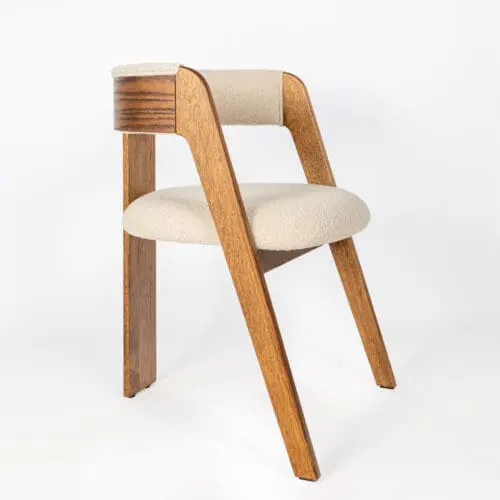
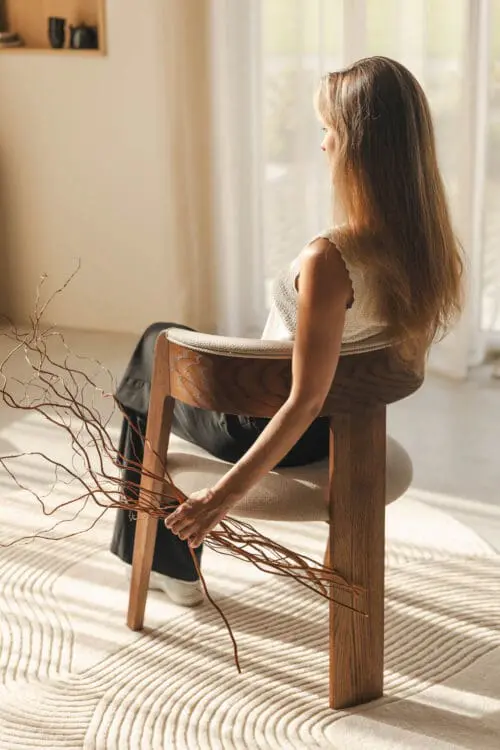
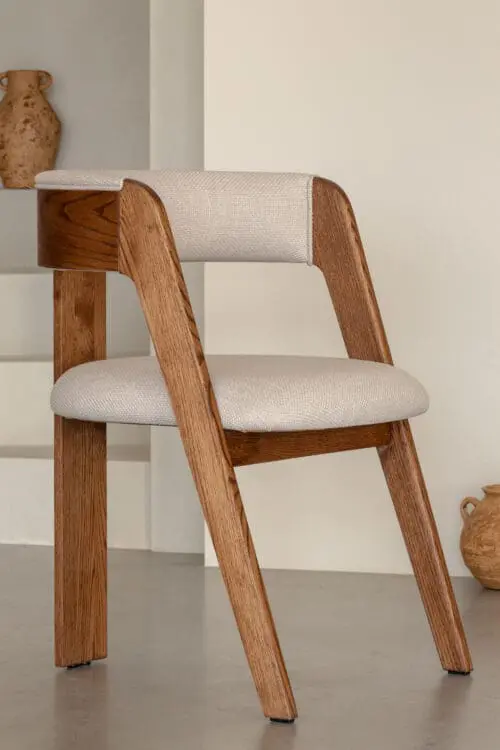
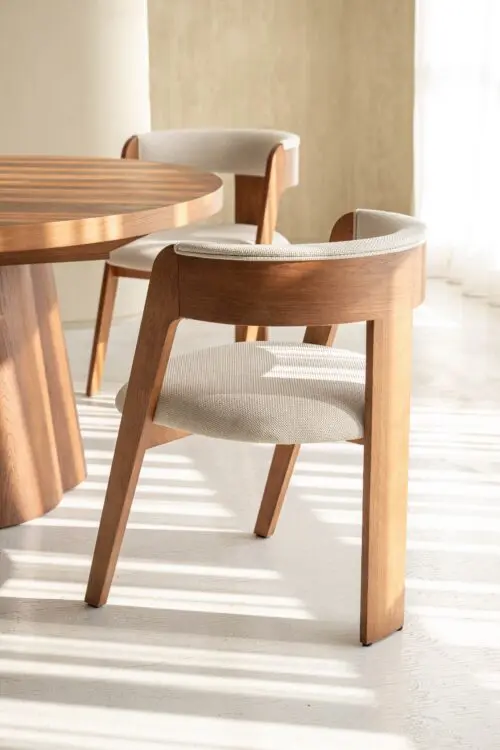
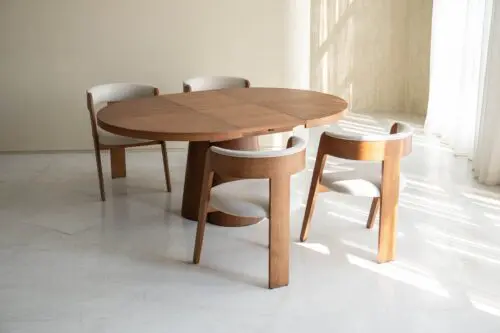
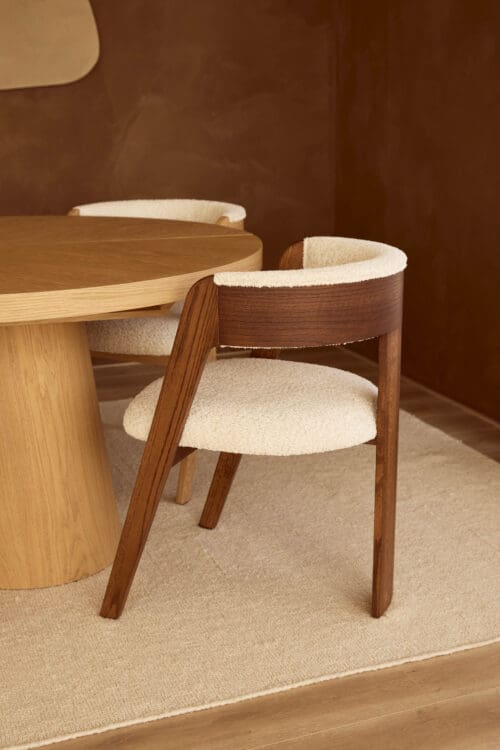
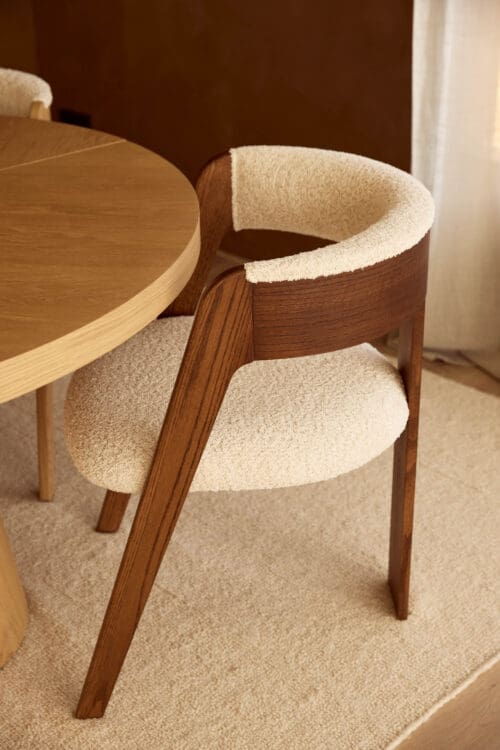
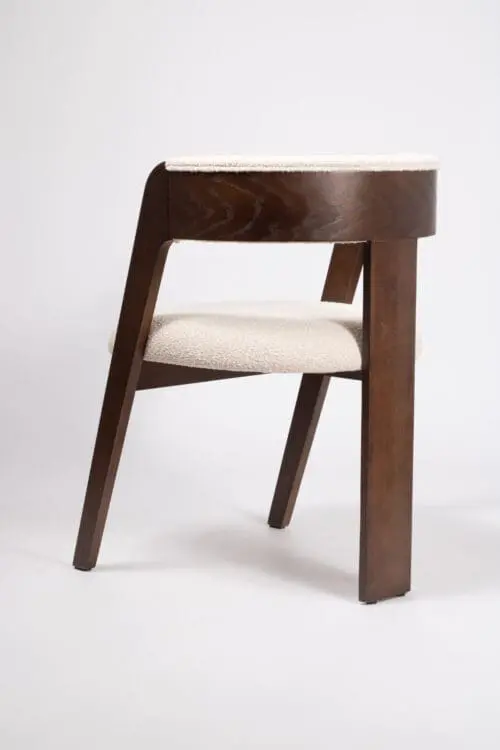
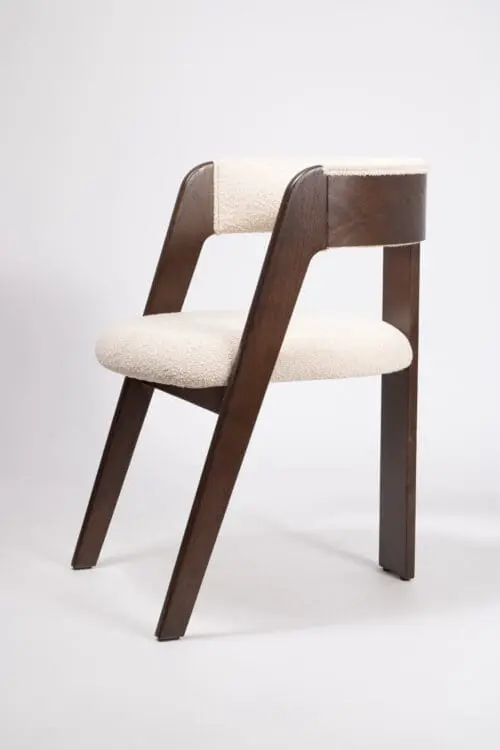
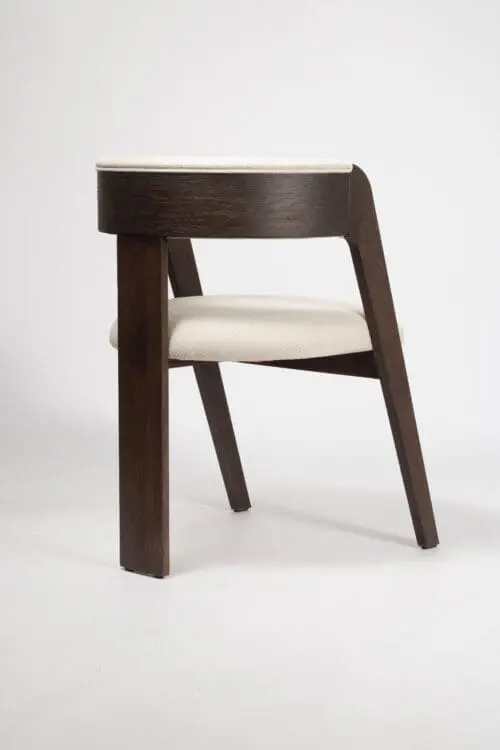
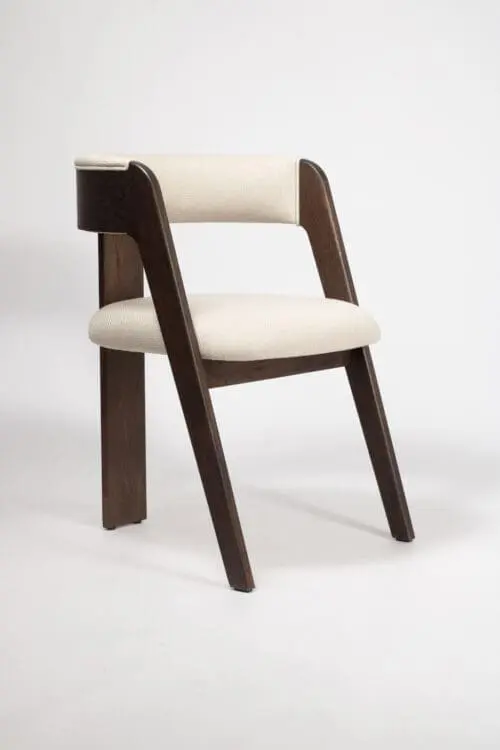
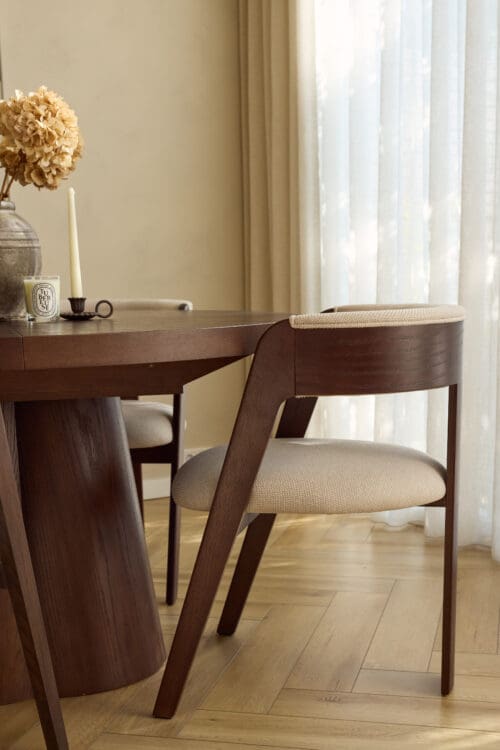
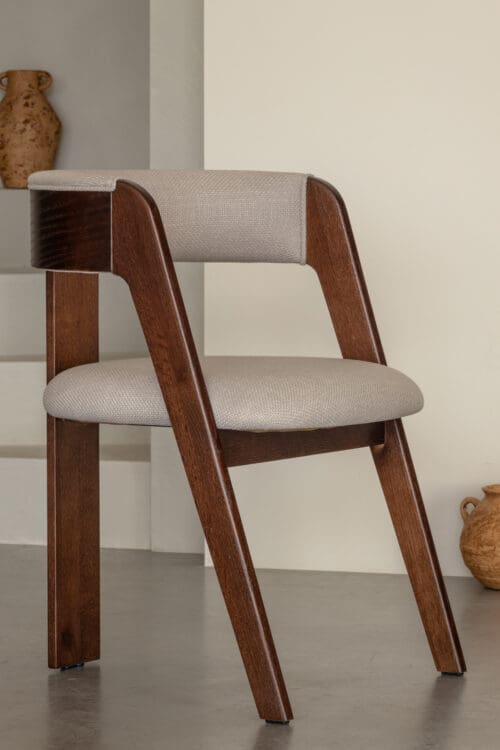
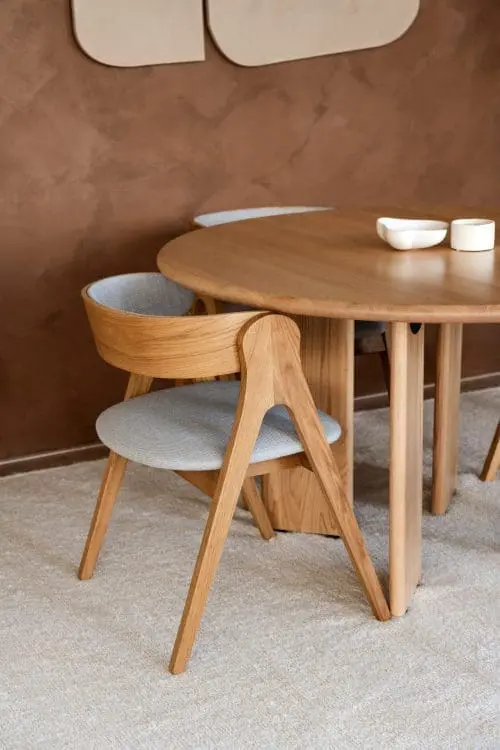
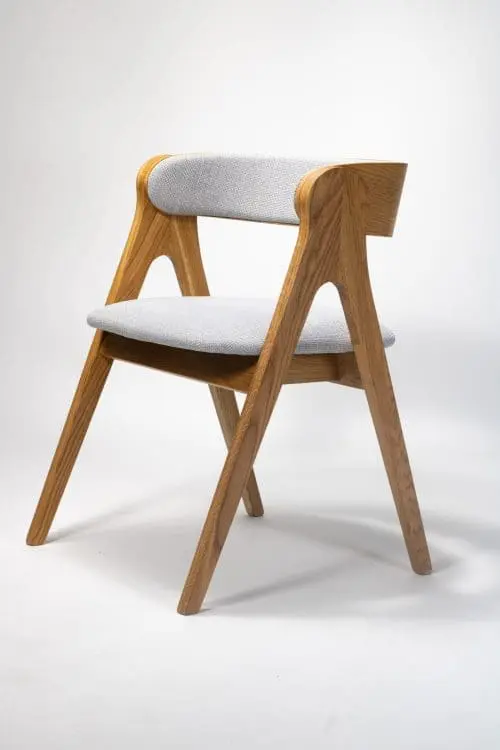
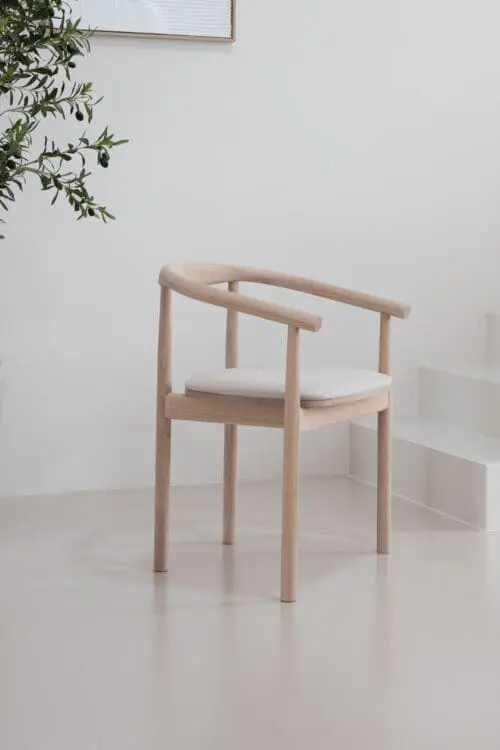
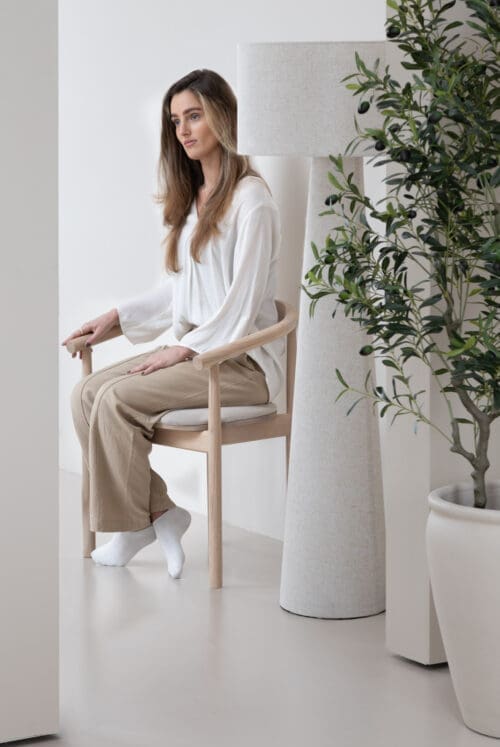
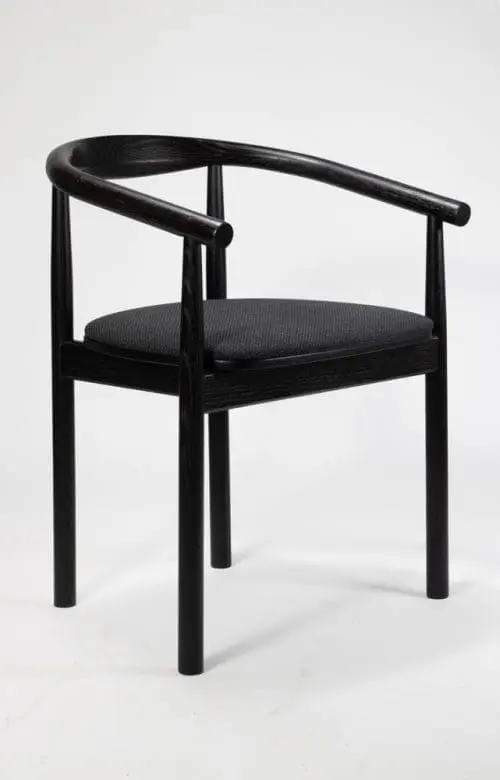
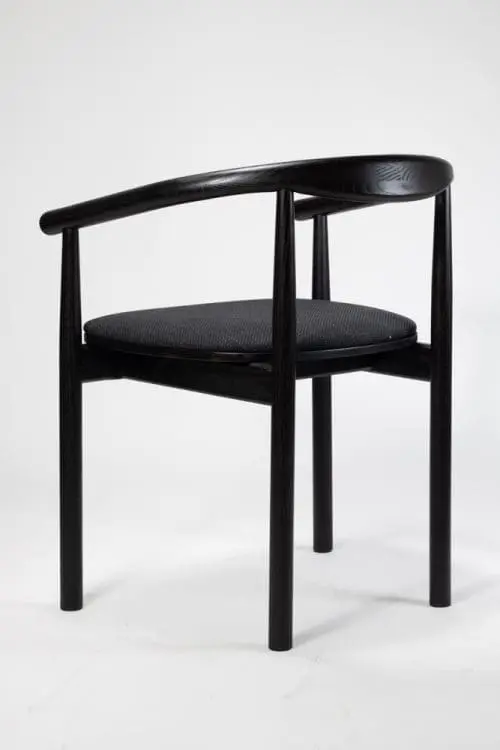
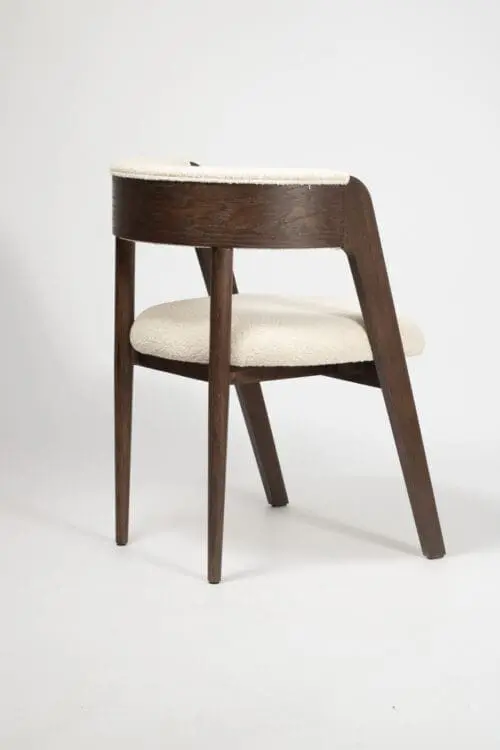
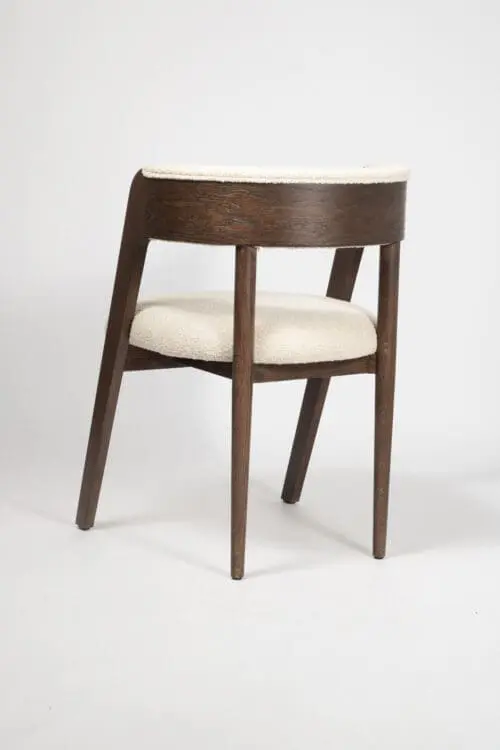
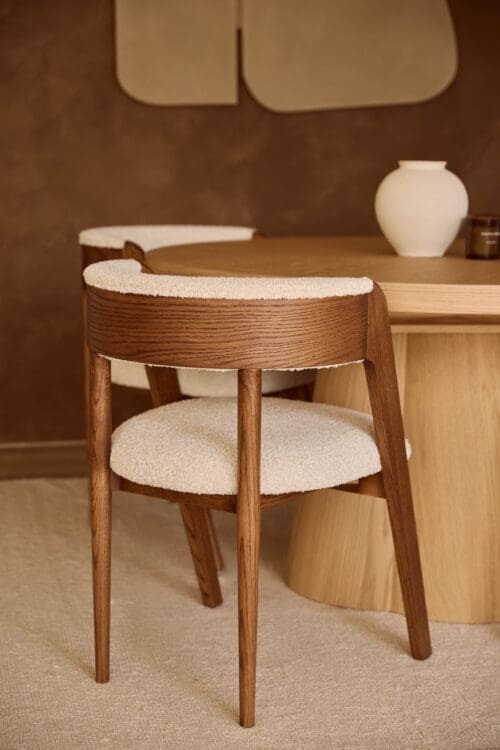
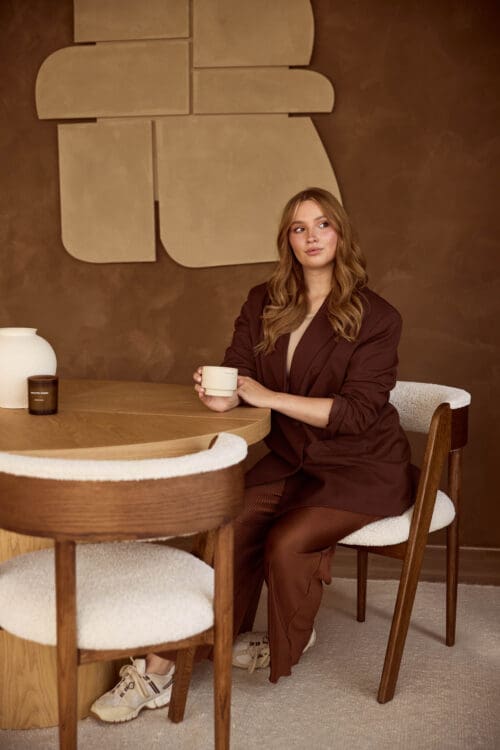
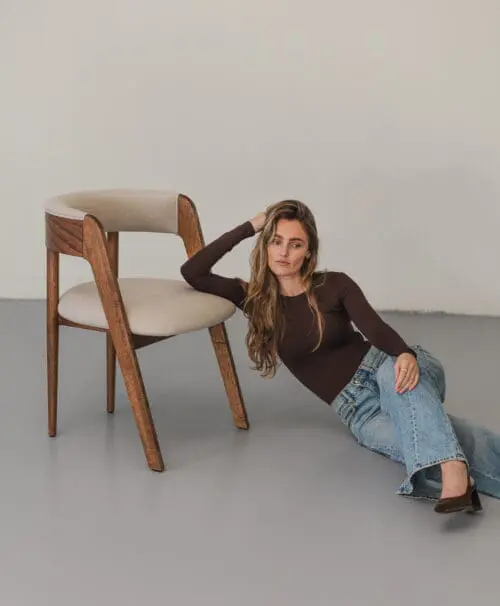
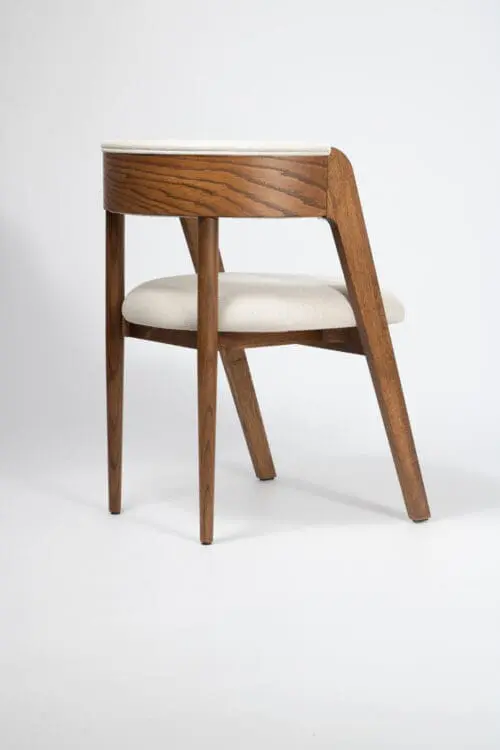
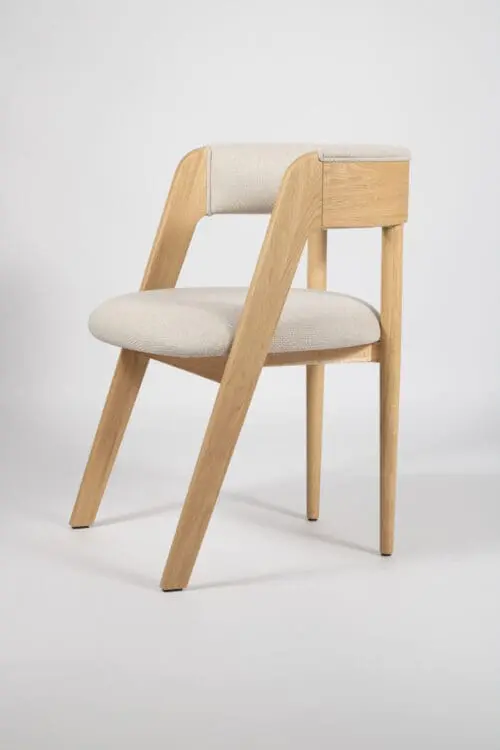
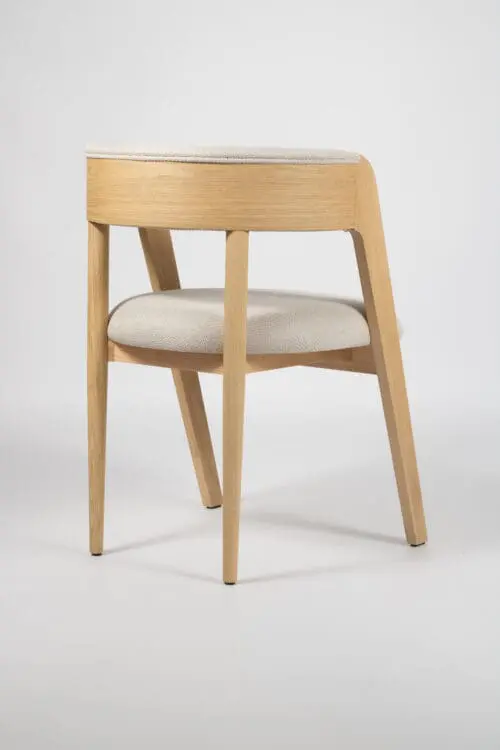
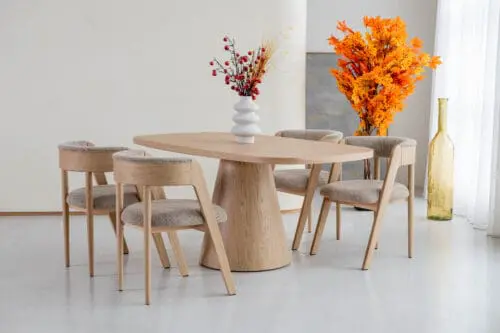
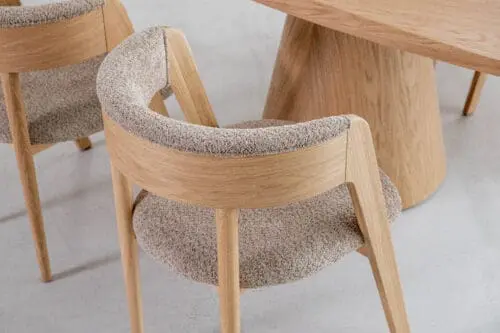
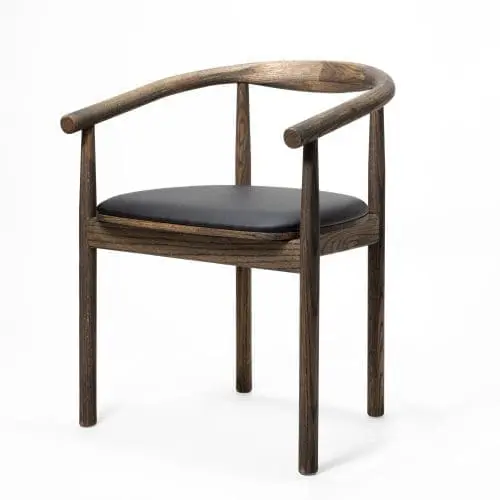
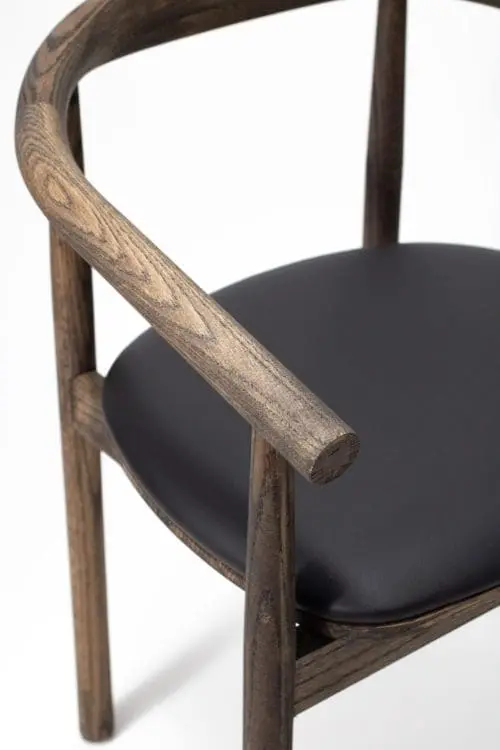
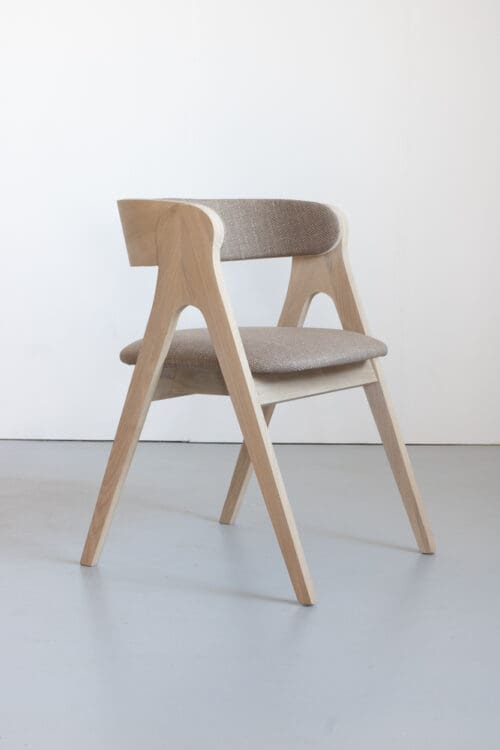
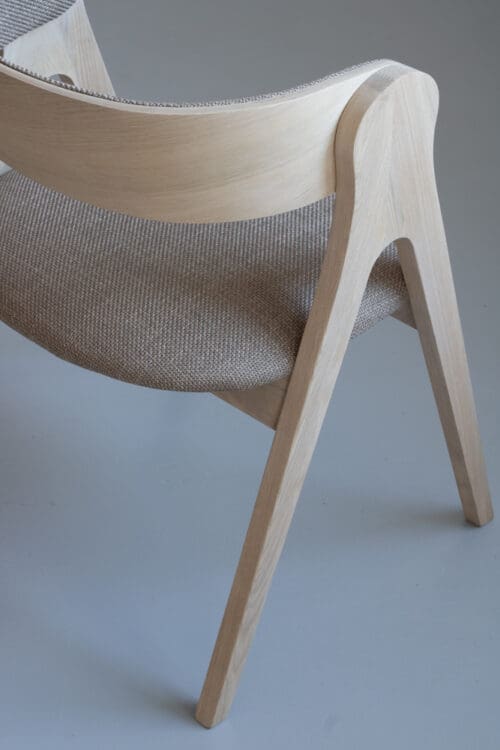
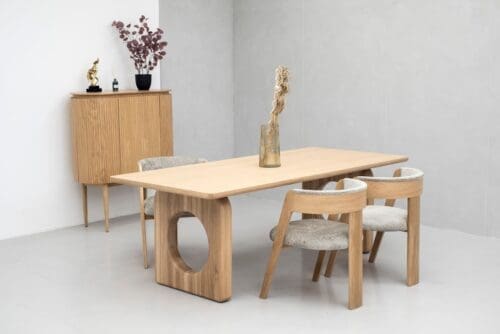
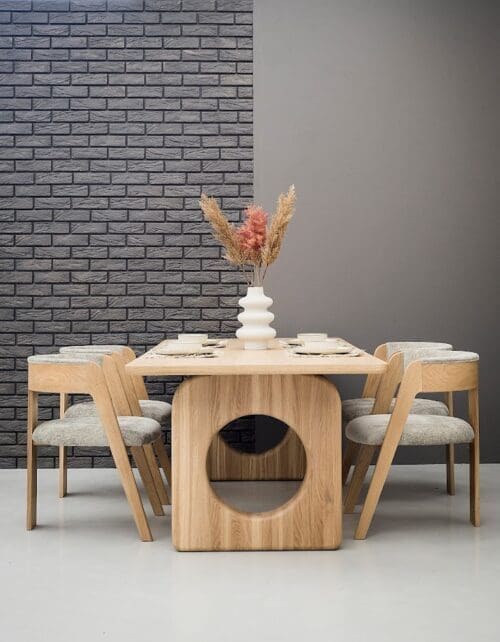
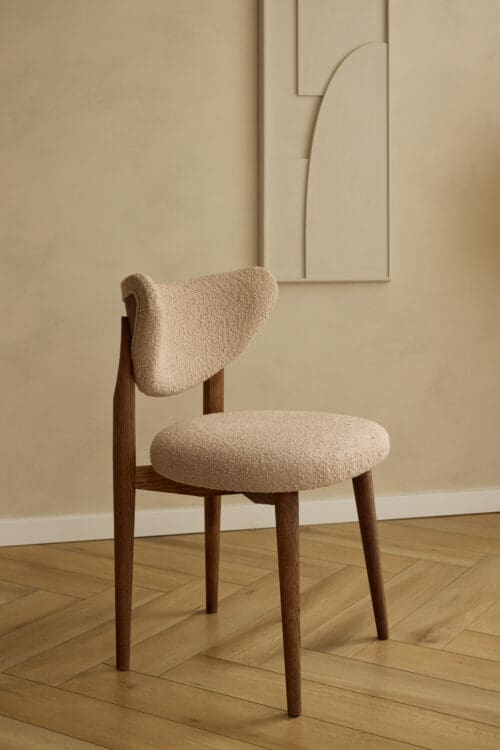
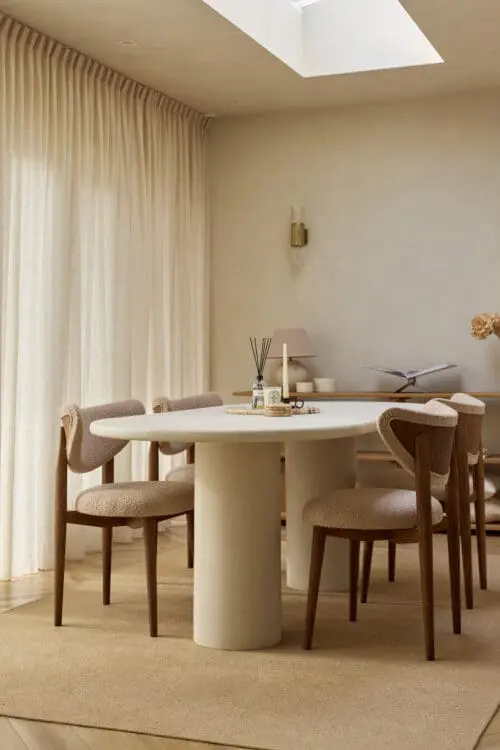
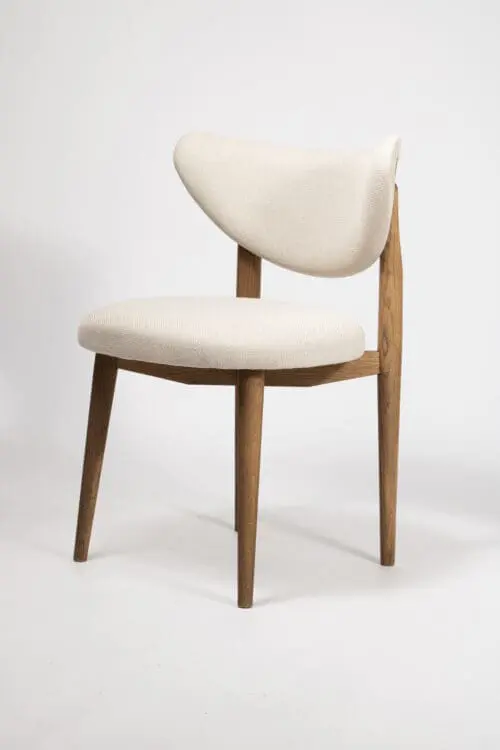
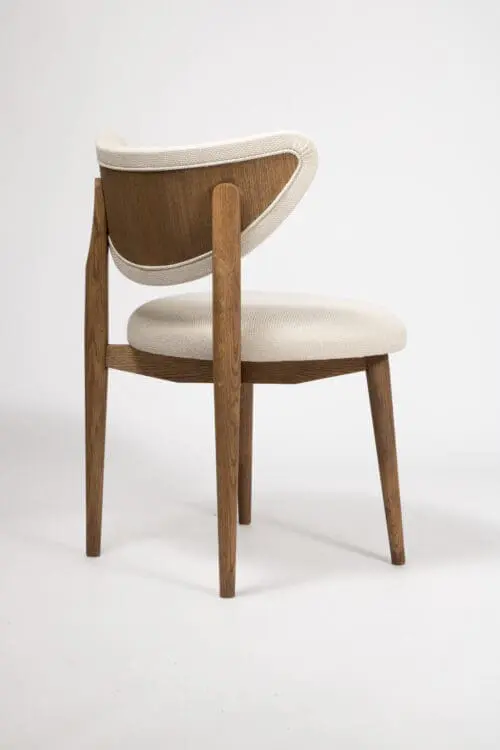
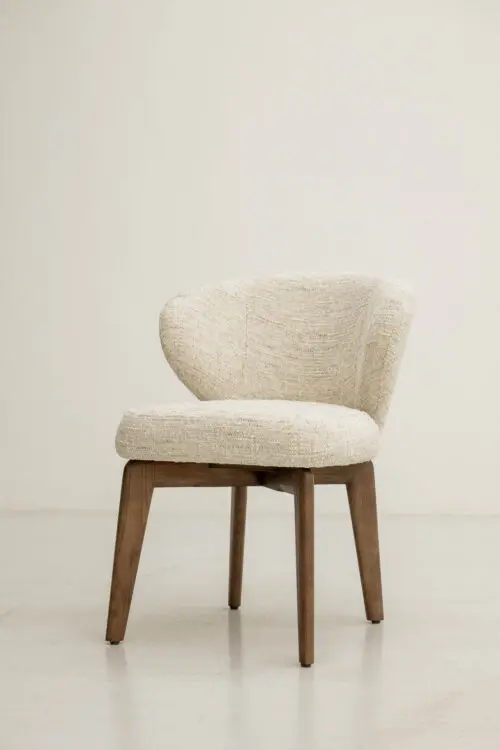
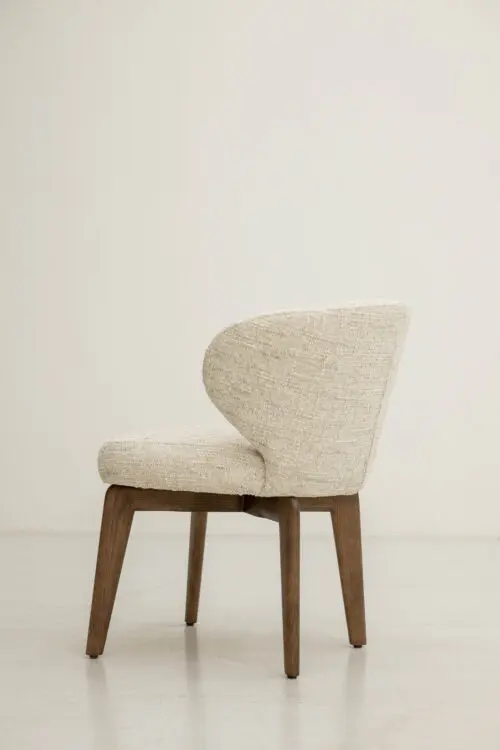
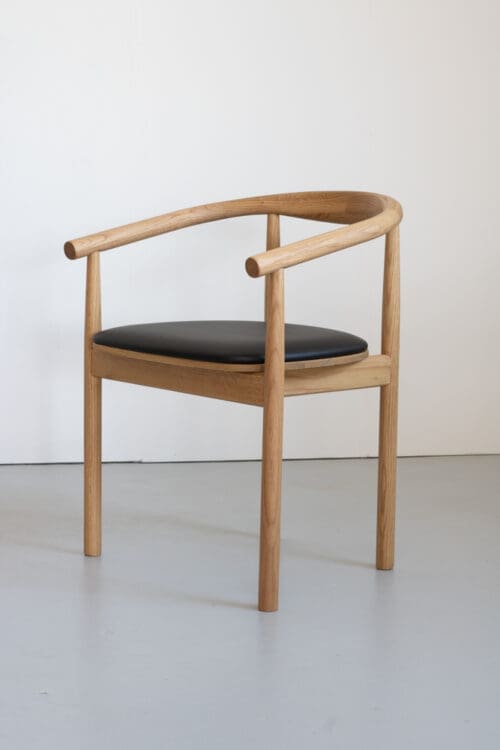
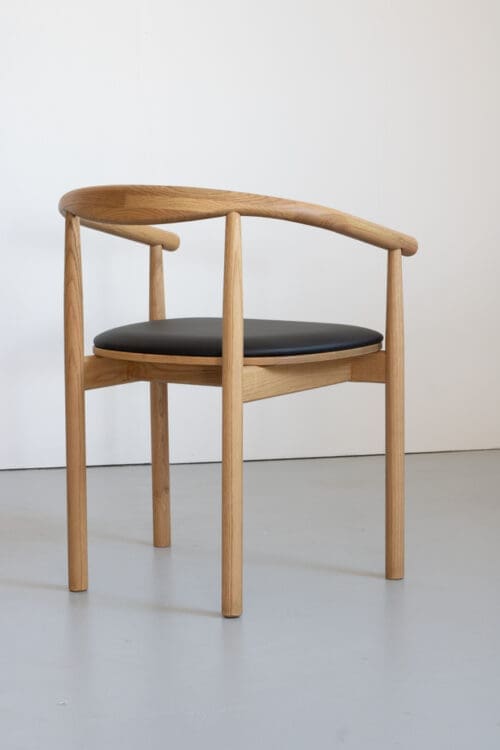
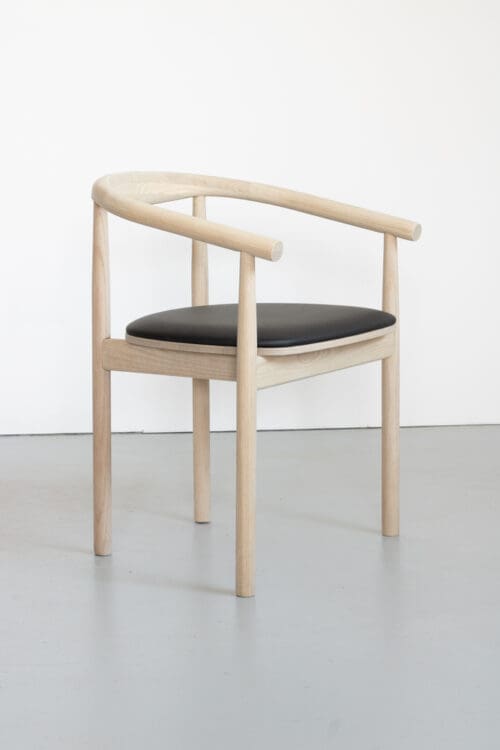
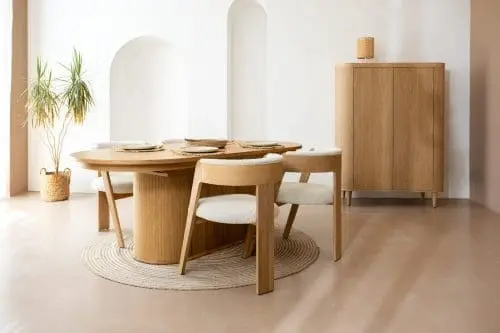
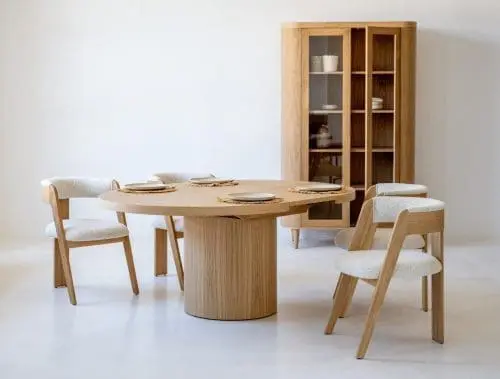
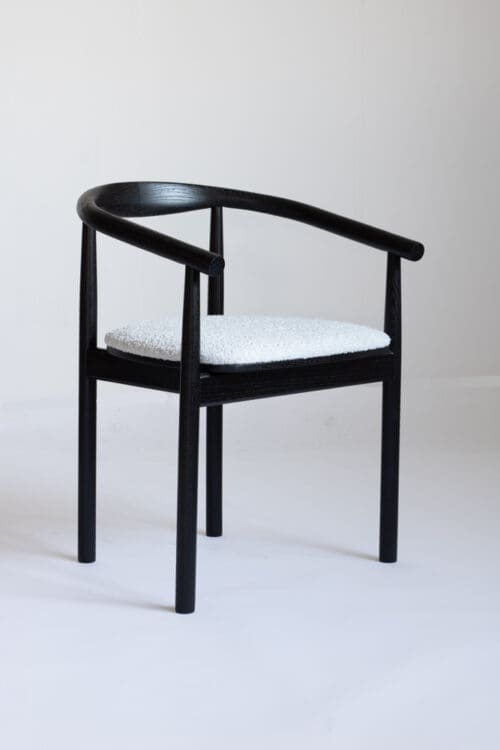
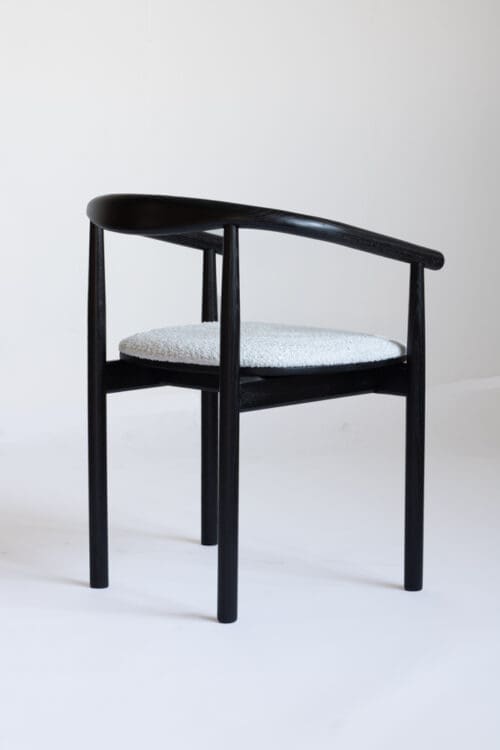
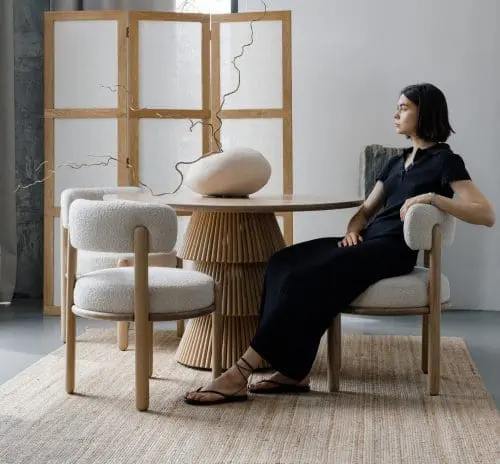
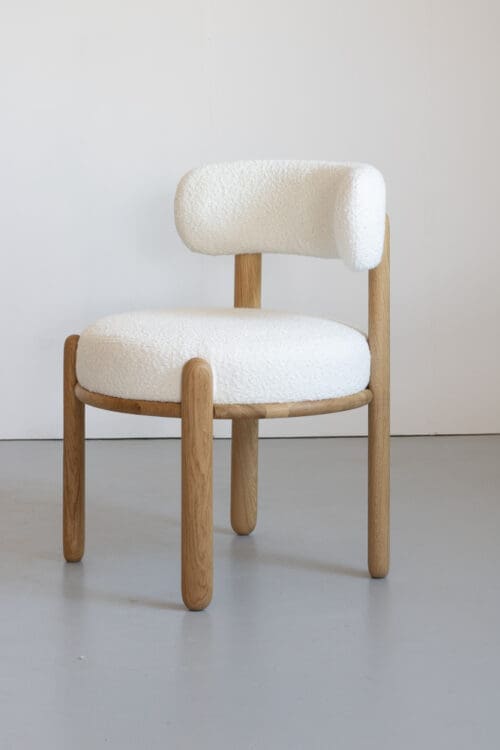
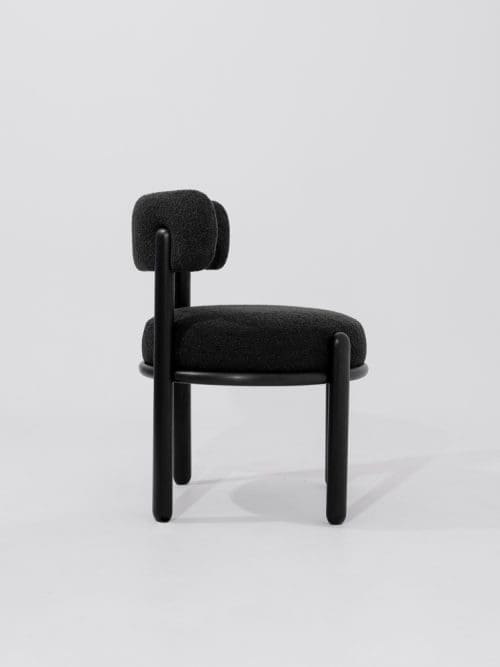
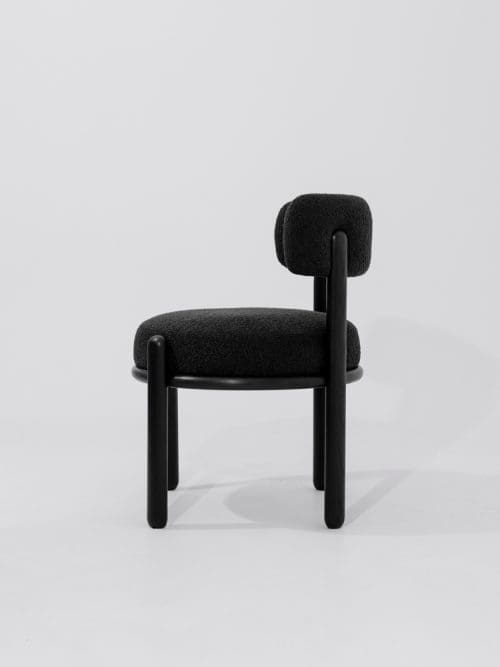
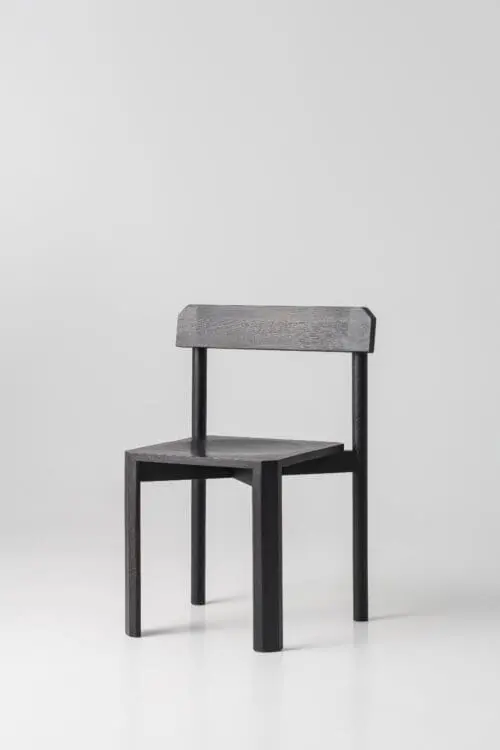
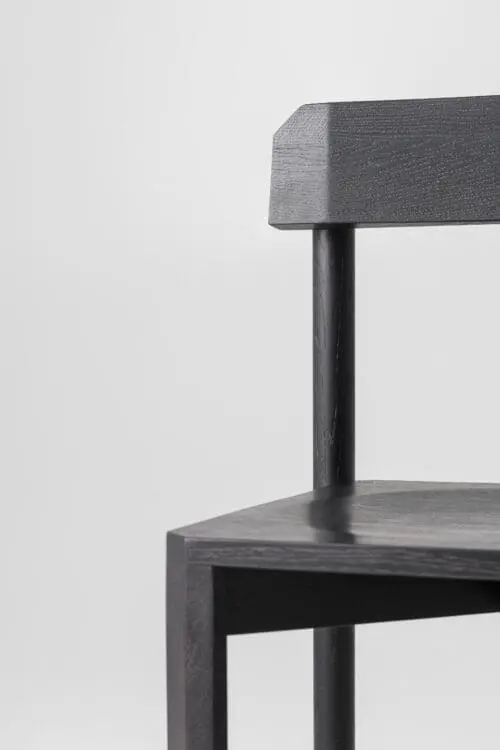
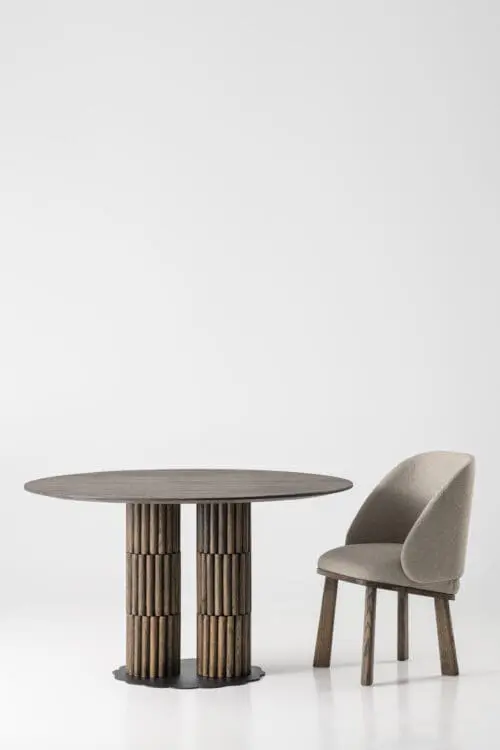
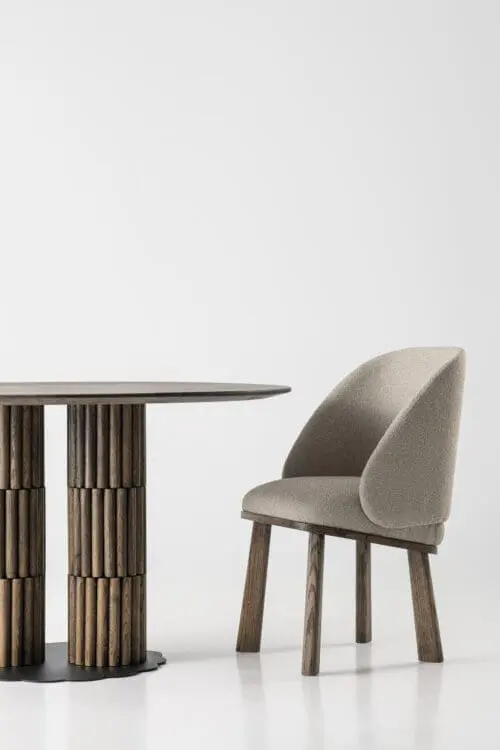
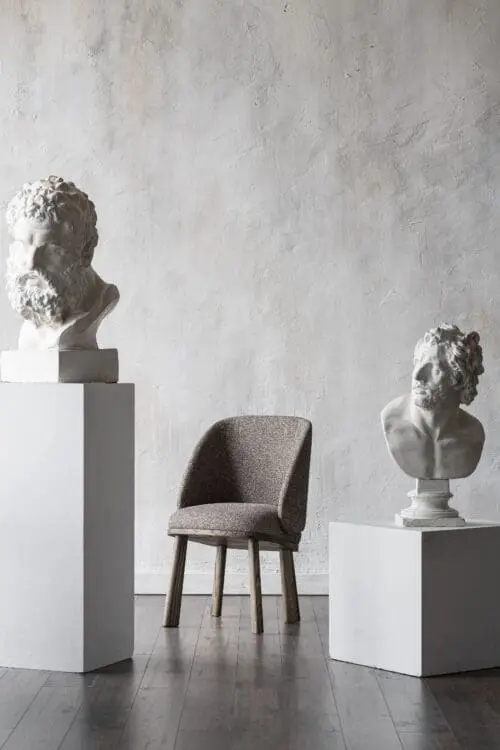
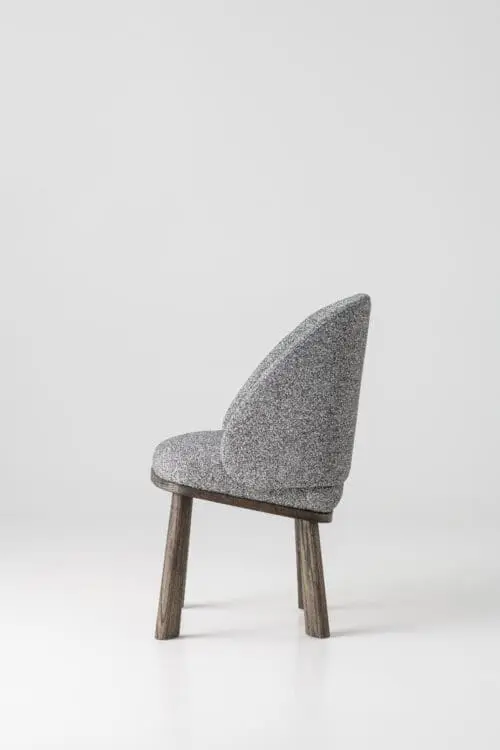
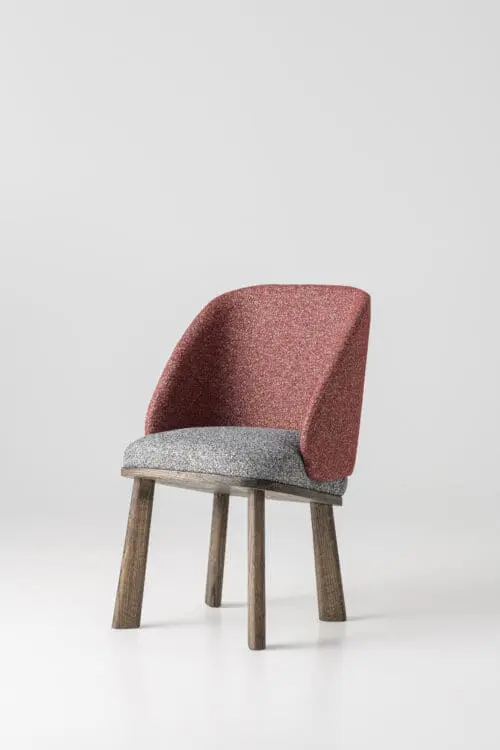
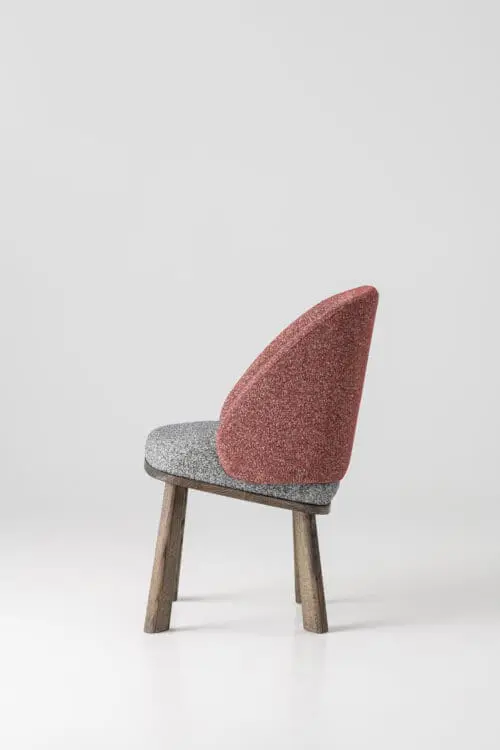
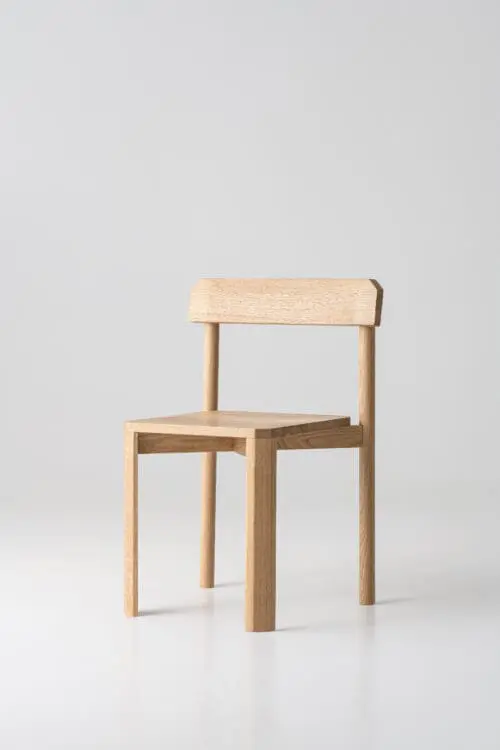
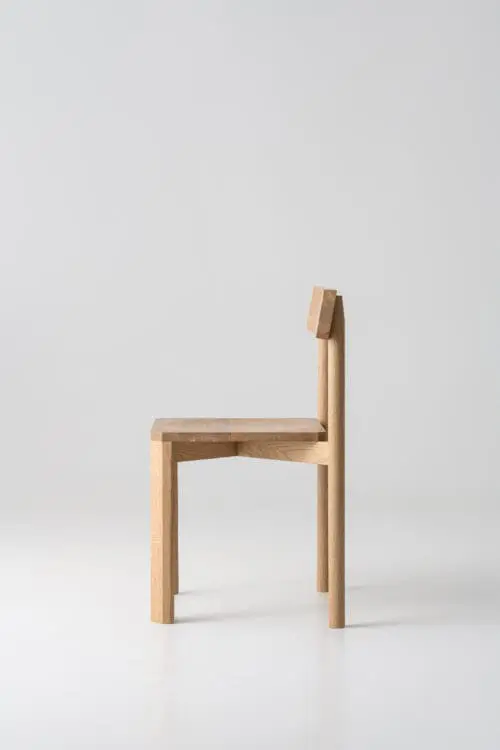
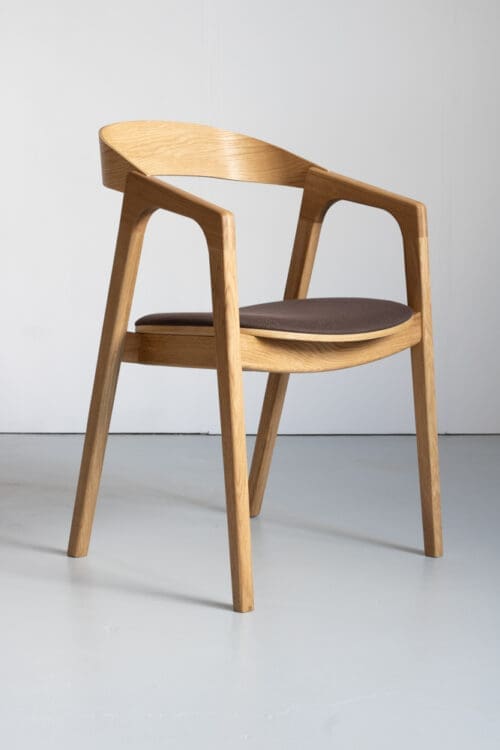
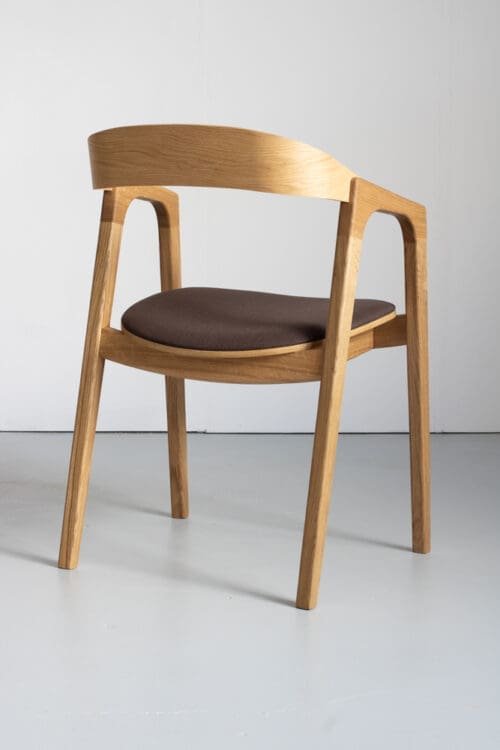
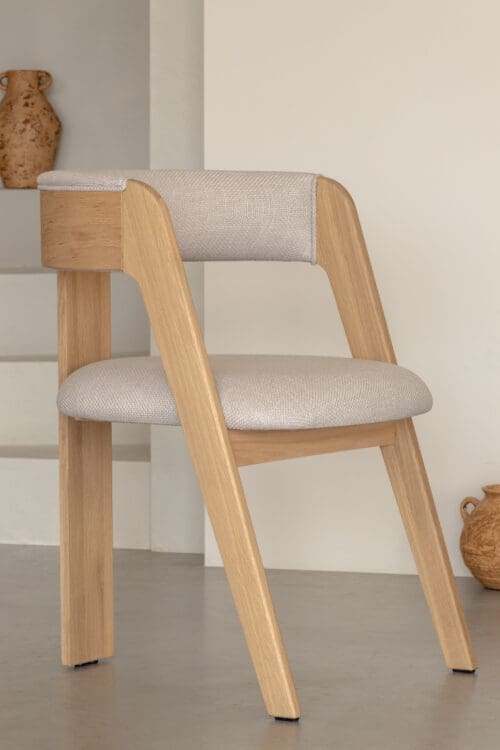
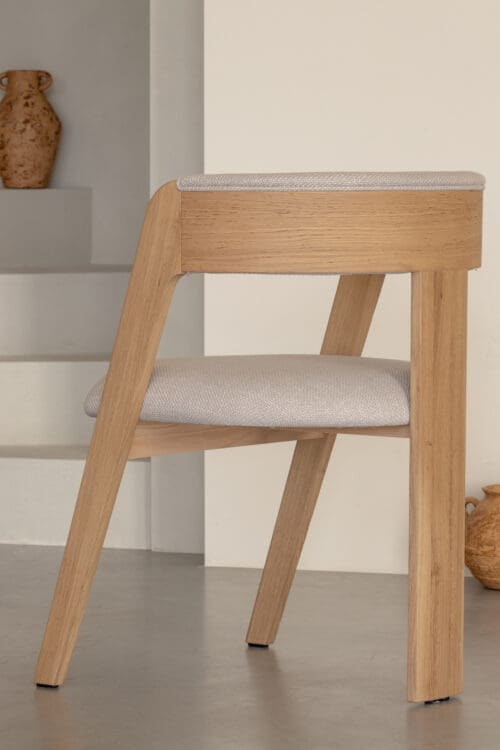
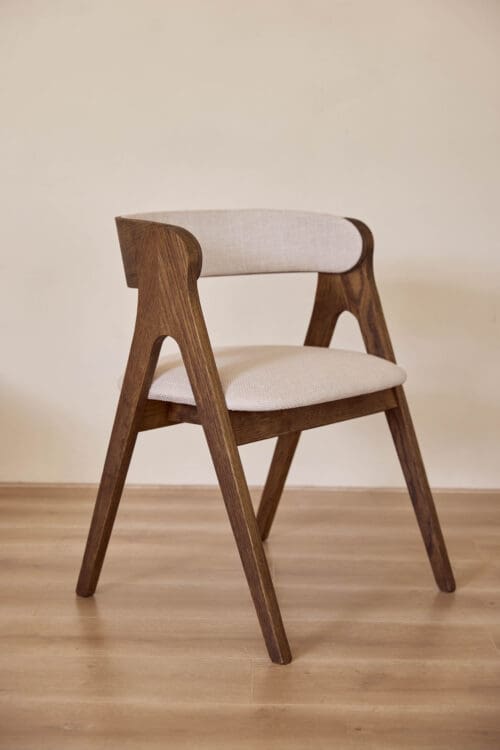
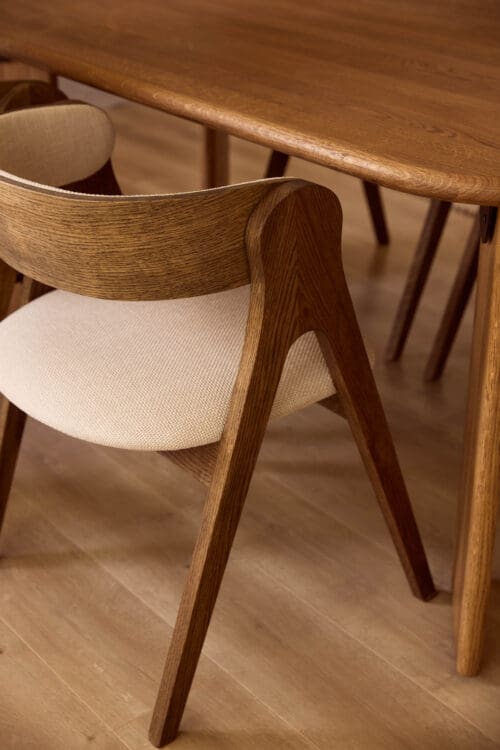
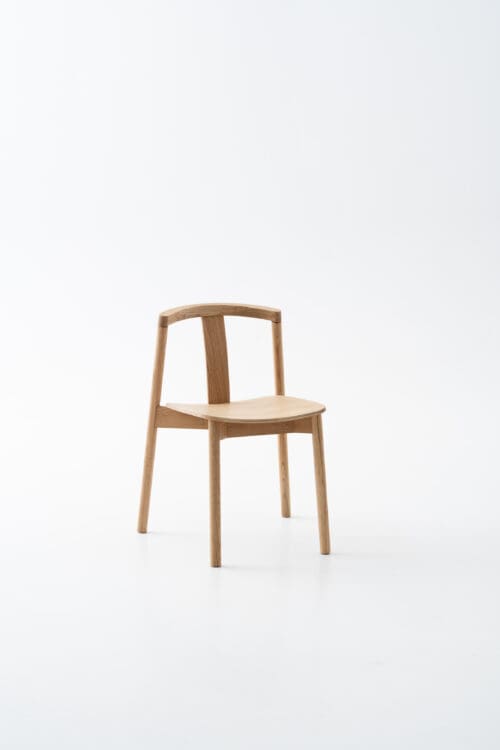
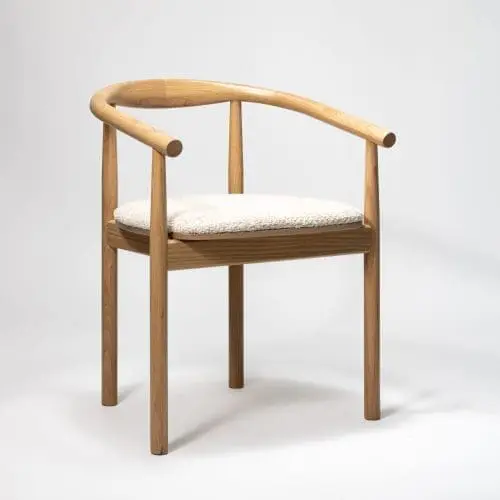
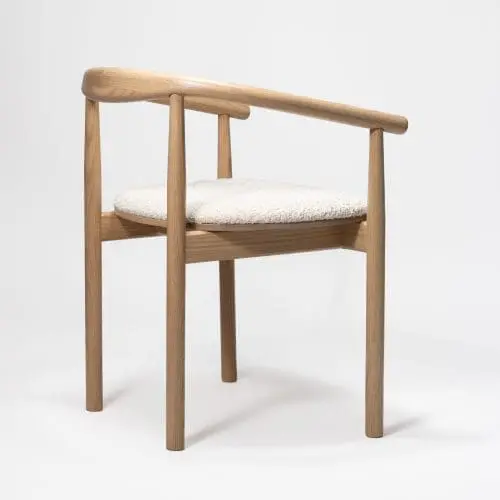
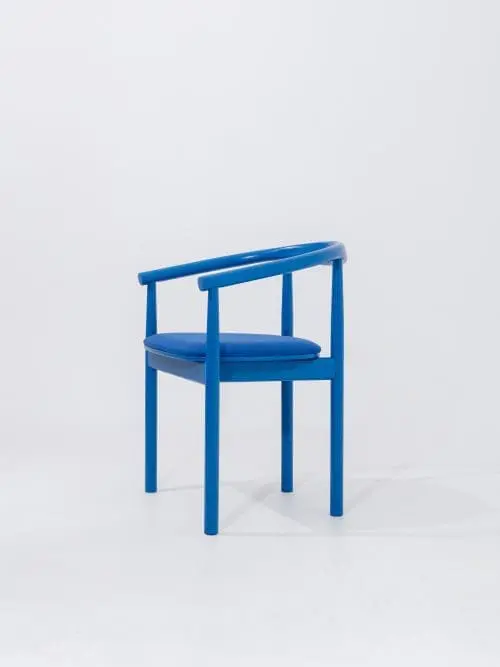
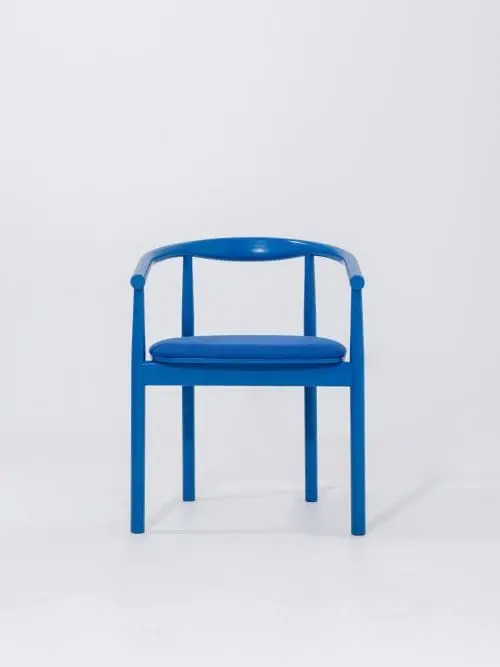
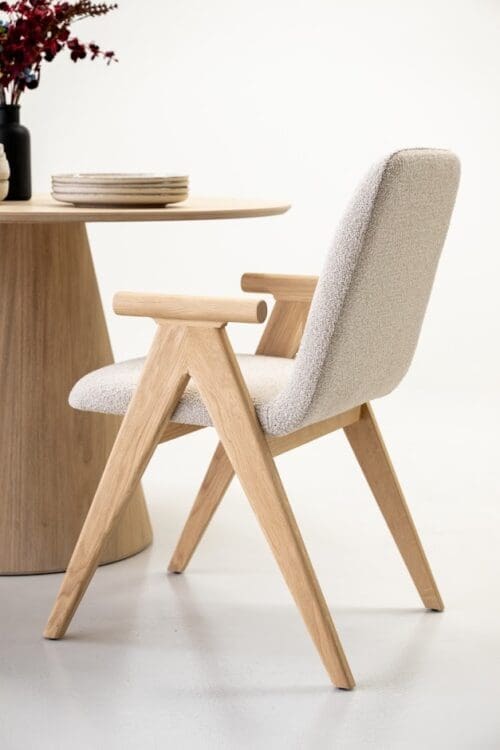
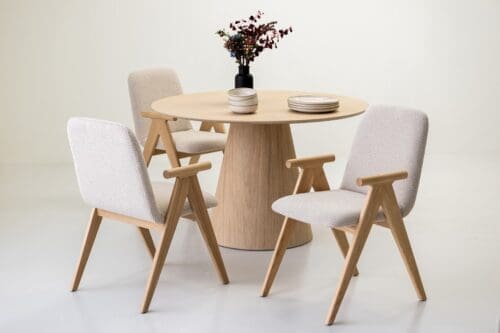
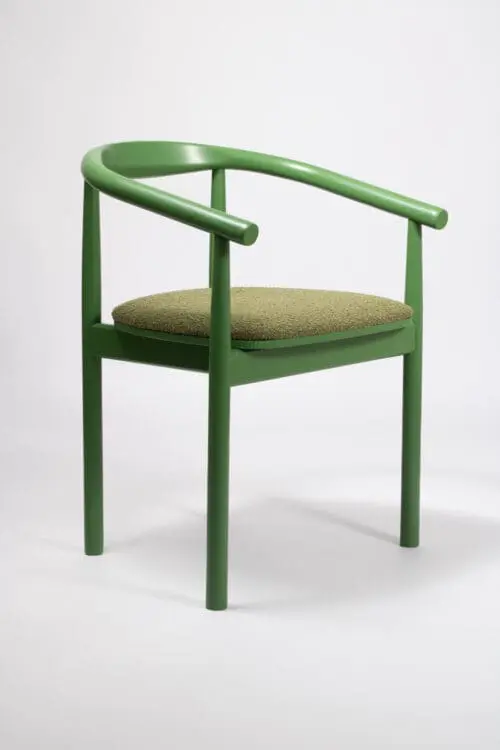
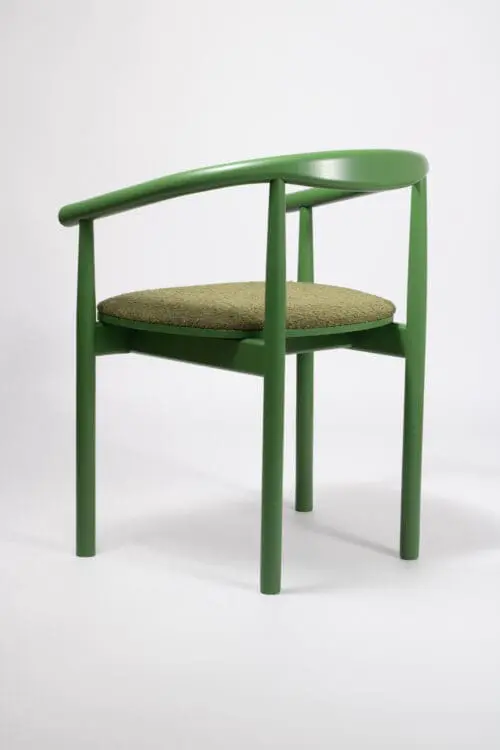
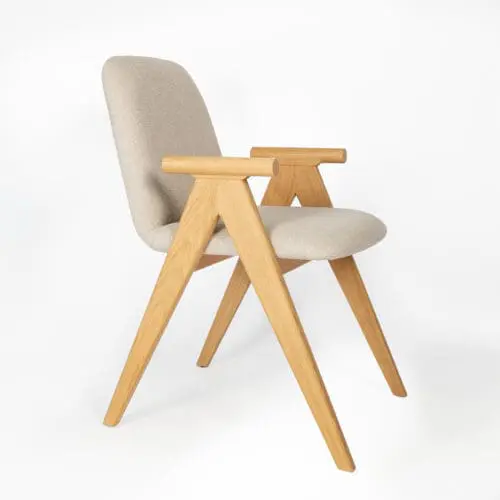
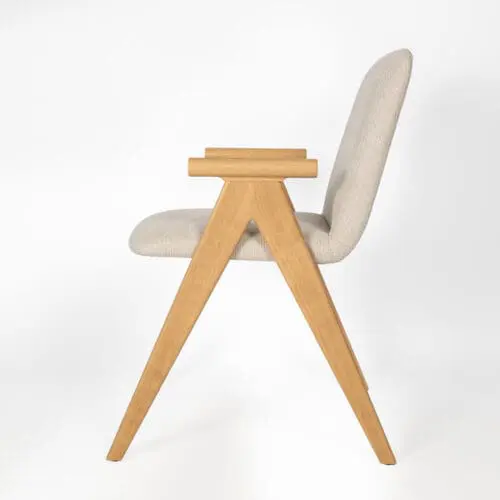
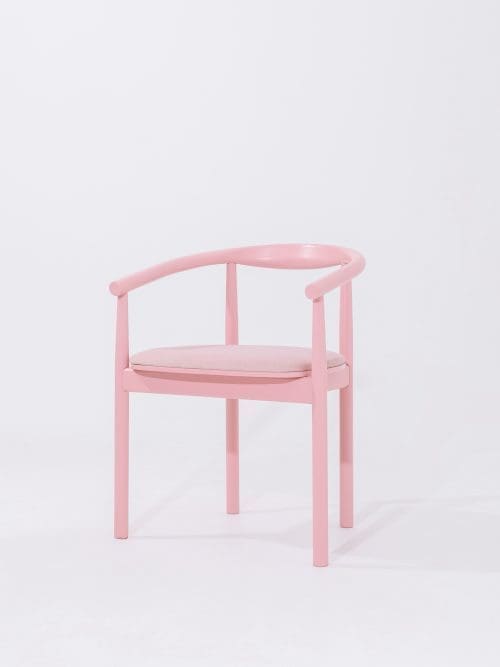
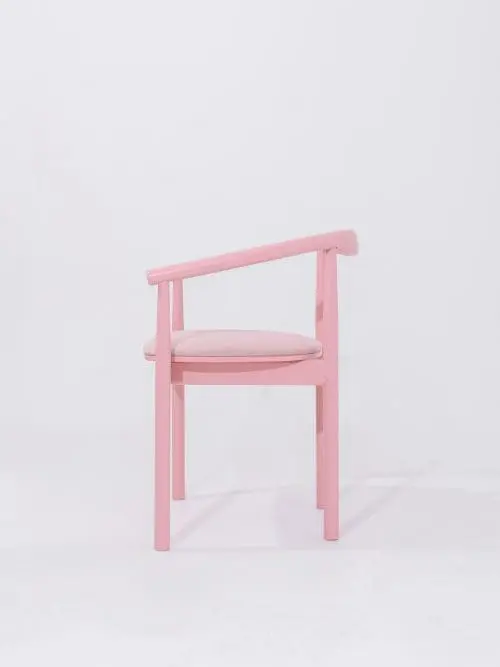
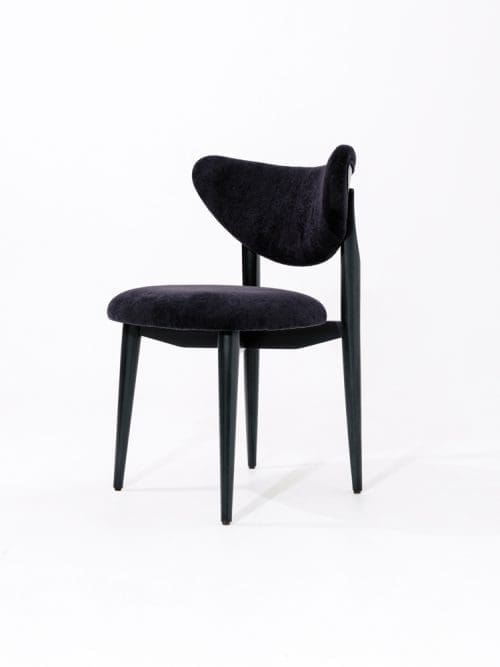
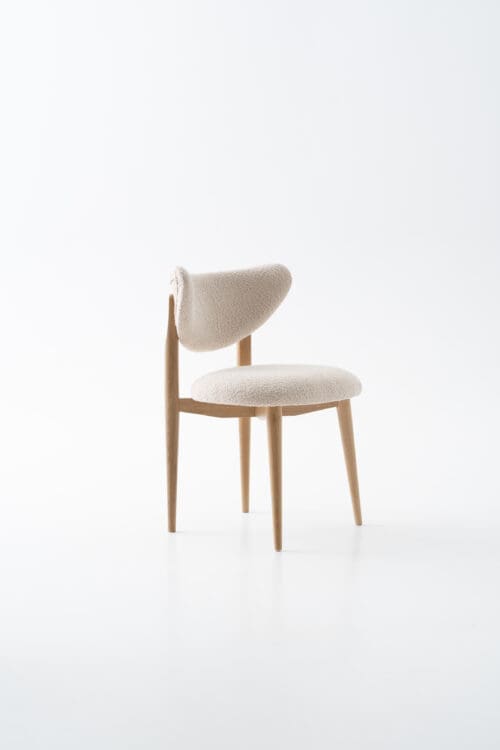
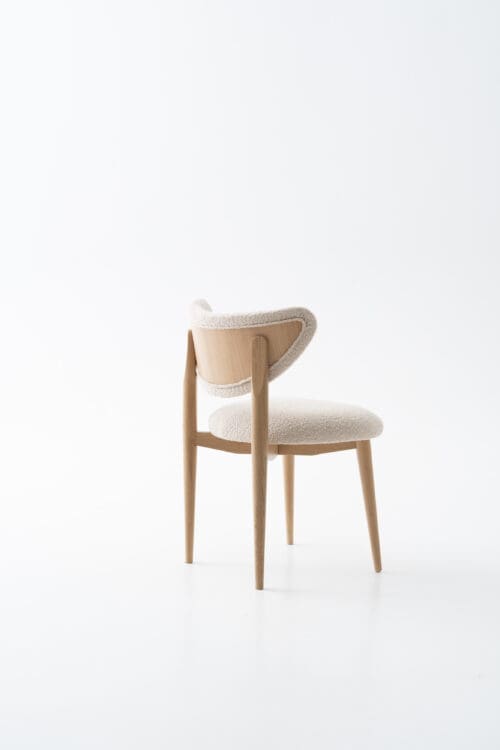
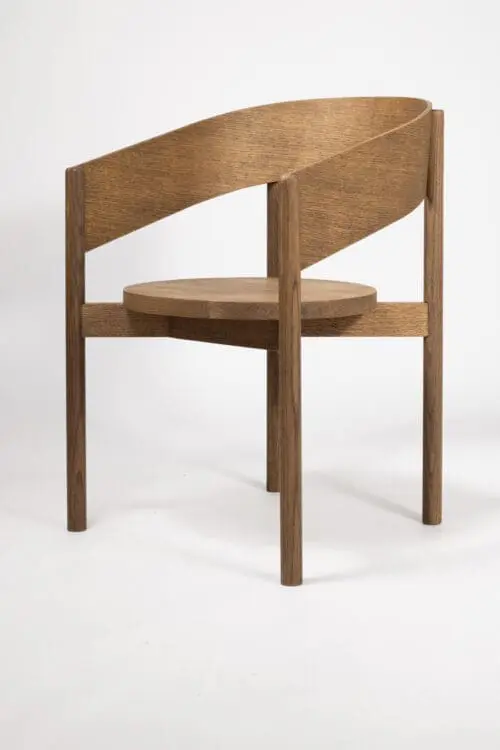
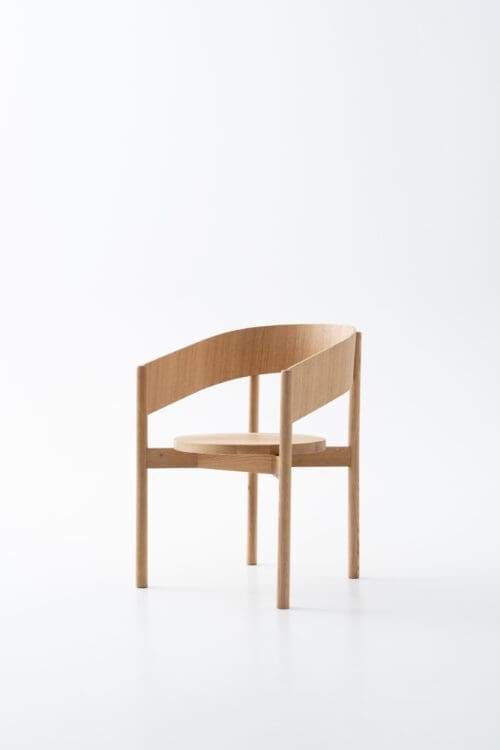
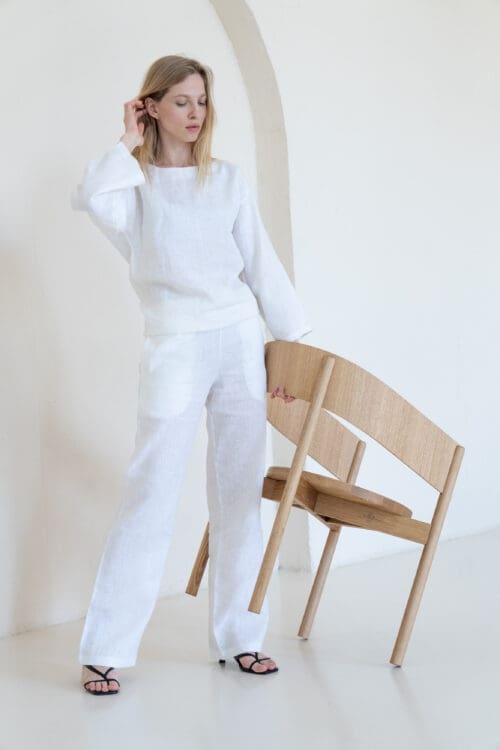
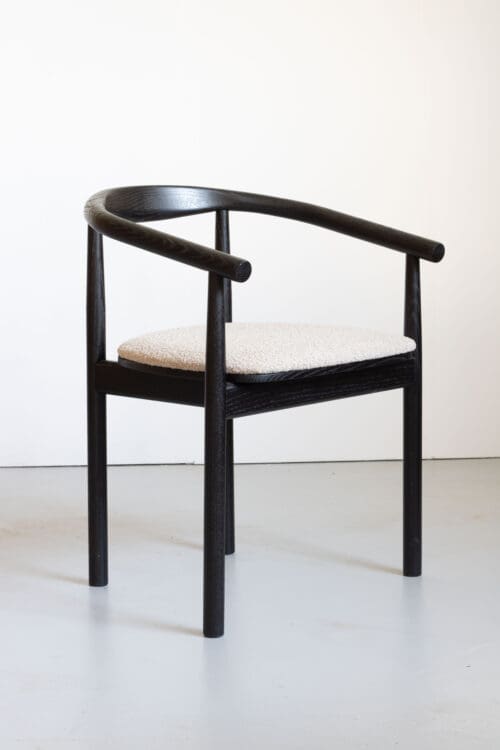
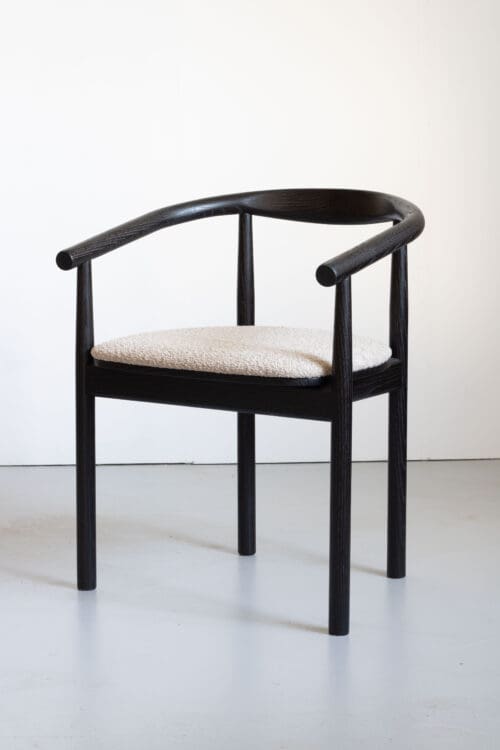
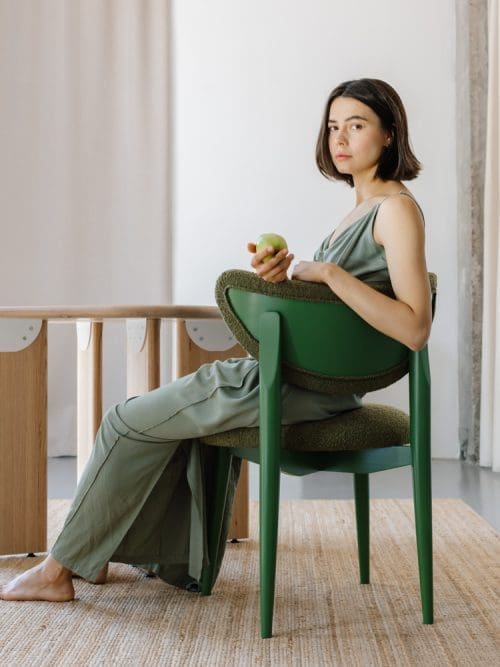
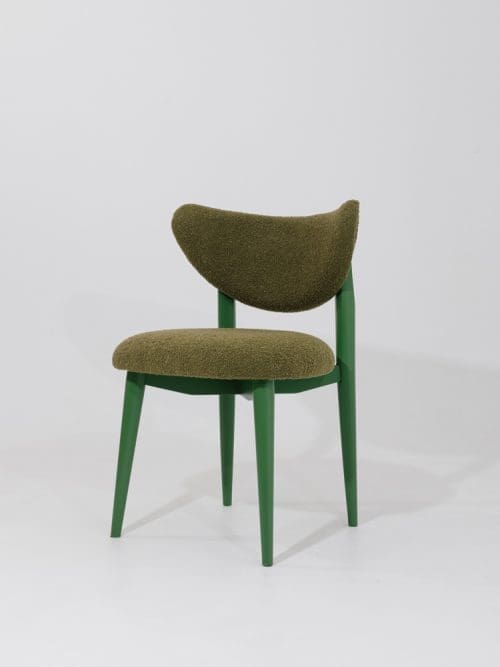
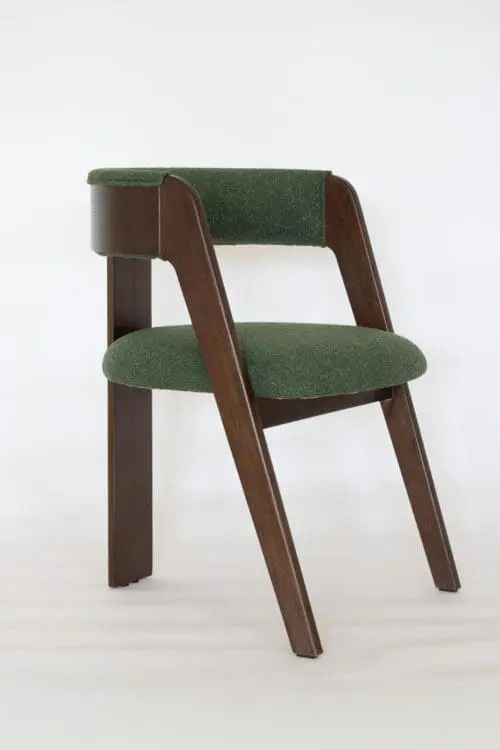
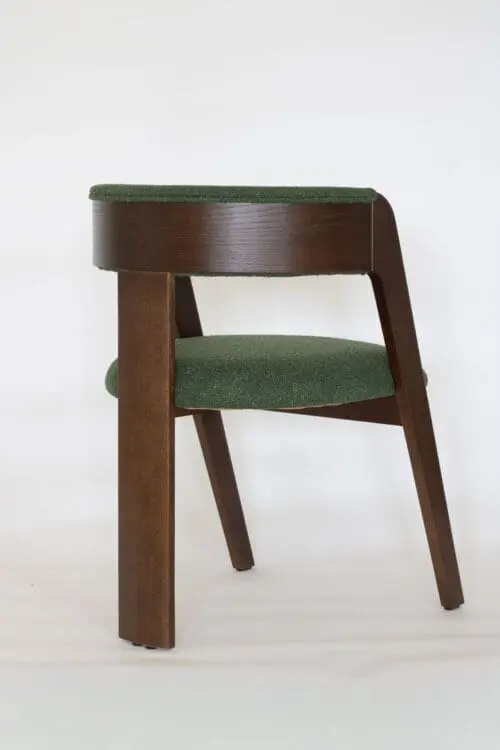
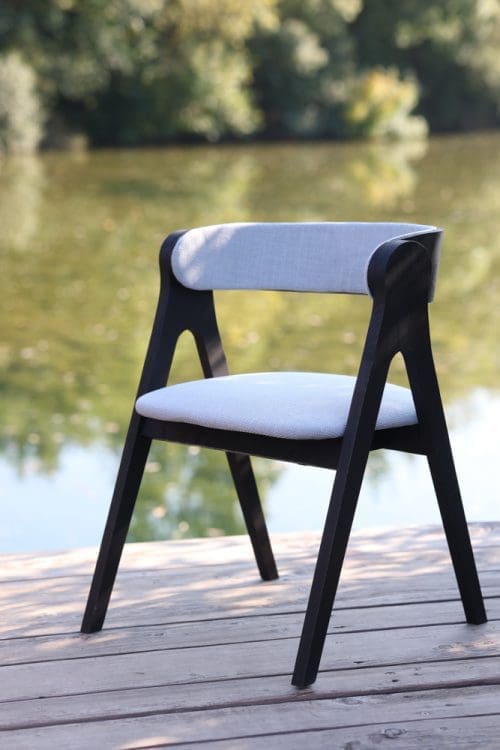
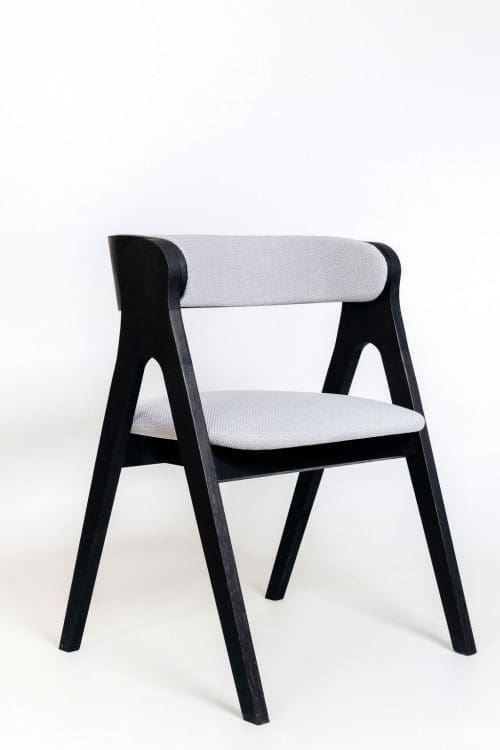
In a Japandi interior, you can easily opt for chairs with and without armrests. The “best” option mainly depends on two things: how much tranquility you want in the overall picture and how much space you have around the table. Without armrests, it usually looks lighter and more peaceful. With armrests, it is often more comfortable and feels more like lounging at the table, as long as you choose a slim, open armrest and you check carefully whether the chair fits under your table.
With Japandi, is it better to choose chairs with or without armrests?
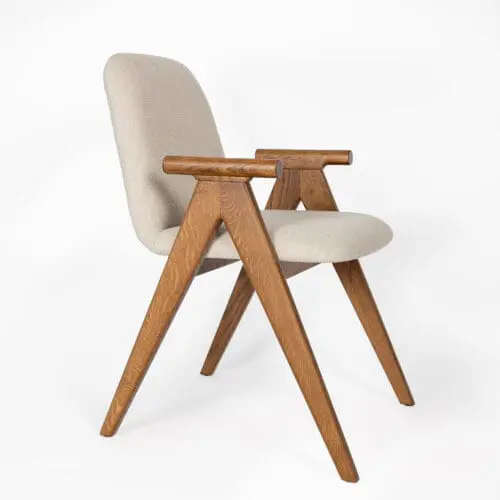
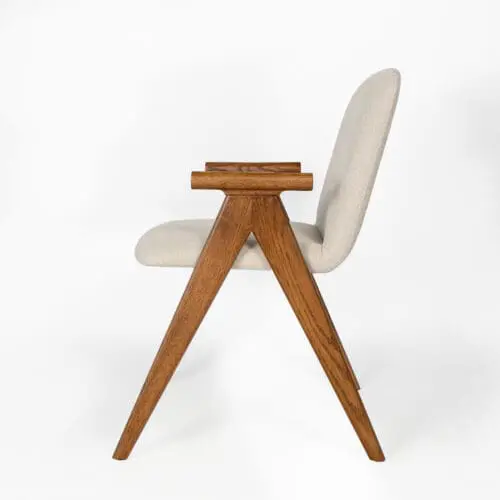
Japandi is all about soft simplicity. That’s why chairs without armrests are often the safest choice if you want to keep it calm. Armchairs also fit well with Japandi, but choose a model that looks light: sleek lines, an open frame, and not too wide “armchair arms”. With Japandi, think more about subtle comfort than massive coziness.
Would you like to get a feel for styles and shapes? Then take a look at chairs or start from the atmosphere at Japandi furniture.
Are armrests useful in my dining area?
Armrests are useful if you sit at the table for a long time. Think of lingering over dinner, working from home, game nights, or simply because comfort is important to you. They provide support and make a dining area a little “softer” in terms of feeling. They are less useful if you often push chairs in in a tight space, or if you want to clear the table regularly. Then the extra volume can get in the way.
- Useful: long sitting moments, comfort, dining area as a second workplace.
- Less useful: small walking space, frequent sliding, many chairs around a compact table.
- In doubt: choose 2 armchairs and the rest without armrests.
Does an armchair fit under my table?
This is the most important check. It’s not the style that determines whether it fits, but the size and construction of your table and chair. Always measure the height from the floor to the underside of your table top. Pay attention to the lowest point, which is often an edge, rail or frame under the top. Then compare that with the armrest height of the chair. If the armrest is higher than the bottom of your table, the chair will not slide in.
Practical measuring in 3 steps:
- Measure floor to underside of table top or bottom edge.
- Measure floor to top of armrest of the chair.
- Calculate a little leeway, so you don’t have to “wrick” every time you slide in.
Does an armchair take up a lot of extra space?
An armchair usually takes up some extra space, both literally and optically. Literally because armrests often make the chair wider, and because you need more space to get in and out comfortably. Optically because armrests add an extra line in your dining area, which can make it look full faster. In a spacious dining area, this is usually not a problem. In a narrow dining room or kitchen layout, it can make the difference between airy and busy.
What is more peaceful in Japandi: with or without armrests?
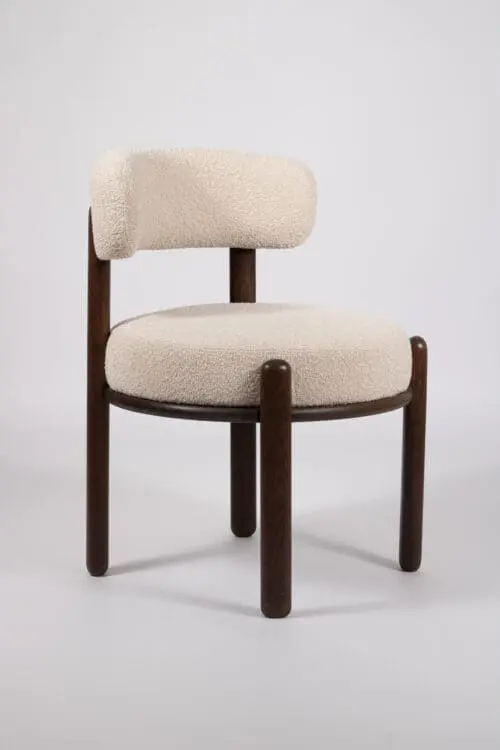
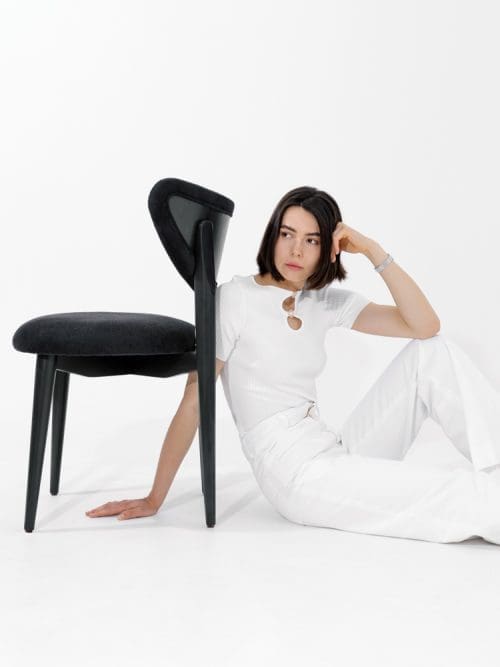
Without armrests is almost always more peaceful. You see more “air” under and around the table, the chairs look slimmer and the repetition of shapes remains simple. Armrests can also look calm, but then the design must be right: low, open and not too wide. If you like to keep Japandi minimalist, without armrests is usually the most serene choice.
Can I combine armchairs with chairs without armrests?
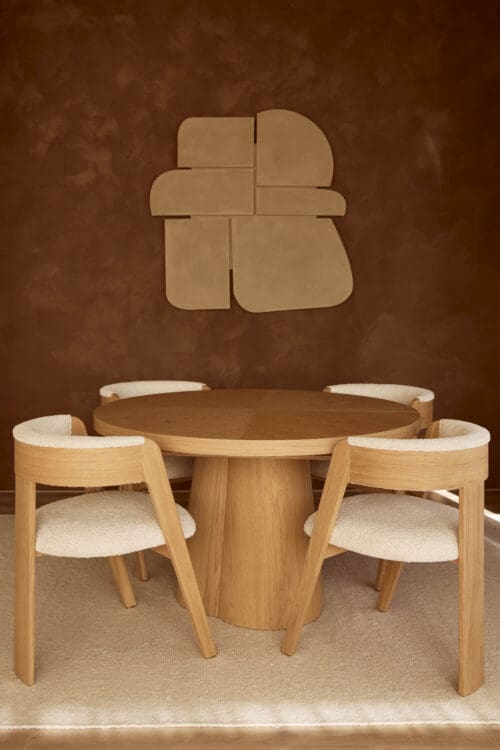
Yes, and this is often the most beautiful solution. You combine comfort with tranquility. The most used (and quiet) arrangement is two armchairs at the head ends and chairs without armrests on the long side. This makes the dining area just a little more special, without everything becoming “heavy”. The trick is to make the mix look like it’s on purpose, not like it’s accidentally together.
- Keep the same fabric color, and only change armrest yes or no.
- Or keep the same wood tone in legs/frames for cohesion.
- Stick to one design language, for example, all soft curves.
If you already have a beautiful interior but want to add Japandi furniture, read: How do you combine Japandi furniture with your style?
Which armrest looks Japandi and not clumsy?
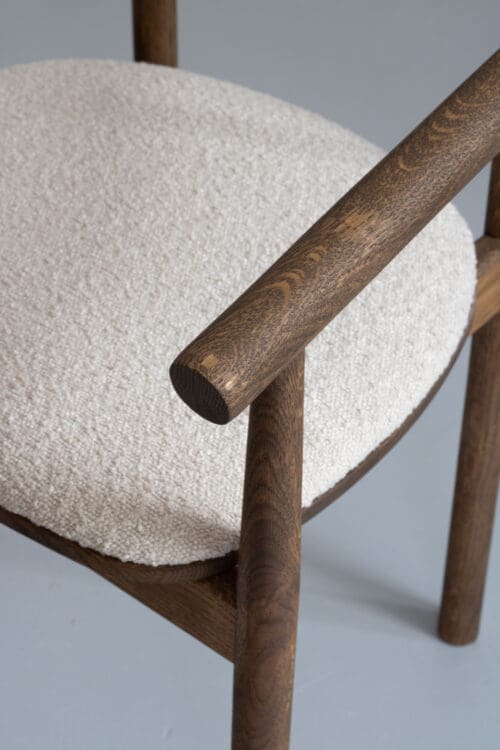
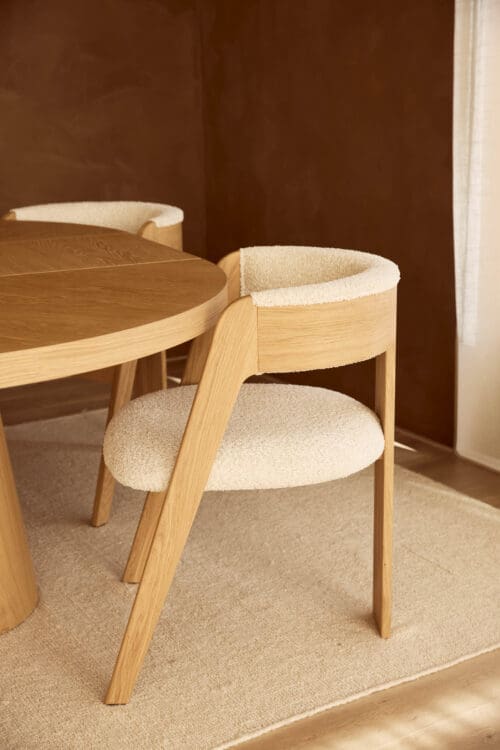
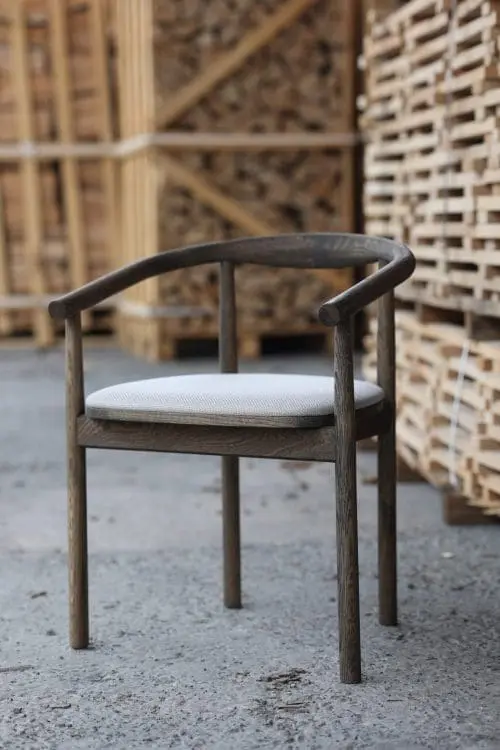
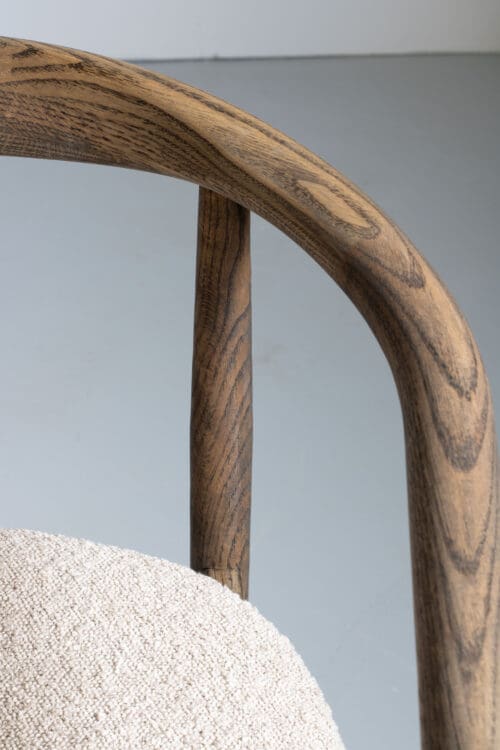
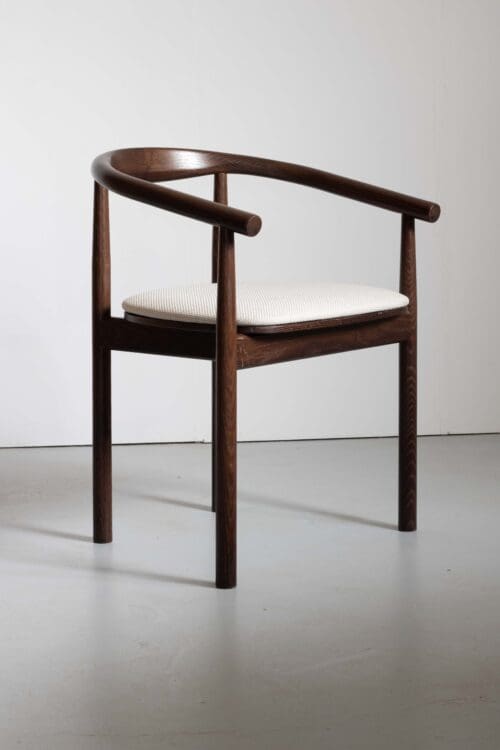
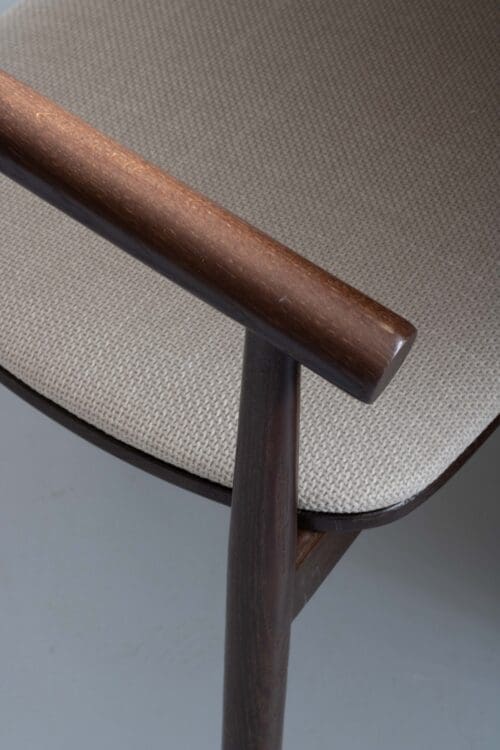
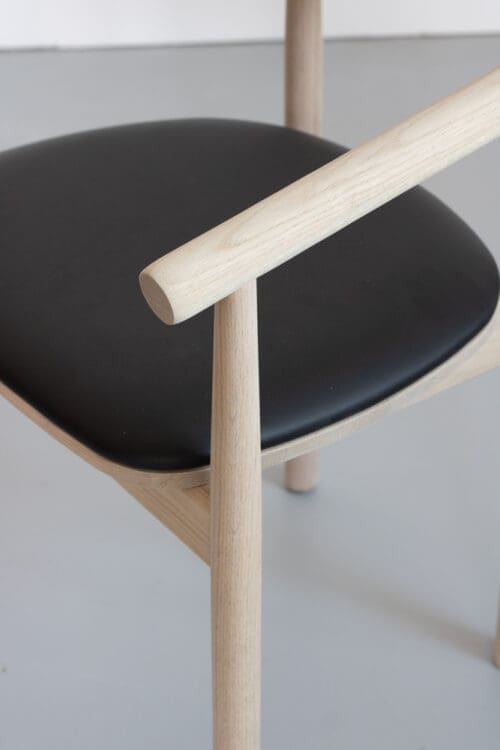
A Japandi armrest feels light, soft and functional. Rather choose a slim profile than a wide, high-pitched arm. Openness also helps: if you still see space between the armrest and back or seat, it immediately looks more airy. And curves often work better than hard corners, because Japandi wants to radiate that soft tranquility.
| Japandi-worthy |
Clumsier in the overall picture |
| Slender armrest, preferably low and subtle. |
Wide, thick armrests that add a lot of “mass.” |
| Open frame or light lines, maintaining a sense of space. |
Fully enclosed and heavily upholstered, armchair-style. |
| Soft curves and matte materials. |
Hard angles, gloss, and sharp contrasts. |
| Armrest that flows logically from the backline. |
Arms that protrude significantly or are too dominant. |
Which fabric and color works nicely with armchairs?
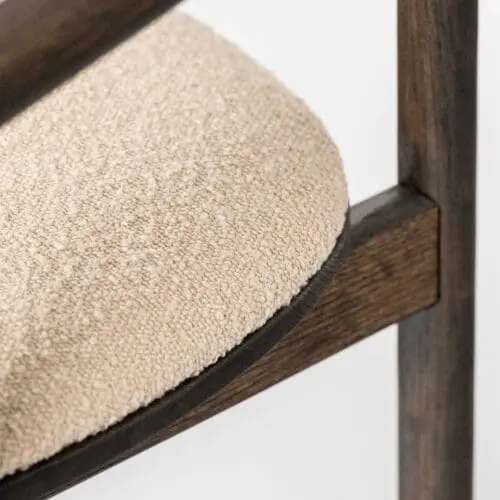
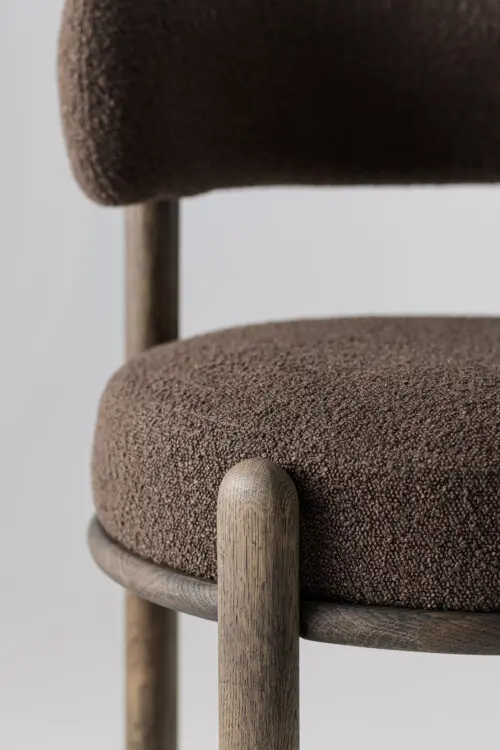
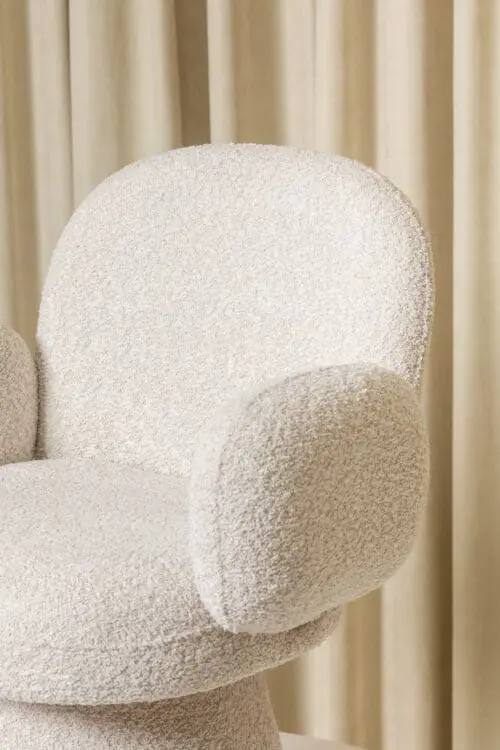
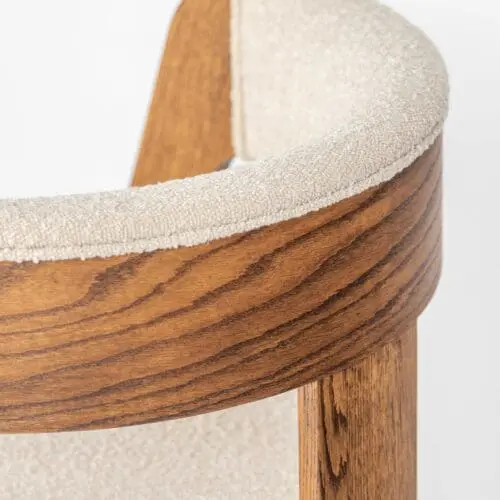
With Japandi, you want the fabric to add warmth without being busy. That’s why quiet fabrics with visible structure often work best. Think of a linen look, a soft wool-like weave or a subtle bouclé. Choose colors that support your base: cream, sand, beige, taupe and greige are very safe. If you want a little more character, a muted green tint such as sage or olive is often a beautiful Japandi accent color, as long as you keep it calm in the rest of the room.
A simple guideline that often works well: keep your chairs in the same color family as your walls and floor, and add contrast with one dark detail in the room. For example, a lamp, a vase or a small side table, instead of black everywhere.
Quick selection guide for your dining area
If in doubt, don’t immediately choose everything “with arm”. Build up slowly. In many dining areas, this order works best: first determine how many chairs you need, then measure whether armrests fit under the table, and only then choose what you find the most peaceful in terms of appearance. For a complete guide, check out our other blog: How do you create a Japandi interior?
- Compact space and need many chairs: especially without armrests.
- Comfort important and you have space: armchairs are possible, but choose slim and open.
- Best of both worlds: 2 armchairs at the head, the rest without.